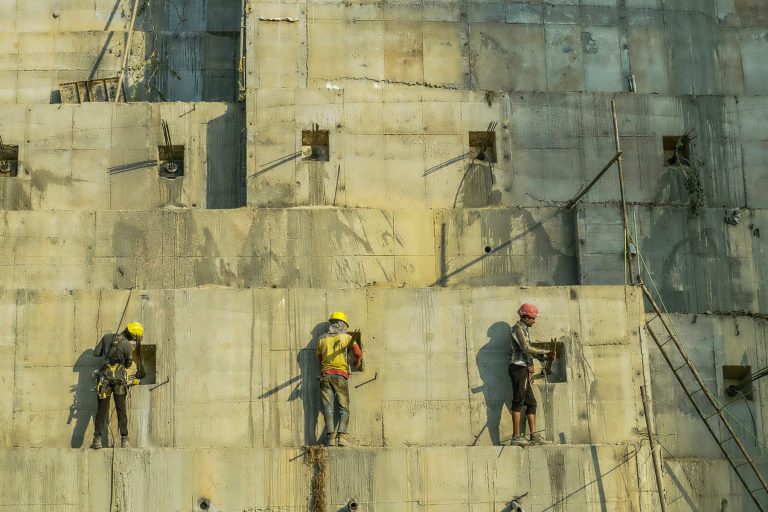
The recently opened Necaxa–Tihuatlán highway, designed and built by the Spanish company FCC and the Mexican company ICA, is one of the largest road infrastructure projects undertaken in Latin America in recent years. Stretching 85 kilometers and crossing the states of Puebla and Veracruz, it is part of the 283-kilometer Mexico–Tuxpan corridor that connects Mexico City with the Gulf of Mexico coast and has reduced the total travel time from 6 hours to 2 hours and 40 minutes.
-5.jpg)
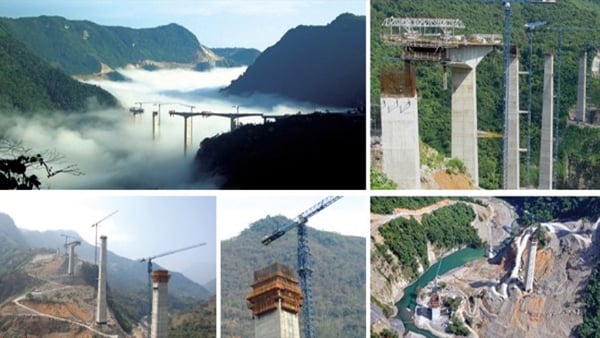
The project, with an estimated cost of 500 million euros, is divided into two sections. The first section, a 36.6-kilometer, four-lane stretch between Nueva Necaxa and Ávila Camacho, crosses the Sierra Madre; its challenging terrain required the construction of six tunnels and 12 bridges. The main viaduct, the bridge over the San Marcos River, is 850 meters long and features a central pier 225 meters high, making it the tallest bridge in Latin America. Work on the Huachinango Tunnel—consisting of two parallel, one-way tubes, each 13 meters in diameter and 105 meters long—has faced multiple challenges: navigating around existing oil pipelines and power lines, dealing with weak soil conditions, and the presence of sand and clay in the upper part of the tunnel portal. The second section, the Ávila Camacho–Tihuatlán stretch, is 48 kilometers long, has two lanes, and is 12 meters wide.
-5.jpg)
-5.jpg)
This project is of enormous importance to Mexico, as it improves connections between the capital and the sea, as well as the tourist, port, industrial, and oil-producing areas located along the Gulf Coast. Careful attention has also been paid to the project’s social and environmental impact; it has served as a source of employment for local communities and provided professional development opportunities for Mexican engineers.
-5.jpg)