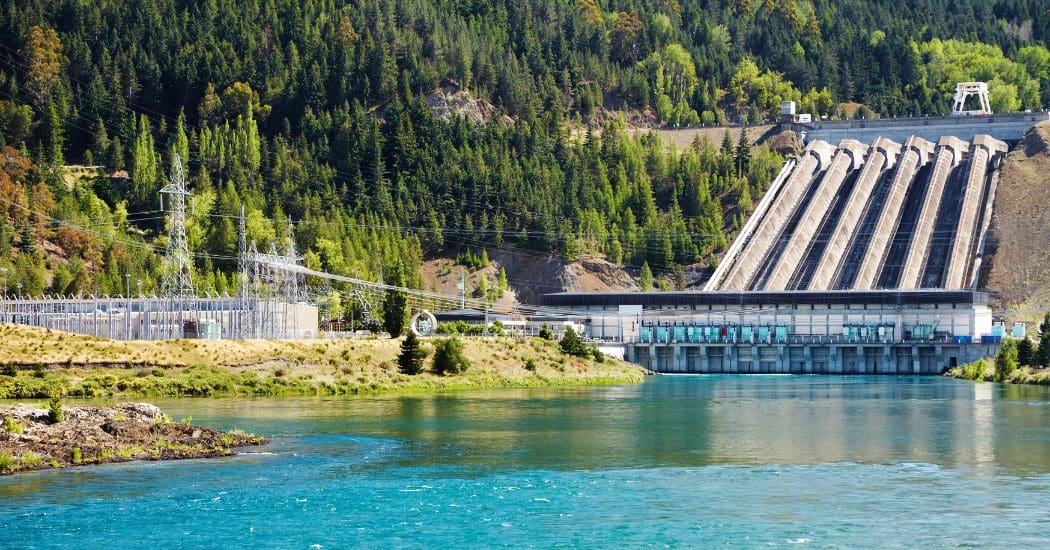
A mini-hydroelectric plant is, as its name suggests, a special type of hydroelectric plant that generates energy on a small scale—that is, a small-scale hydroelectric plant with low capacity. These types of plants can operate at power levels in the range of 100 kW. If you want to learn more about this type of plant… keep reading!
Like conventional hydropower, mini-hydropower is a type of renewable energy. Although they are not very well known, the use of small hydroelectric power plants is widely prevalent today, because of its low initial cost and ease of installation, which means they can be used at the local level as well as for private use.
Small power plants include, or may include in the most general sense, the the same components as a full-scale installation, but with limited power.
The power of a turbine is function from the net jump (or elevation difference), and the circulating flow by it. The product of these parameters, when a series of fixed coefficients and efficiency coefficients are applied, is the factor that determines the power of the systemn. Consequently, a power plant can be called a "mini-power plant" if it is conventional flow rate Enjoy a very slight elevation change (such as 5 meters), as well as the one that Take advantage of a standard elevation difference (about 200 meters), but with a limited flow (such as 2 cubic meters per second).
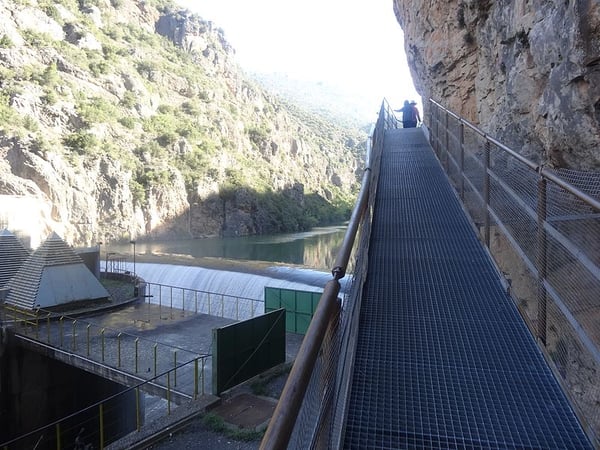
Photo: Jordiferrer (Wikipedia)
The main ones advantages associated with this type The differences between power plants and conventional hydropower projects are as follows:
On the one hand, the distribution company It does not require regulation to adjust the energy supply (electricity generated) in response to the lawsuit (electricity consumption), so no reservoirs are needed for storage—only diversion weirs.
In addition, the Utilization is optimized to the fullest extent. Normally, the instantaneous power output of operating mini-power plants is controlled by the water level in the head chamber. As the water level rises, the plant’s control elements (injector and distributor) open, generating more power. If the setpoint level drops, the control system closes, and they produce less, but they always make the most of their capabilities, without restrictions.
On the other hand, there is a great freedom in design, since it's easy to carry a moderately sized pipe directly from the weir to the powerhouse. Furthermore, because the pipe is small, its installation does not require the construction of special winches or cableways.
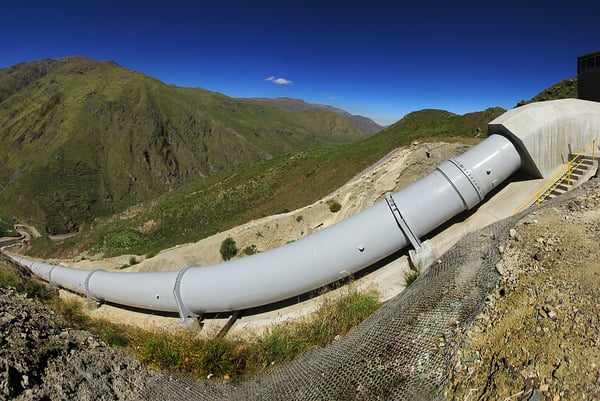
Photo: yourproject (Pixabay)
Another important advantage is the space savings in the power plant building, since the machine size is lower than the conventional one, and most of the facilities for support services are eliminated or reduced in size.
Furthermore, since these are low-power machines, the frequency signal comes from the grid, so they typically do not have a speed regulator. When the grid voltage fails, under normal conditions the mini-power plant shuts down and does not operate in island mode. Given that the power of a mini-power plant is small in relation to the total of the network to which it is connected, If it stops, it won't cause any serious problems on the network.