In the field of civil engineering, engineers often face complex challenges that require Effective and safe solutions. Sometimes, these solutions aren't found in advanced technologies or expensive tools, but rather in relatively simple mathematical concepts which, when applied correctly, yield surprising results. Such is the case with the clothoid, a curve that has proven to be essential for improve road safety, particularly in the design of roads and highways.
What is a clotoid curve?
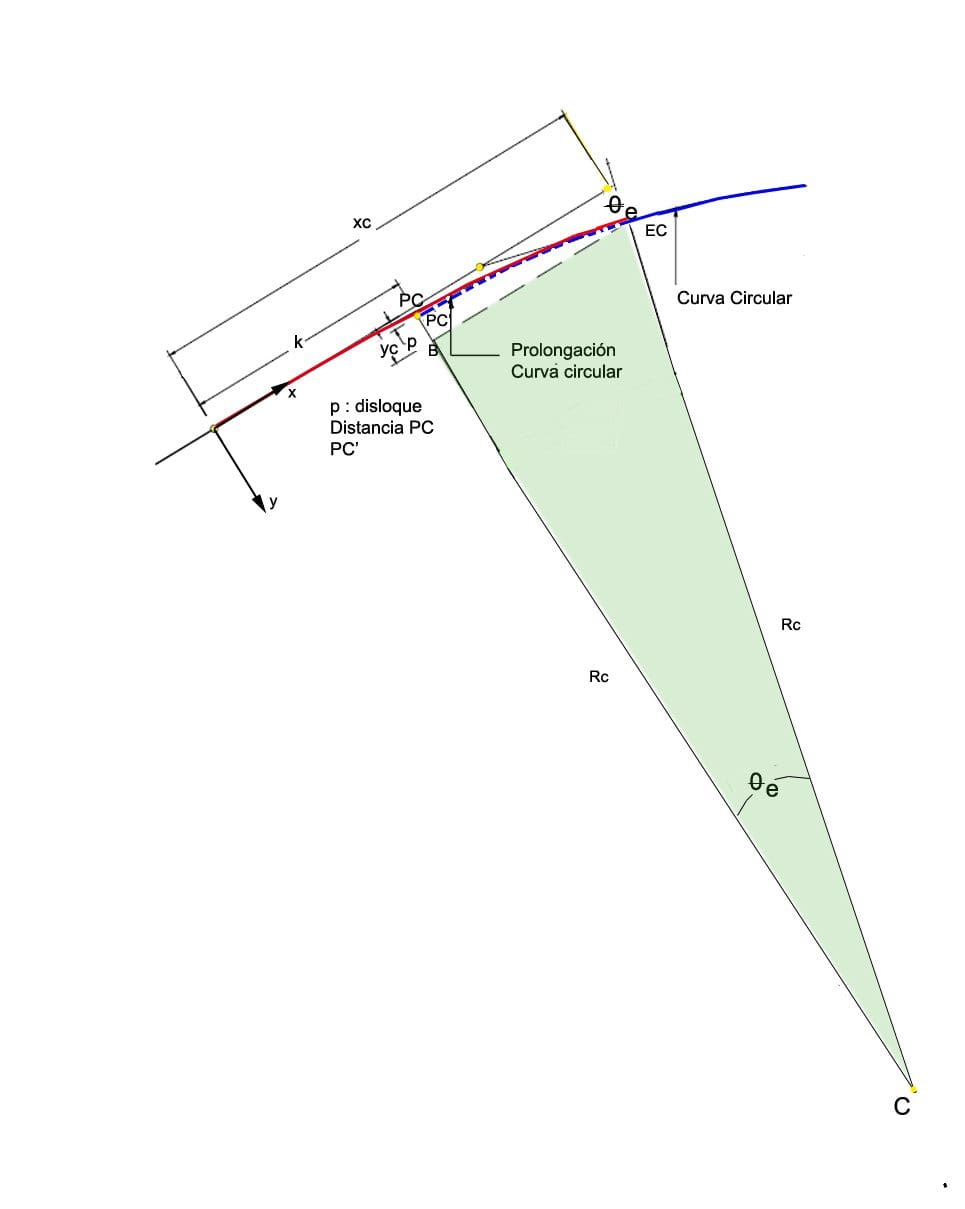
One clothoid, also known as Cornu spiral or spiral of Euler, is a geometric curve whose curvature varies linearly with respect to its length. In other words, as we move along the curve, the curvature changes gradually, starting from an initial value of zero (a straight line) until it reaches maximum curvature, which makes it ideal for smooth transitions between straightaways and curves.
Mathematically, a clothoid is defined by its arc length parameters s, curvature k and the clotoid parameter A, where $k = \frac{1}{R}$, $k = R1$ (where R the radius of curvature at a given point). The relationship between the arc of a curve and its curvature is expressed as:
k(s) = s/A² k(s) = A²/s
Here, A is a scaling parameter that defines the «stiffness» of the curve, while sss is the distance along the curve from the origin. This property of the clothoid allows for a smooth and controlled transition from a straight line to a circular curve, which reduces the negative effects associated with sudden changes in curvature.
Application of the Clothoid Curve in Road Safety
In road safety, the clotoid plays a crucial role in highway design, especially in the configuration of curves. One of the biggest challenges in designing highway curves is to mitigate the effects of centrifugal force acting on vehicles when traveling at high speeds. If the curve is designed without a proper transition, such as a simple constant-radius curve, Drivers may experience a sudden change in lateral force, which can lead to a loss of control of the vehicle.
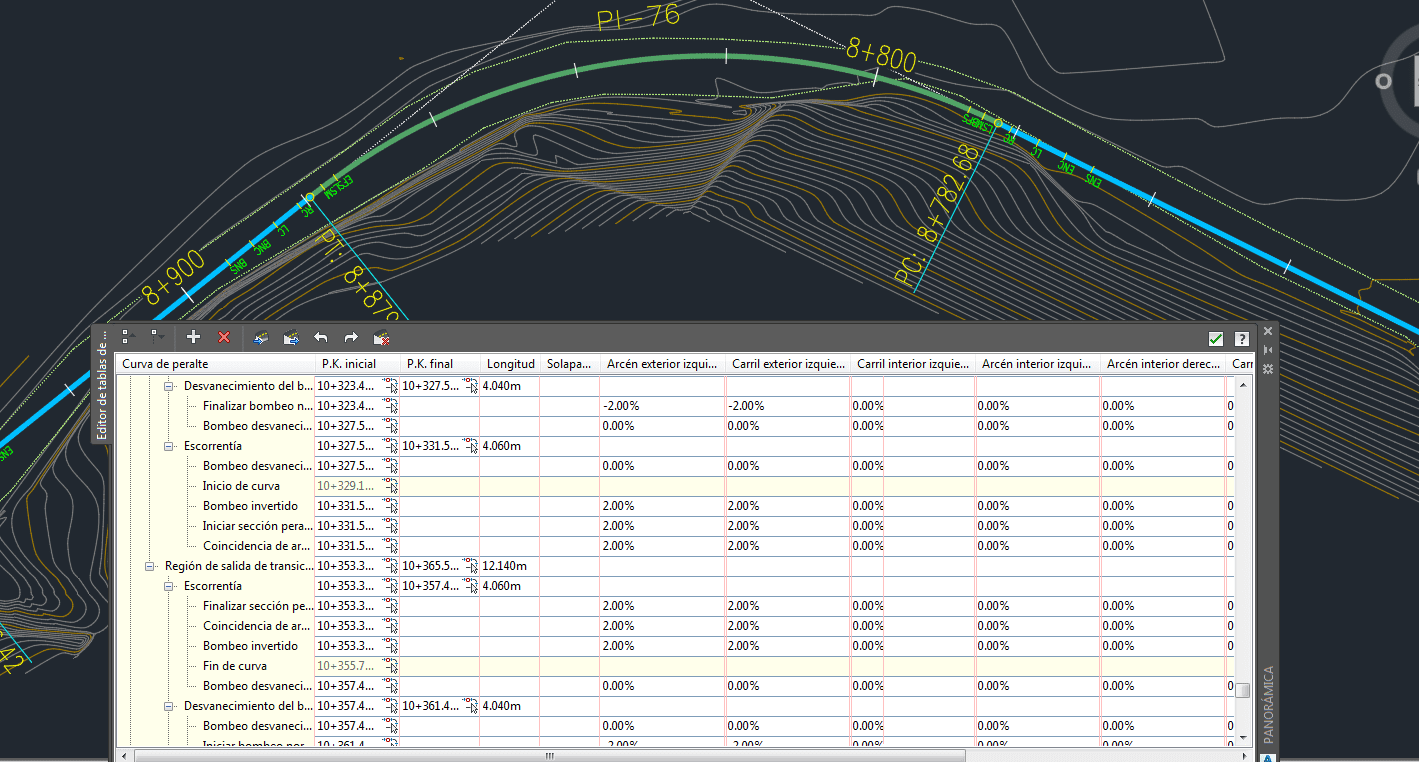
This is where the clotoid becomes an essential tool. When implementing curves clothoid at the transitions between straight lines and circular curves, a gradual change in centrifugal force is achieved experienced by drivers. This smooth transition significantly reduces the risk of accidents by providing a gradual change in curvature that Drivers can anticipate situations and drive more safely. The clotoid therefore allows for safer and more predictable highway design, especially on freeways and high-speed roads.
Other Applications of Clothoid Curves
Although the clothoid It is widely recognized in civil engineering, but its application is not limited to this field. Curves clothoid They are also used in the railway design, where it is essential to ensure smooth transitions between straight sections and curves to prevent excessive stress on the rails and provide a more comfortable ride for passengers. In addition, in the field of optics, the clotoid is used in the manufacture of lenses and optical systems to control the propagation of light, taking advantage of its ability to create smooth transitions in the direction of light rays.
Another interesting use of the clothoid can be found in architecture and urban design, where the curved shapes and smooth transitions are preferred for aesthetic and functional reasons. The geometry of the clotoid lends itself to the creation of spaces that are not only visually appealing, but also facilitate the movement of people and vehicles in a more natural and comfortable way.
In conclusion, the clothoid shows how a relatively simple geometric solution can have a significant impact on the safety and functionality of road infrastructure and in other fields of engineering. This example underscores the importance of continuing education and specialization in areas that truly make a difference in society. As engineers and architects, it is crucial Don't neglect training in areas that may seem simple, but which offer powerful solutions. For this reason, it’s a good idea to explore the catalog of online courses and master’s programs that Structuralia offers in engineering and innovation, to continue contributing to the creation of a safer and more efficient future.