Columns and beams are key components of any building. Specifically, the steel columns They are one of the most common types of support systems in modern buildings. However, to understand their purpose and the advantages of use steel in the design of the columns, we must first consider other alternatives, such as their wooden or reinforced concrete counterparts. What does steel offer in these structural elements that none of those materials provide?
Specific Characteristics of Steel Columns
The steel columns These are structural elements that are manufactured in the factory, although modifications of any kind may occasionally be made to them on-site. For example, foundations, which are actually often simpler with steel columns than with concrete ones due to their lighter weight. These metal columns are composed of elements very similar to those of any other type; the most important ones are as follows.
- Zapata: It is the shallow foundation on which the columns are built.
- Pedestal: It forms the lower part of the spine and provides support for it.
- Steel plate: It forms the core of the spine.
The Construction Process for Steel Columns
The construction of steel columns It is carried out using a specific, standardized procedure. These are the key steps to follow.
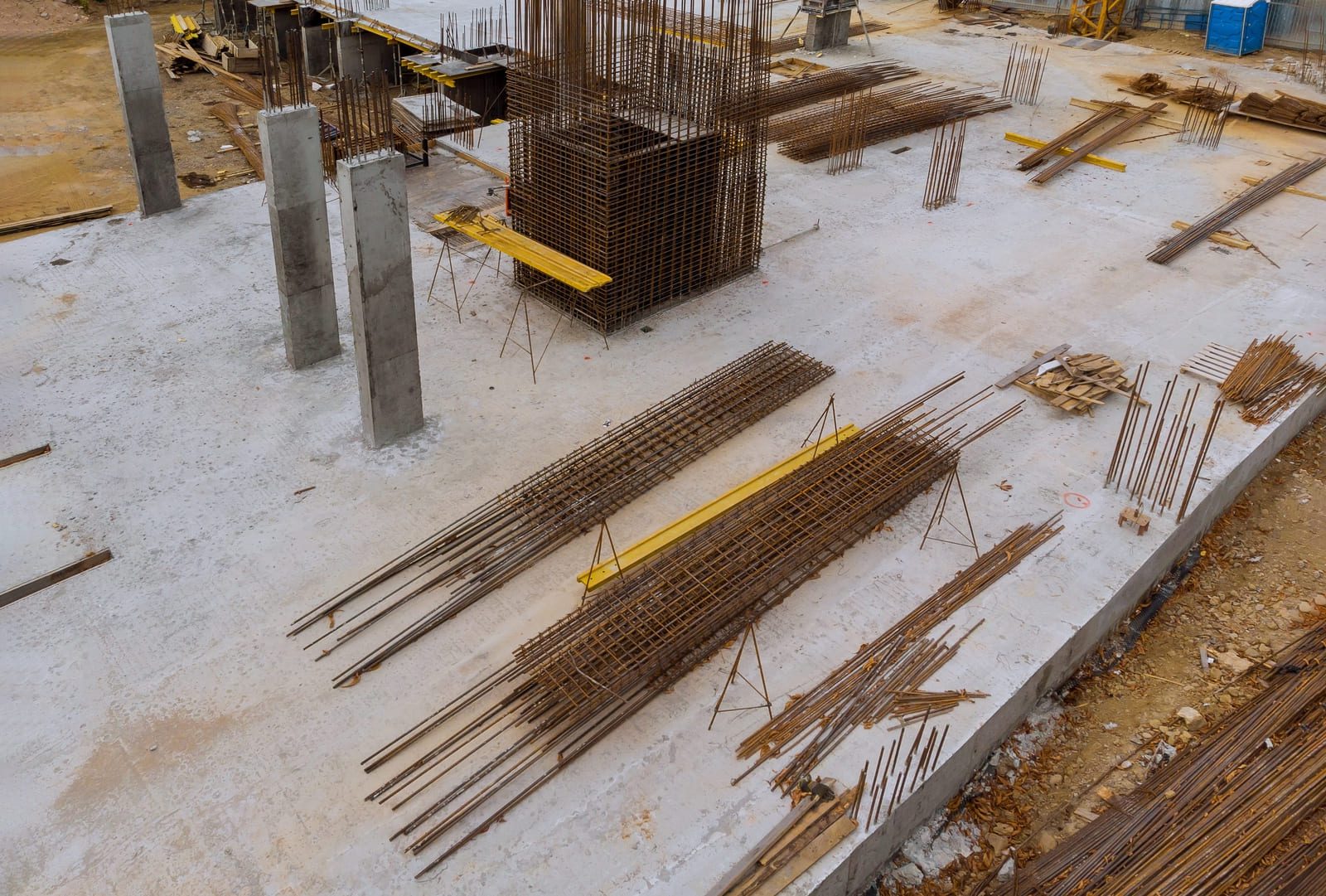
- The footing reinforcement, the pedestal, and the tension members—which support the suspended load and tensile forces—are installed.
- Work continues on installing the foundation and the pedestal.
- The base steel plate is then attached to the foundation by welding and anchoring. This creates a structure that distributes the load to be supported by the pedestal.
At this point, it is important to highlight the significance of a product used to provide greater consistency to steel columns. This product is the grout, a high-strength cementitious mortar that is applied between the slab and the pedestal.
Types of Steel Columns
Before distinguishing between the different types of columns steel Among the types of columns found in construction, it is important to know that a column is classified first based on its position within the structure. Thus, there are columns isolated or detached, which, as their name suggests, are separated from the walls or any other part of the building. The attached columns, for their part, are placed against the wall, while the embedded columns They are partially and seemingly embedded in the main body of the structure.
However, in the case of these steel columns, the distinction between the two types is particularly important. These are the columns compound and mixed.
Composite steel columns
They are made primarily of steel, although they are often encased in concrete for added protection or for aesthetic reasons. They are used in both high-rise and low-rise buildings.
Among its advantages are its greater load-bearing capacity, ideal ductility for seismic zones, greater fire resistance, and better damping. The main drawback is the difficulty in shortening them if the initial measurements were not as precise as necessary.
Composite steel columns
For their part, the Composite steel columns are those manufactured using a a combination of concrete and steel. The result is an even greater load-bearing capacity and a high fire resistance. All of this makes them, in general, the preferred choice of architects, engineers and designers.
In short, the steel columns They are one of the best structural alternatives in modern construction. And their use is becoming increasingly widespread, mainly due to their aesthetic appeal.