The renovated house, it's not just a house—it's a eco-friendly lifestyle. The more energy and resources are saved, the more valuable it becomes.
How to Design and Build Your Renewable Home
The renovated house, it's not just a house—it's a eco-friendly lifestyle. The more energy and resources are saved, the more valuable it becomes. The eco-friendly home is an alternative to industrial food production and overexploitation; it is a way of life that ensures everyone has enough food, clothing, housing, and access to clean water. It is sustainable because it uses natural sources of clean energy and without increasing the demand for fossil fuels or other forms of pollution.
What is a renewable home?
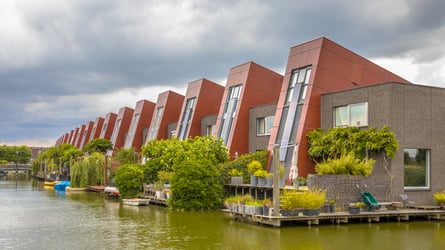
It is an eco-friendly house that is environmentally friendly, built with non-toxic materials and energy-efficient, not only in its construction but also in its use.
For a house to be considered sustainable, its design must be in harmony with its surroundings and the The materials used in its construction must be recyclable and environmentally friendly. In addition, household appliances should help reduce energy consumption. In other words, a sustainable home is one that produces the least amount of pollutants and saves the most energy.
What types of renewable homes are there?
Currently, there are different types of renewable homes, which differ mainly in the type of material used to build them.
1. Bioclimatic Houses
These are homes that use natural resources from their surroundings—such as the sun to heat the house and leafy trees to provide shade.
2. Wooden Houses
These are cabins built from logs and firewood that do not need to be cut with conventional saws at a sawmill.
The following materials are used in its construction: natural and renewable materials which come from sustainably managed forests. These houses are very well insulated.
3. Eco-Friendly Concrete Homes
The concrete It is a material made primarily from a mixture of cement, sand, and stones. It is currently the most widely used material in construction, but because it contains cement, it represents the 8% of pollution in this area.
However, recent scientific studies have succeeded in reducing pollution from this product by 50% adding to the mixture O2.
4. Houses Made of Compacted Earth Blocks
Compressed earth blocks (CEB) are made by mixing soil, sand, and clay with air-setting or hydraulic lime as a stabilizer.
It is generally used as a substitute for conventional brick. Its production requires only approximately one 1% in Energy than is required to manufacture a conventional brick, which results in significant energy savings; furthermore, its production process generates minimal CO2 emissions.
4. Tiny Houses
The tiny house (mini house, in Spanish) is a tiny house built on a trailer. It is known for being very affordable and promoting minimalism. Its approximate area is 15 m² and it uses very little energy.

What renewable energy technologies could you install in your home?
If you've already built or purchased your home through conventional means, don't worry—in this section, we'll give you some options so you can make your home more eco-friendly.
1. Solar panels
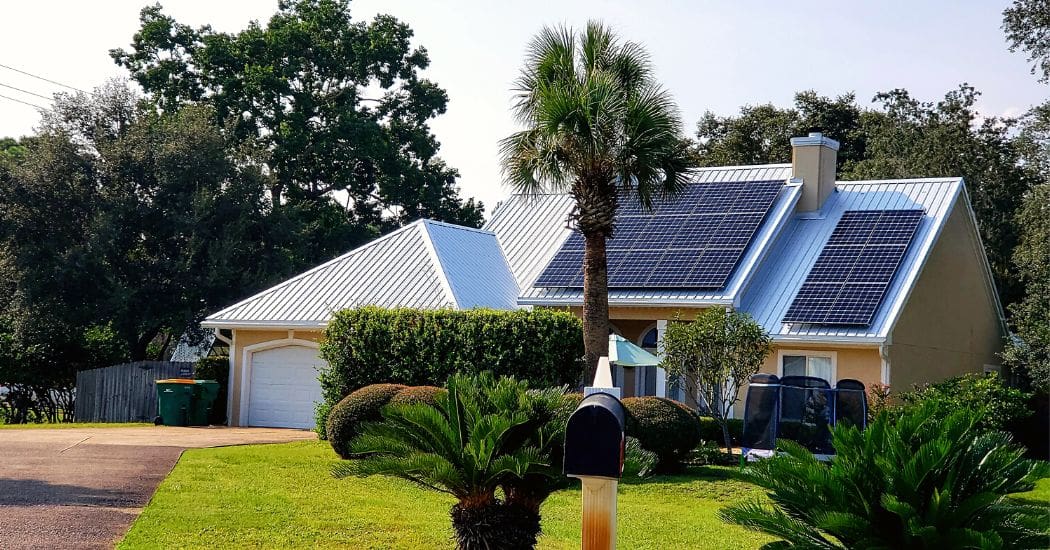
Solar panels are designed to convert sunlight into electricity for use in the home. The solar panels distributed across its surface absorb light energy from the sun, which in turn generates an electric field capable of producing and supplying electricity in the home, reducing its cost by up to 90%.
2. Rainwater Harvesting System
This technology is implemented by setting aside a space in the home for collect rainwater, and transport it to locations where it can be stored, such as storage tanks or cisterns. It will then undergo the necessary treatment for human use and consumption.
You can use rainwater for watering plants, doing laundry, or flushing the toilets in your home, thereby reducing the cost from the water bill.
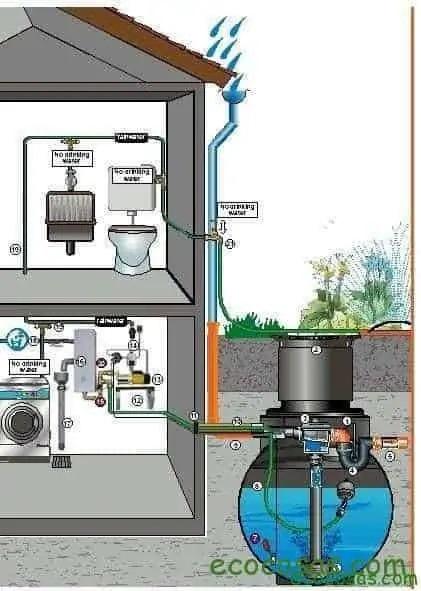
Rainwater harvesting system. Source: ecocosas.com
3. Solar Water Heater
There is no doubt that the sun It is an affordable and inexhaustible source of energy that technology is harnessing to make the world greener.
Another example is the solar water heater. This device uses radiation derived from solar energy to heat the water.It is commonly used in homes, hotels, and other industries. It contributes significantly to energy savings and to the reduction of environmental pollution.
A house is our home, and it must be built in a way that sustainable. We need to invest in it to protect it.
The focus should be on the way How can we make use of the available resources?, from its construction to its recycling at the end of its useful life. While it is a sustainable, beautiful, and functional structure, without causing any environmental impact on the planet.