In honor of the feast day of St. Francis of Assisi, today we’re sharing a post with you about environmental decontamination. It’s worth noting that the saint is the patron saint of forestry professionals (forestry engineers, technical forestry engineers, and forest rangers) and, by extension, of everyone who cares for and respects the environment. Here we go!
The founder of the Franciscan Order and the Poor Clares, he was an Italian saint born in 1181 in the town of Assisi. He was canonized by the Catholic Church in 1228, and his feast day is celebrated every October 4.

In keeping with our love of nature, today we’ll tell you how, surprisingly, rivers are able to develop a mechanism for purifying their own waters, thereby helping to create an ecosystem suitable for the survival of many animal species.
The quality standards required for water are as diverse as the types of water we encounter (groundwater, inland waters, seawater, etc.), but in any case, nature takes care of the initial removal of pollutants.
In the case of rivers, water quality naturally declines as the rivers get closer to populated areas. However, the water found in the upper reaches of rivers is of very high quality, mainly due to minimal discharges and the rivers’ high self-purification capacity.
We already knew that, but What does this self-purification involve?
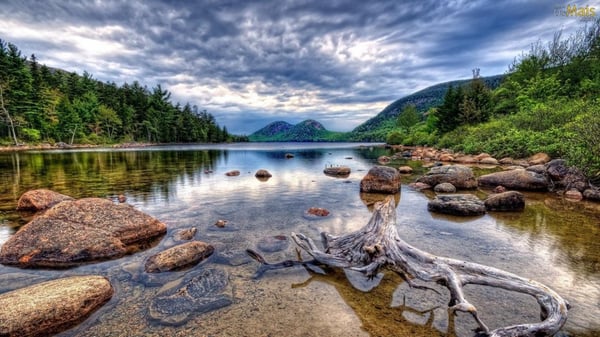
Self-purification of water
Water self-purification is a set of physical, chemical, and biological phenomena that occur naturally in watercourses and result in the breakdown of foreign substances carried by the flow. These are primarily:, aerobic bacteria, which consume organic matter with the help of the oxygen dissolved in water. In addition, aquatic plants should be taken into account, as they absorb certain components as nutrients, as well as through other photochemical processes.
A river's ability to regenerate itself depends on the following three factors: the flow rate, which will help dilute the spill and facilitate its subsequent degradation, turbulence of water, which will supply diluted oxygen to the environment, promoting microbial activity and, the nature and size of the spill that has occurred throughout the course.
The natural self-purification mechanisms of a river can be categorized as follows: four areas depending on its pollution level and treatment stage.
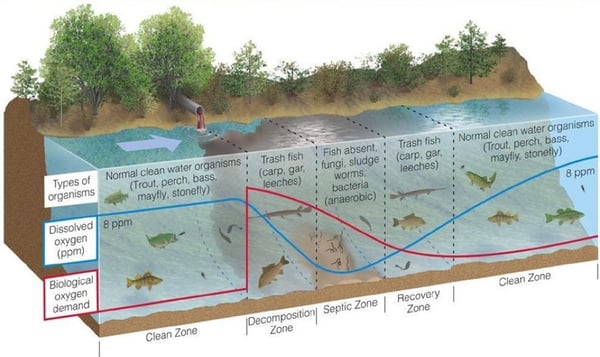
- Areas of Degradation near the spill site; the most delicate forms of life—such as certain fish and algae—disappear, while more resilient ones appear. The water looks dirty, the oxygen content decreases, and the COD increases. Degradation by microbial flora begins.
- In the active decomposition zone Dirty, blackened, foamy, and foul-smelling water appears. Anaerobic decomposition is taking place, causing gases to be released.
- The third This area is the recovery zone. Plants reappear and the water clears up. This is all due to the presence of dissolved oxygen or oxygen produced by the plants' photosynthetic activity, which helps break down the pollutants.
- Finally, the clean water area, which describes the physical and chemical characteristics and the presence of animals and plants in accordance with the nature of the riverbed.
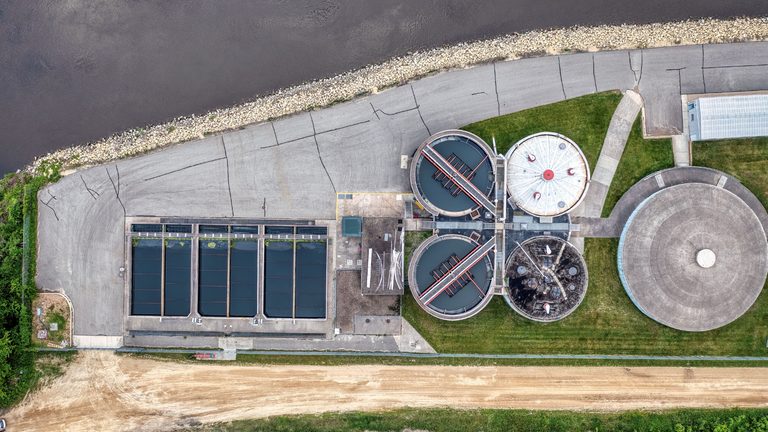
Despite having the invaluable resource of water’s ability to regenerate itself, when dealing with large volumes of wastewater, it is essential to have a comprehensive wastewater treatment infrastructure in place to prevent the irreversible contamination of waterways.