Do you know the difference between a highway and a freeway? We'll address this and other questions below… Don't miss it!
To establish a reliable classification of existing road types, we will follow the provisions of Article 2 of the Law 37/2015, of September 29, on State Highways (Spain).
Thus, the aforementioned text classifies roads into highways, expressways, multi-lane roads, and conventional roads. Some of their characteristics, as we will see below, will allow us to distinguish one from another and understand their unique features.
Here is the classification of roads in Spain:
1. Expressways and highways
The difference between a highway and a freeway It lies in the type of access and exclusivity for cars. Both are among the main Types of Roads in Spain.
Highways
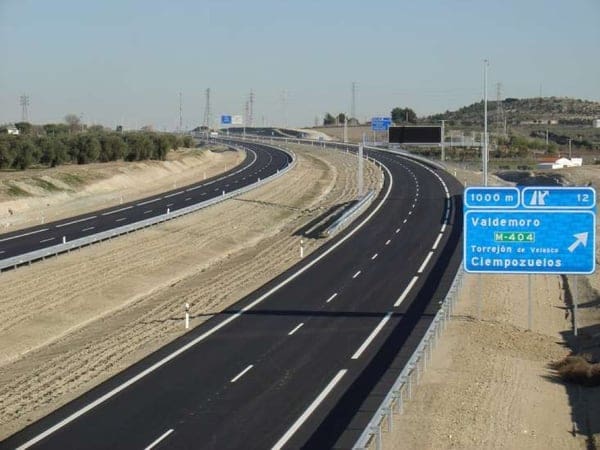
- For cars only.
- There are no access points to the adjacent properties, which must be taken into careful consideration when submitting requests for new access points.
- It cannot be crossed at grade by any other transportation infrastructure, which dictates the design of the interchanges to be built to connect with new roads.
- It consists of separate lanes for each direction of traffic, separated from one another.
Highways
- The difference from highways is that they can be crossed at grade by other road infrastructure and that traffic on them may not be limited to cars.
- In Spain, there are first-class highways, which makes it difficult to distinguish them from the former and often leads the public to confuse them.
2. Conventional highways
One conventional highway It is any road that does not meet the technical requirements of a highway or expressway. These roads have a single lane in each direction, no physical separation, and a lower speed limit.
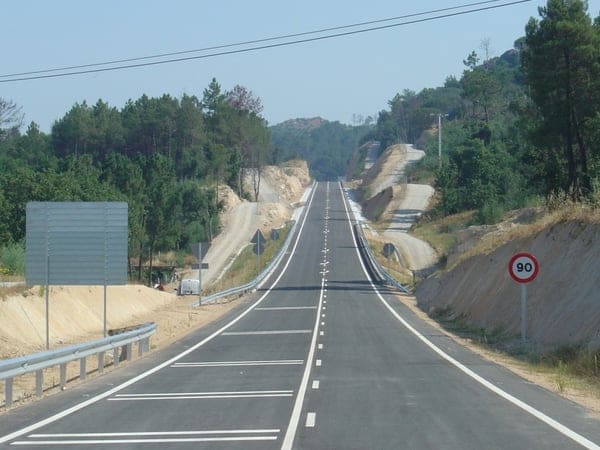
The difference between a conventional highway and a freeway It is clear: while the expressway offers greater safety, separated roadways, and grade-separated interchanges, the conventional highway allows for direct access, intersections, and a wider range of uses (including cyclists and farm vehicles).
3. Regional Highways
The state highways These are the roads owned and managed by Spain's autonomous communities. In other words, they fall under the responsibility of each regional government, unlike state highways (which are under the jurisdiction of the central government) or provincial/local roads (which may be under the jurisdiction of provincial councils or municipal governments).
4. Highways that serve as bypasses
The highways that serve as bypasses They are a specific type of highway (or freeway) whose main function is to completely or partially surround a city or metropolitan area. Its goal is to divert through traffic that does not need to enter the city center, thereby improving traffic flow and reducing congestion on the city's inner roads.
5. Roads in the provincial network
The provincial highways are managed by the Provincial Councils or Island Councils. They connect towns within the same province and link up with regional and national networks.
They play an intermediate role in the hierarchical structure of the Types of Roads in Spain.
6. Local roads in the municipal network
The local roads in the municipal networkThese are roads owned and managed by local municipalities. Their primary function is to connect different areas within the municipal boundaries, such as neighborhoods, residential developments, rural areas, farm roads, or access roads to municipal facilities.
These roads are typically used for local or neighborhood travel, with lower traffic volumes than provincial or regional roads. Although they are not designed for long distances, they are essential for residents’ daily mobility and the logistical operations of each municipality.
7. Highways or roads that are part of the European route network
The highways or roads on the European route network These are roads that are part of thethe Trans-European Transport Network, also known as E-road network. This network connects different countries on the continent via highways identified by the letter “E” followed by a number, such as the E-5 or E-90.
In Spain, many of these routes coincide with national expressways or highways, allowing for the smooth and uninterrupted flow of people and goods between countries. They are marked with green and white signs, which differ from the usual blue signs found on national highways.