Every day, the search for clean and renewable sources of electricity intensifies. For this reason, various countries are increasingly installing wind turbines to generate energy from the wind.
In this post, we explain how these onshore wind turbines are assembled, which allow us to convert wind energy into electricity.
Before construction begins, it will be necessary to quantify the damage and impact that the construction project has on the surrounding environment, since regional and local environmental authorities are paying increasing attention to the actual impact this facility has on the environment.
Prior to the installation of the wind turbines, it will be necessary to construct the access roads and internal roads. In the design and construction of these roads, it is necessary to take into account the needs of special transport vehicles, which are responsible for delivering the wind turbine components to the site.
The access road will be built using selected materials, with a layer of 40 centimeters of artificial gravel and a fine gravel finish, which is usually installed once the special transport operations have been completed. Generally, the vehicle that determines the weight the access roads must bear is the chain crane. The width of the access road is determined by the trucks that use it and must be between 5 and 6 meters of usable width on straight sections. Internal access roads are usually 10 meters wide so that the chain crane can move between wind turbines.
Once the special transport operations are complete, a layer of fine gravel is typically spread, and the slopes are replanted.
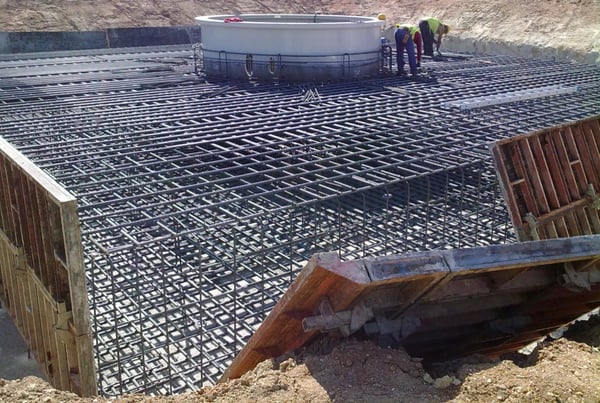
Without a doubt, of all Of all the phases involved in assembling a wind turbine, the most critical is the construction of the foundations. The foundation footings for a 2-MW wind turbine are about two meters high, and if they are square, they measure 15 meters on each side, although they do not necessarily have to be square or have a rectangular cross-section.
In order to begin gathering the components for the wind turbine, the first step is to apply for a transport permit. Specialized transport vehicles will be escorted throughout their journey, and the need to widen road shoulders, remove barriers, signs, or other road elements must be carefully assessed. It is also very important to take weather conditions into account during the transport of the wind turbine, as difficulties may arise, such as excessive dust or slippery conditions in the event of rain or snow.
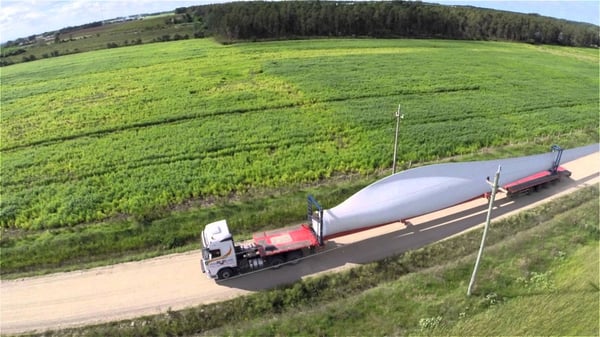
Once the wind turbines have been delivered, assembly begins. The assembly process for a wind turbine can vary depending on the manufacturer and also depends on the site where it will be installed.
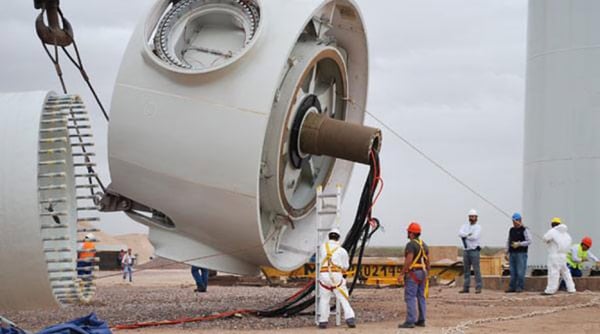
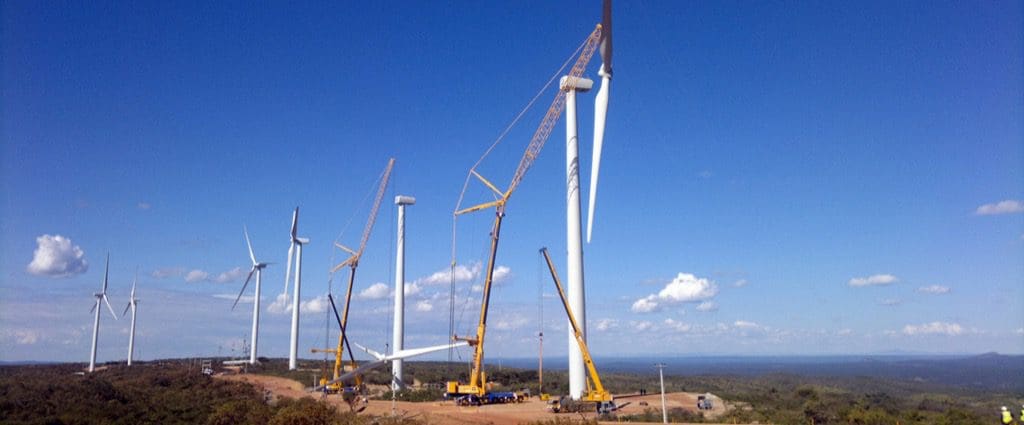
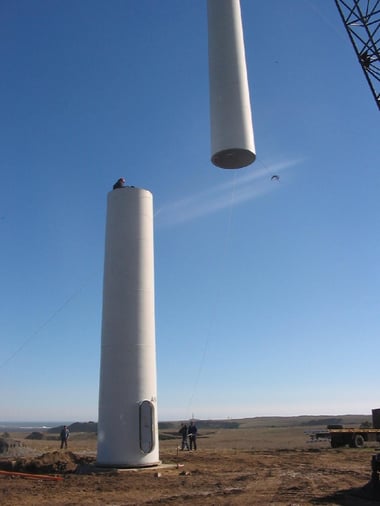
They are generally used two types of cranes, the first with a capacity of 200 metric tons, which, in addition to being cheaper, is easier to move. It is used to assemble the first two sections. The Another crane will have a capacity of 500 metric tons, and it will be used to assemble the rotor and the nacelle.
The nacelle is usually hoisted as a single unit, although it can also be hoisted in sections—but only for very large wind turbines, generally those with a capacity greater than 4 MW.
The The rotor can be hoisted while mounted on the ground and raising the rotor to a horizontal position, which requires the use of two cranes. Once it exceeds a certain height, it is placed in the anchoring position. It can also be hoisted with the hub attached to the nacelle, and then the blades can be attached one by one.
Once the wind turbine has been assembled, the electrical and hydraulic systems will be connected to enable it to begin operating.
If you'd like to learn more about Power Generation, check out our master's program:
Master's Degree in Power Generation: Development, Technology, and Operations