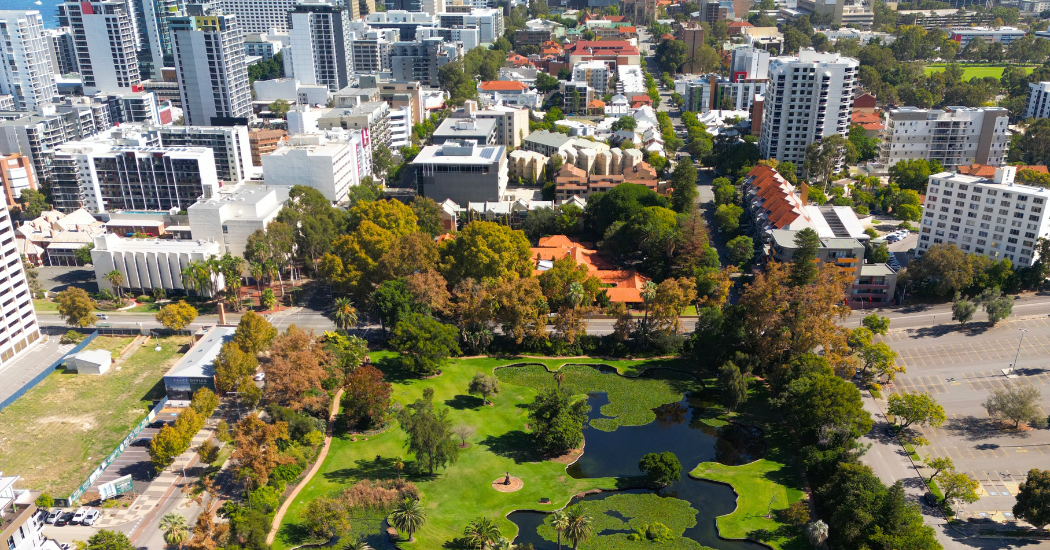
For large, congested cities, it has been shown that the green corridors are part of the solution.
A green corridor is the answer to urban mobility
In the development of large cities, The preservation of natural areas is essential to ensuring the quality of life of their residents. In this context, the green corridors are emerging as a vital solution, blending nature with the urban landscape. In this article, we will take an in-depth look at the The Importance and Benefits of Green Corridors in our cities, highlighting how these spaces not only beautify our surroundings but also promote health, well-being, and urban sustainability.
What is a green corridor, and what benefits does it bring to cities?
A green corridor is a vegetation belt that run through or cross urban areas, connecting natural spaces or parks within a city. According to the report «Urban Green Corridors: A Practical Guide,» published by the United Nations Environment Programme (UNEP), these corridors not only provide a refuge for urban biodiversity but also serve as routes that promote sustainable urban mobility, thereby having a positive impact on the environment and citizens’ quality of life.
In addition to improving biodiversity and mobility, green corridors offer a number of benefits to cities. They can also be called green lungs, since they filter polluted air and provide fresh oxygen to city residents. In some cases, they serve as a flood barrier that absorbs excess rainwater, and help reduce the risk of soil erosion. These green spaces also have a positive impact on citizens’ physical and mental health by providing areas for recreation, exercise, and relaxation, counteracting the effects of urban stress. We can say that, Green corridors are always a good initiative for a sustainable and livable city.
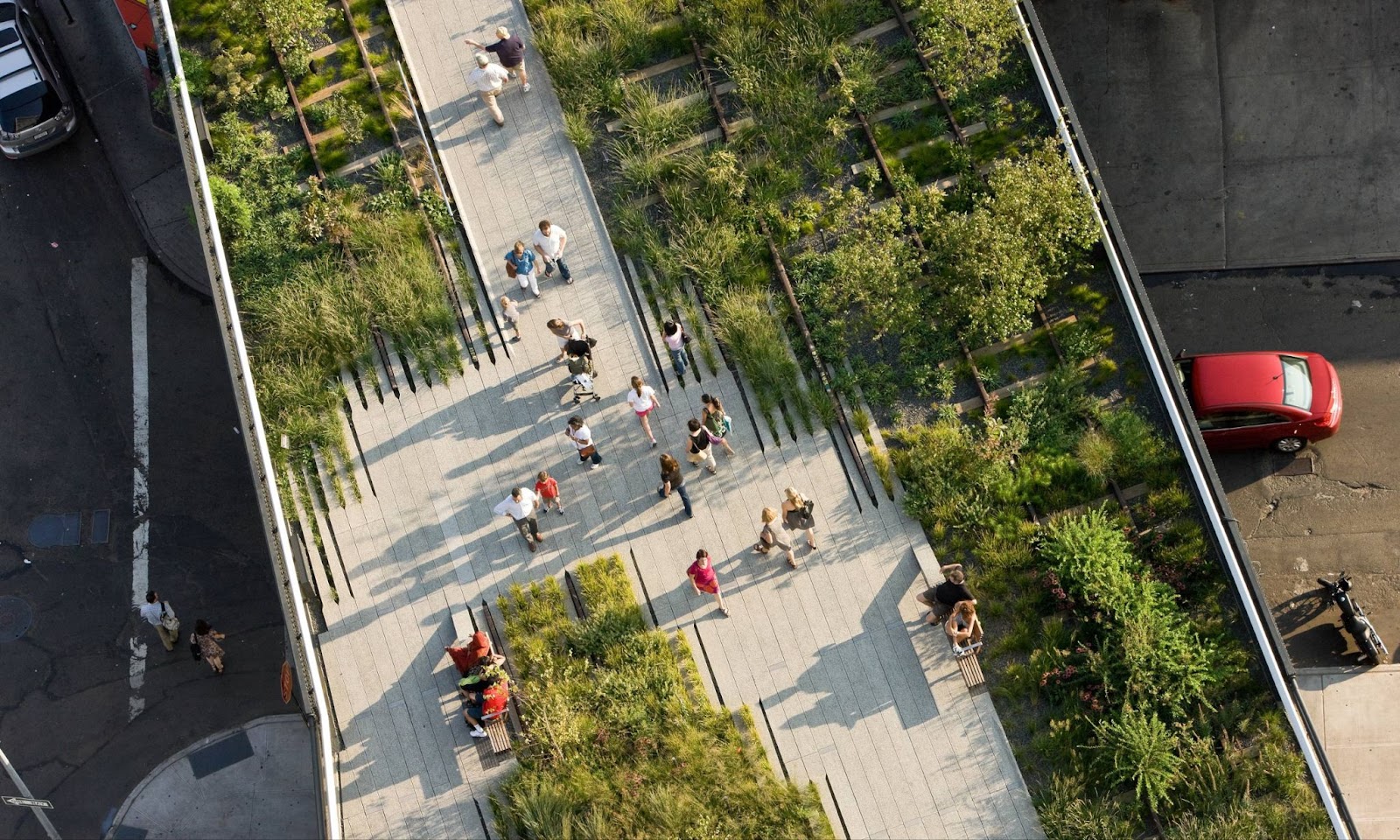
Aerial view of the High Line, New York's green corridor. Thehighline.org
Key Characteristics of a Green Corridor
Environmental Connectivity
A green corridor is characterized by its ability to connect or traverse natural spaces and green areas within an urban setting. This fosters favorable conditions for wildlife and plants, promoting biodiversity and maintaining the health of ecosystems within the urban environment.
Accessibility
Green corridors must be accessible to the public, providing safe walking and biking routes. Accessibility is key to ensuring that these spaces are used by everyone and to promoting recreational activities and sustainable mobility.
Ecological Function
In addition to their aesthetic and recreational value, green corridors perform important ecological functions. They act as natural filters, purifying the air and reducing smog, as well as providing shelter for certain types of wildlife that can coexist in the city. They also help mitigate the effects of urban heat island by providing shade and lowering the ambient temperature.
Urban Resilience
Green corridors increase cities’ resilience by reducing the risk of flooding and soil erosion, as they filter and absorb excess rainwater. This is crucial in the context of climate change, where extreme weather events are becoming increasingly frequent.
At this point, it is essential to understand how they complement other critical infrastructure, such as the components of the sewer system, which are responsible for efficiently collecting and conveying wastewater and stormwater.
Health Promotion
A key aspect of green corridors is their role in promoting exercise and outdoor activities. These spaces provide areas for exercise, recreation, and connection with nature, helping to reduce stress and improve the quality of life for residents and visitors.
In short, green corridors are multifunctional spaces that not only enhance the aesthetics of the urban environment, but also cThey contribute to the sustainability, health, and resilience of cities.
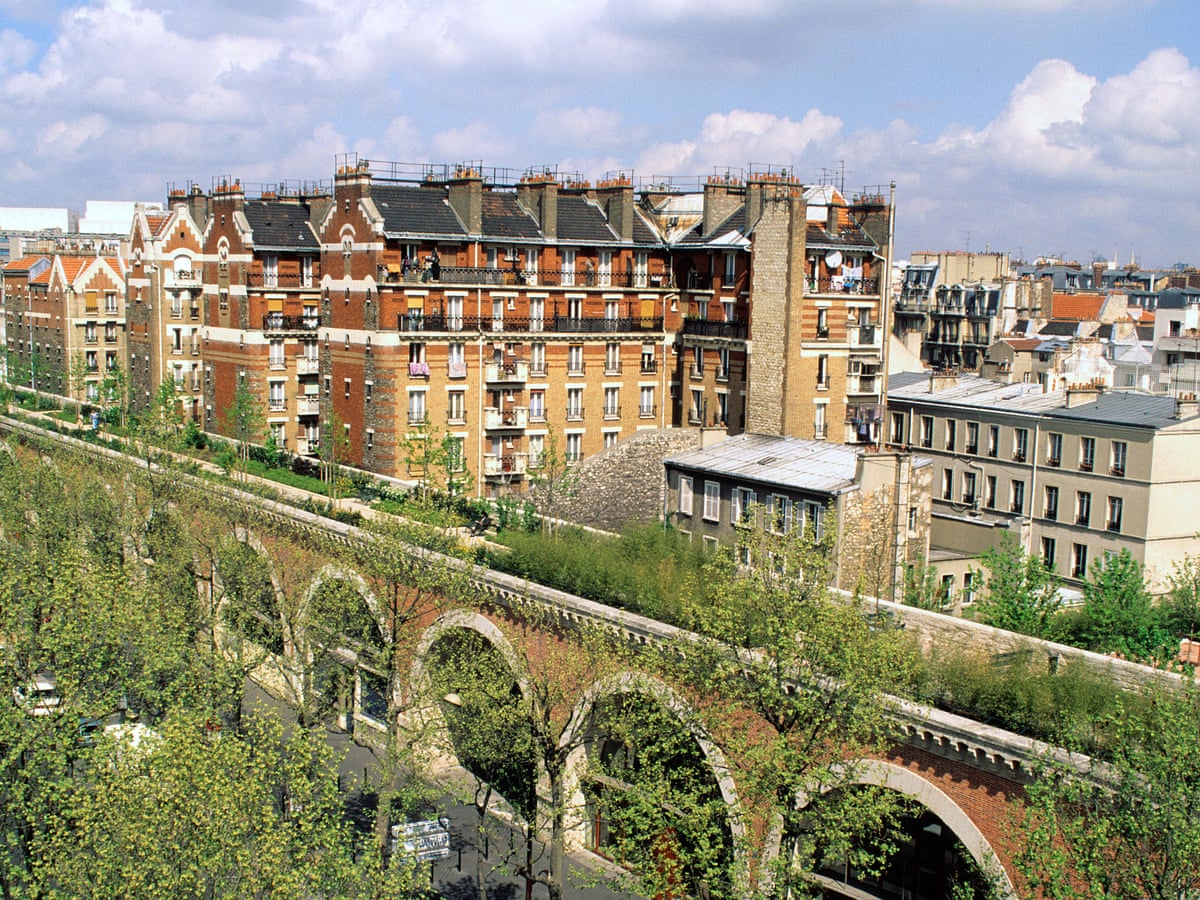
View of the Promenade Plantée, Paris's green corridor. The Guardian
Examples of Green Corridors Around the World
1. High Line, New York, United States
Located in New York, it is an exemplary linear park built on a historic elevated railroad track in the borough of Meatpacking District, Manhattan. This exceptional green corridor provides a unique public space, enriched by lush gardens, artistic expressions, and panoramic views of the city, which has breathed new life into a previously run-down urban area.
2. The Emerald Necklace, Boston, United States
Designed by the renowned landscape architect Frederick Law Olmsted, The Emerald Necklace is an intricate network of parks that encircles the city of Boston. This green corridor includes iconic sites such as the Boston Common, the Public Garden and the Arnold Arboretum, thereby providing easily accessible green spaces for city dwellers and enriching the environment with their natural beauty.
3. Promenade Plantée, Paris, France
Better known as the Coulée Verte René-Dumont, it is a unique green corridor built atop a historic elevated railroad line in eastern Paris. This picturesque elevated walkway is adorned with lush gardens, trees, and flowers, providing an urban oasis for pedestrians and cyclists and adding a touch of serenity to the bustling city.
4. Cheonggyecheon, Seoul, South Korea
Cheonggyecheon, a restored stream that winds through downtown Seoul, is a remarkable example of urban revitalization. This ambitious project transformed a former covered canal into a linear green corridor featuring pedestrian paths, waterfalls, and recreational areas. As a result, the heart of the city has been revitalized, creating a vibrant urban space and significantly improving the area’s environmental quality.
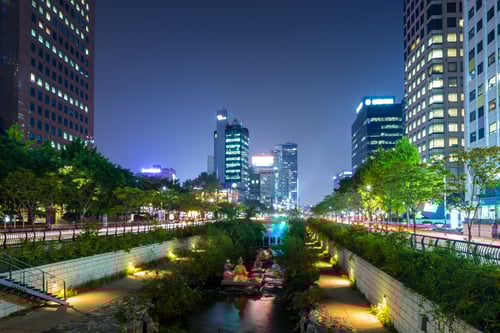
View of Cheonggyecheon, Korea's green corridor.
In conclusion, green corridors are emerging as a clever and necessary response in the face of contemporary urban challenges. Its ability to blend nature with the urban landscape not only beautifies our cities, but also significantly improves the quality of life for those who live there. From promoting biodiversity to creating healthy and accessible spaces, Green corridors are an investment in sustainability and urban well-being.
For those interested in delving deeper into the topics of urban sustainability and eco-friendly architecture, we invite you to explore Structuralia’s extensive catalog of online courses and master’s programs. Among them, the Master's Degree in Energy Efficiency and Sustainability in Building Construction, a unique opportunity to gain specialized knowledge and actively contribute to building greener and more resilient cities.