Unique Roofs: Form, Function, Efficiency, and Sustainability. In this post, take a look at some of the some of the most iconic roof structures on the planet.
From the earliest examples of architecture to major engineering projects, roofs have played a vital role: providing shelter and offering a technical and structural solution for the upper enclosure, as well as a sAn insulation solution tailored to the site's climatic conditions.
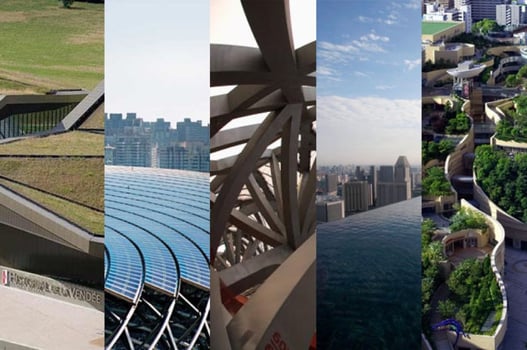
With technological advances, the functional, structural, and aesthetic evolution of roofs has given rise to endless possibilities and new solutions. In addition to optimal thermal performance, acoustic, water-repellent, and structural, They have taken center stage and expanded their functions, becoming—depending on the case—more environmentally friendly, designed for public use, energy-efficient, with large spans, transparent, and lightweight. Going beyond the building envelope and maximizing their potential, they blend into the landscape, reduce environmental impact, express new forms, and—in many cases—create spaces in and of themselves.
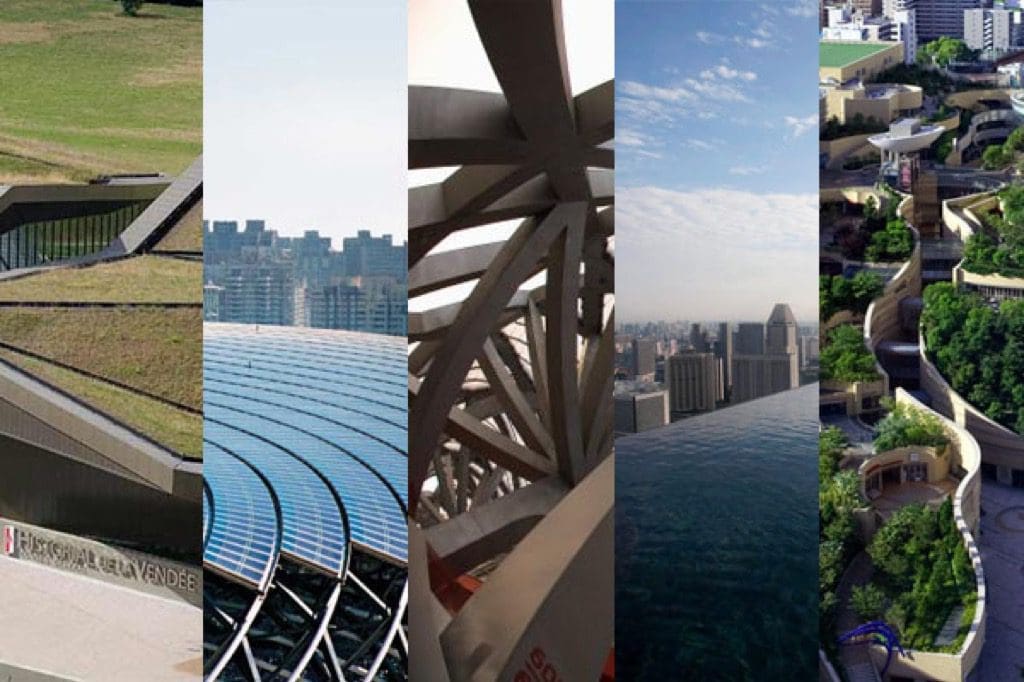
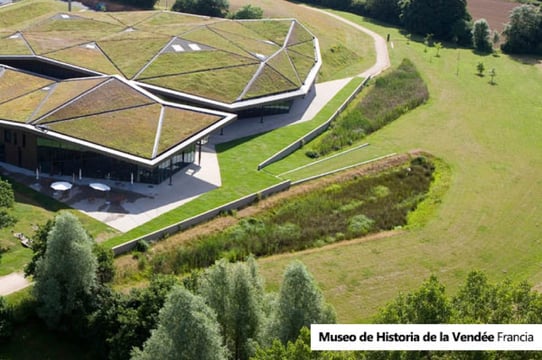
Some notable examples with unique roofs include the Vendée History Museum, in France, where the green roof—integrated into the landscape—fulfills its insulating and waterproofing functions in an environmentally responsible and sustainable way.
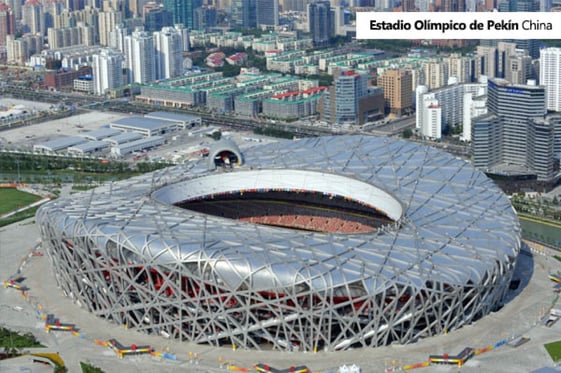
Among the energy-efficient buildings, the stadium in Toyo Ito in Taiwan, covered by 8,844 photovoltaic panels, which generate power for the building's own use and feed the surplus into the power grid; and the Beijing Olympic Stadium, designed by Herzog & De Meuron, whose seamless transition between the side and roof enclosures creates a building envelope featuring an advanced water recycling system and a system for collecting both cold and hot air.
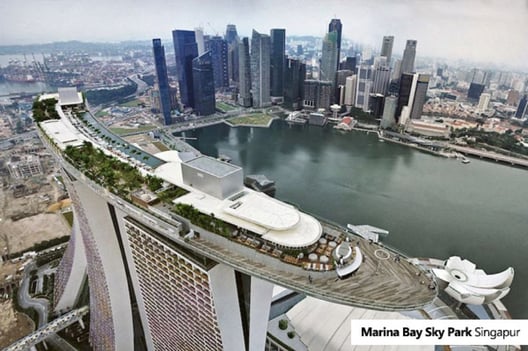
Two walkable rooftops that maximize usable space while taking advantage of the city views are the Sky Park Terrace in Singapore, an open-air park with a pool, recreation area, observatory, and wooded garden at an elevation of 200 meters; and the Namba Park in Japan, on a 120-meter-tall office building featuring an amphitheater, an urban garden, and an observation deck right in the heart of Osaka.