Originally published on October 31, 2022; updated on April 6, 2023
The difference between cement and concrete It's when one is used as the basis for the other; here's how it works.
Cement and concrete are two of the most commonly used materials in construction. In fact, there are many people who They think they're exactly the same, and people use these terms interchangeably. However, although they have many similarities, in reality Cement and concrete are not the same material.. In this article, we'll explore the difference between cement and concrete, and what each is used for.
What is the difference between cement and concrete?
Cement and Concrete These are two compounds so commonly used in construction that they can both cause confusion; one might even think that mortar and reinforced concrete They are identical materials with different names.
But nothing could be further from the truth, since there are significant differences in the composition and usefulness of each of these materials, knowledge that is essential for professionals working in the construction industry.
There is a fairly significant difference between hormigón and concreto. In this regard, the most important thing to know is that To create one of them, you need the other. With this in mind, it will be very easy for us to identify both materials when using them on a construction site, during a renovation, or when making a decorative element or trim.
Source: www.cnec.org.mx
Cement and Concrete Throughout History
We can say with certainty that the confusion between these two materials has existed for a long time. Both were first used during periods in history that were very close together, and for purposes very similar to those for which we use them today.
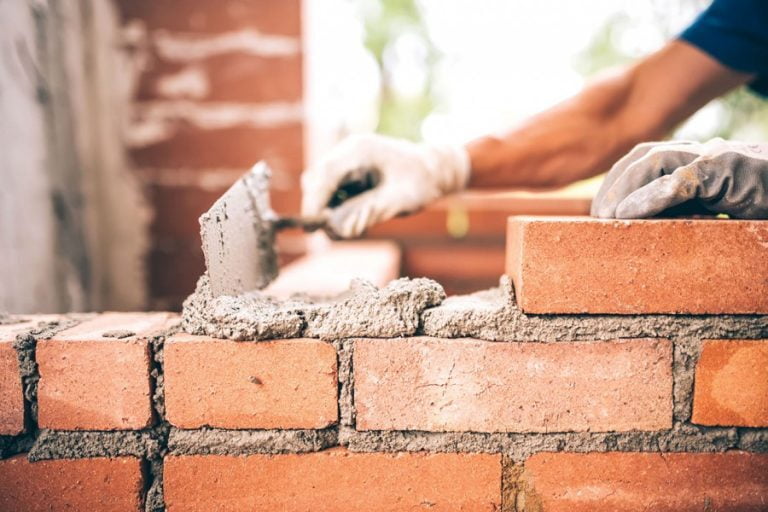
In Ancient Greece, it was discovered that when water was added to a mixture of clay, plaster, and lime with volcanic tuff, the result was a mixture well-suited for join masonry blocks in the buildings of that period.
That is how they emerged and spread the first natural cements, and were later improved in the 1st century B.C., in Ancient Rome, where they discovered that by adding volcanic ash obtained from Pozzuoli The final result was much more durable.
It was right there that they decided to add pieces of rock or pottery to the wet mixture and shape building materials from it, giving rise to the first rough outline of what would become concrete.
Cement
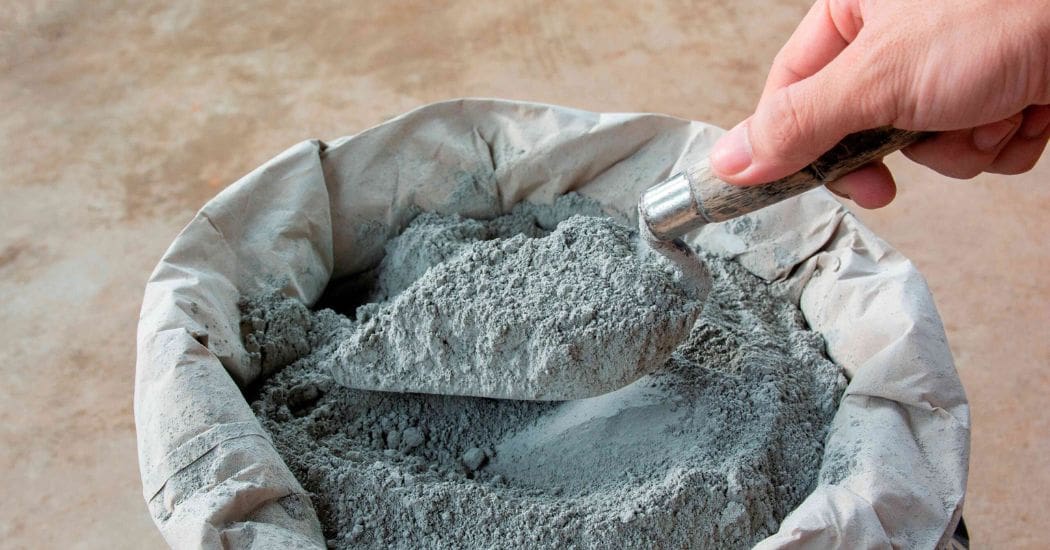
As we have probably already figured out, cement is the name given to the mixture invented by the Greeks, which, when it comes into contact with water, hardens so that to be used as mortar or for create smooth surfaces thanks to its malleability.
It is a very versatile blend, since, depending on the proportions of the various components in the mixture, they can be used for different purposes, including, as a fundamental base for concrete production and reinforced concrete.
Concrete
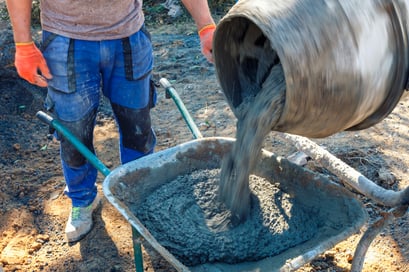
The concrete, also known as “concreto” in several Spanish-speaking countries, is a material made from a binding agent, which is usually Portland cement, mixed with a specified proportion of water, various types of aggregates, and, in many cases, additives that give the material specific properties.
It is a material with high resistance capabilities and capable of taking on almost any shape and maintaining it, and generally used for structural purposes It is reinforced with iron bars on the inside that improve its mechanical performance, and it becomes known as reinforced concrete.

Source: pavex.es
Differences Between Cement and Concrete
To better understand the difference between cement and concrete, here is a summary of the main differences between the two:
-
Cement is a material known as a binder, which serves as the basis for mixtures and for creating different types of materials, mortars, and concretes.
-
Using cement alone, we cannot create materials with mechanical strength high enough to be used in structures.
-
Due to its composition of materials and aggregates of certain sizes, concrete is unsuitable for use as a bond between different masonry elements.
-
Within the concrete mix A variety of aggregate sizes can be used, allowing you to vary the properties of the mixture. This is not possible with cement.
This brief list gives us a quick overview, helping us clearly see the difference between the two materials and understand where it comes from. If this has piqued your interest, we invite you to explore in depth the various applications and the different types of materials and components that can be made from the cement and concrete on the Structuralia blog.