History can show us the origins of a profession as important as the industrial design, and its examples, its wide range of possibilities.
Industrial Design and Its Most Notable Examples
All the objects around us have characteristics that can make them seem more or less useful, beautiful, ugly, organic, rigid, overloaded, abstract—in short, sensations they convey to us, regardless of their function, through their physical and symbolic characteristics. Industrial Design, along with other fields of design and art, ensure that the objects we use or that surround us, are capable of conveying much more to us than just functionality and efficiency, so that these objects gain added, intangible value.
The History of Industrial Design
If we try to trace the origins of industrial design, we will be forced to go back to the very need to create objects or tools that have served humankind since its earliest days. The closest equivalent we can find in ancient times is the figure of the artisan, who devoted himself to creating unique everyday objects, whose designs and manufacturing techniques were jealously guarded by the artisan himself, since the value of his craftsmanship lay in the authenticity of each piece.
The Industrial Revolution
The next major milestone in industrial design would undoubtedly be, the Industrial Revolution. Starting in the 18th century, the final product would no longer depend so much on the craftsman's technical skills, since certain things began to emerge machines that were capable of mass-producing the same object. The Industrial Revolution forced a paradigm shift, which led to the emergence of the role of the designer, who, through the design of the piece, was able to give it added value regardless of his manual skills.
The “Werkbund” and the Bauhaus
By the early 20th century, industrial design was already quite firmly established in society, and discussions were beginning to arise about its true purpose. Naturally, different schools of thought began to emerge, particularly in Germany at the turn of the century; as a result of various sociocultural upheavals, a series of professional groups with a creative focus (artists and artisans) known as the “Werkbund.” Their goal was to use industrial mechanization processes to manufacture a variety of everyday and decorative objects.
And this ecosystem of artists and artisans would lead, in 1919, to the creation of the Bauhaus in collaboration with Walther Gropius, known as the first training center for graphic and industrial designers. Despite its short existence, the Bauhaus would mark a turning point in industrial design, succeeding in producing a large number of objects at low cost and with a high level of quality and design.
Industrial Design Today
Today, industrial design, also known as product design, is the department responsible for the creation and development of all types of products, ranging from the conceptualization of an idea, going through the process of prototype manufacturing, and finally the mass production. Globalization has led to a separation between the roles of artisan and artist, transforming the profession into a multidisciplinary field in which great importance is placed on the market and on innovation in the design and manufacture of all kinds of products.
Industrial Design Processes
The Vision and Product Strategy
The goal is to establish a more or less defined roadmap that is specific enough to know what we want to design, yet flexible enough to accommodate changes along the way. The aim is to develop a clear vision and a strong roadmap that can be easily communicated to collaborators and stakeholders.
Research
It involves striving to acquire all the technical, regulatory, economic, and even historical knowledge that will help us avoid repeating past mistakes, while at the same time paving the way toward our ultimate goal.
User Analysis
This would be the stage where we seek to draw conclusions based on the data and feedback gathered during the earlier stages. The goal is to obtain a fairly clear picture of the landscape in which the product will operate, its potential, and the possible risks.
Ideation
This is the most creative part of the process, where bold assumptions and ideas are welcome to help shape the final product. It is a stage that relies heavily on the exchange of ideas and constructive criticism.
Design and Prototyping
At this stage, the goal is to wrap up and bring to fruition all the work done in previous stages, building a prototype of the product so that it can later be tested in every possible way, with the aim of analyzing it objectively in light of the objectives set at the beginning of the design process.
Manufacturing and Industrialization
If the designed prototype is capable of meeting the objectives and expectations established throughout the process, it is finally time to launch it on the market and mass-produce it, if applicable, distributing or implementing it depending on the type of product that has been created.
It is important to clarify that There is no foolproof formula In industrial design, every designer and every product presents different challenges that require different solutions. So, how do you know that It is often necessary to take a step back and rethink the path at any stage, and that this, far from being considered a flaw, often results in the best products.
Examples of Industrial Design and Their Creators
 Thomas Heatherwick

Heatherwick He is one of today’s most renowned designers thanks to his recent creation in New York, “The Vessel”—the best-known interactive monument of this century; yet the London-based designer’s work spans architecture, sculpture, street furniture, retractable bridges, and even buses.
 Richard Sapper
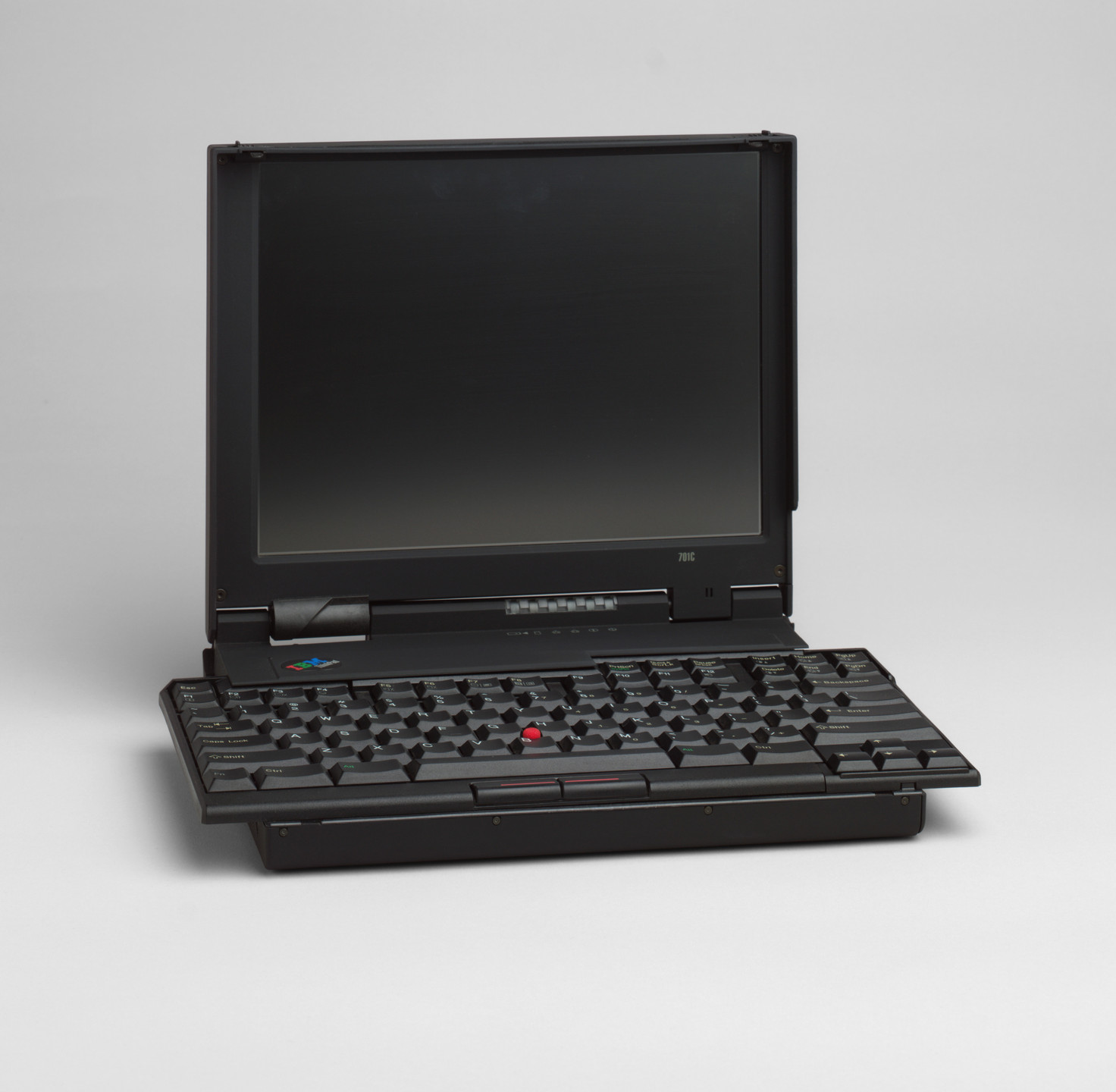
One of the most prominent designers of his generation, he is best known for his “Tizio” lamp, the “9090” coffee maker for the Alessi brand, and above all, for his collaboration with IBM on the design of its “ThinkPad” line of laptops, replacing the monotonous gray of earlier models with an elegant black color and a much more minimalist design.
 Bruno Munariichard
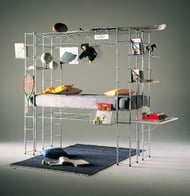
With a slightly stronger connection to the arts, Munari is one of the figures responsible for the recognition of the famous “Italian Design.” He dominated the design scene throughout the 1950s and 1960s, thanks to creations such as the “abitacolo” and the “Falkland” lamp. At the same time, he was also active in editorial design and created many children’s games and workshops.

Philippe Starck
The French designer, known worldwide for his futuristic “Juicy Salif” juicer for Alessi, is also renowned in the worlds of architecture and mobile phone design, having collaborated with “Motorola” and, more recently, with “Xiaomi.”.
 Charles and Ray Eames

This American design duo is responsible for some of the world's best-known and most widely reproduced pieces of furniture. Vitra currently owns the furniture collection, which includes the world-famous Lounge Chair, the Eames Fiberglass, among many other items, including blankets, desks, and decorative pieces.