The Padre Tembleque Aqueduct (Mexico), which was built in the 16th century and is located in what are now the states of Mexico and Hidalgo, has been inscribed on the UNESCO World Heritage List. Mexico is the Latin American country with the most sites on this list.
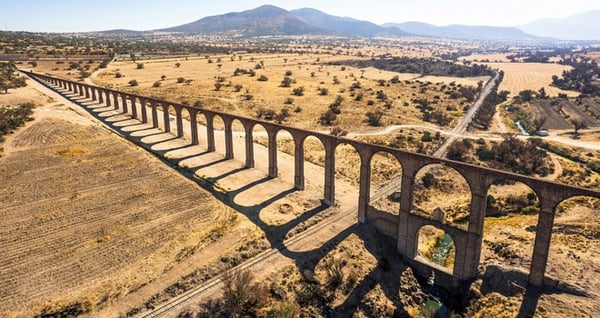
This aqueduct, built of basalt stone, is over 48 kilometers, which feature a total of 6 archways, some of which reach heights of up to 40 meters. Its construction took 17 years, during which more than 40 indigenous communities collaborated on the project.
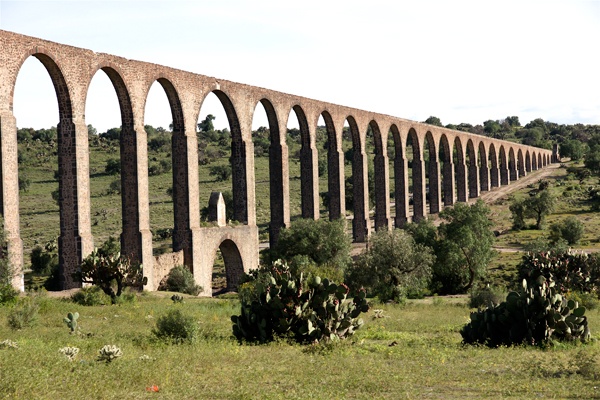
Its construction reflects a combination of two distinct techniques: the technical recommendations of the Renaissance architect Leon Bautista Alberti and the use of materials of pre-Hispanic origin. Some notable construction features of the aqueduct include: the construction of the main arch using adobe formwork, and the use of a bonding agent known as “bruñido,” which is a mixture of water, lime, agave sap, and honey.
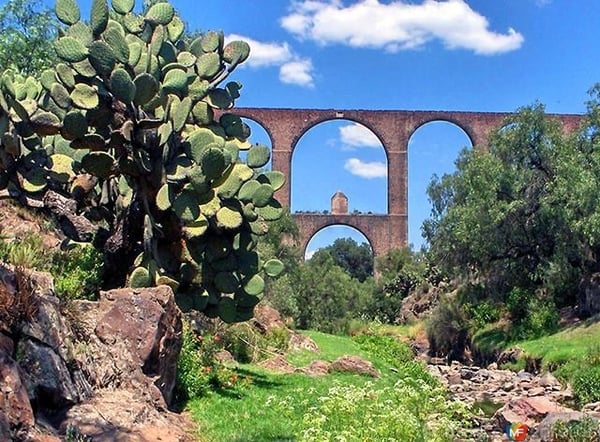
This hydraulic engineering project has more than 400 years old, but despite this, it is structurally sound, although some restoration and conservation work has had to be carried out.
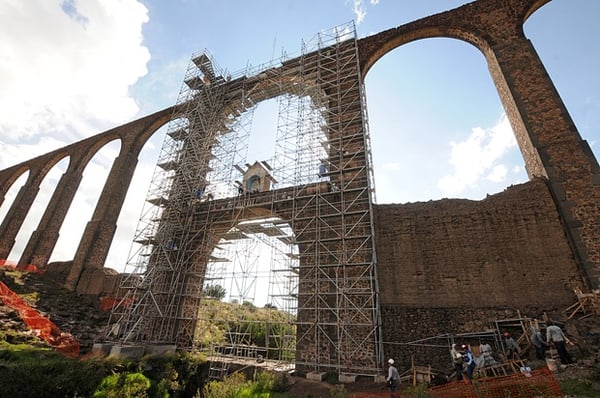
Its construction was prompted by the severe water shortage in the area, and it was designed when the Franciscan friar Francisco de Tembleque arrived from Spain and realized the extent of this problem, thereby providing water to many indigenous communities in the area.
Mexico is the Latin American country with the most UNESCO World Heritage sites, with a total of 33, and ranks sixth worldwide.