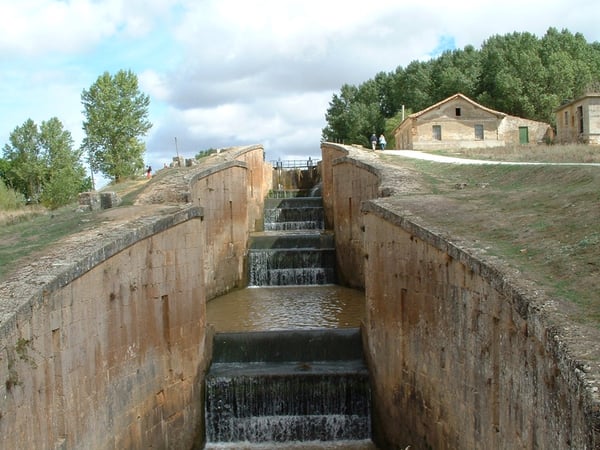
The Canal de Castilla runs through the provinces of Burgos, Palencia, and Valladolid in Castile and León, Spain, and is one of the most important hydraulic engineering projects undertaken in the country between the 18th and 19th centuries.
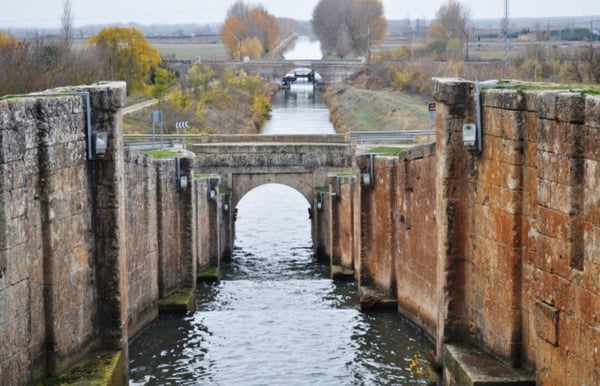
This channel has a 207 kilometers long and one width ranging from 11 meters to 22 meters. Its The average depth is 1.8 m., but in some sections it reaches a maximum of 3 m.
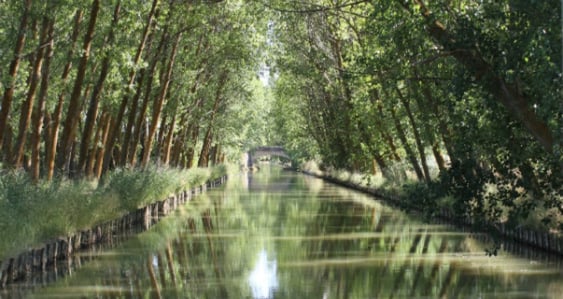
Along the Canal de Castilla, we can find a a series of bridges and aqueducts, whose primary mission is to ensure that the canal can intersect with other transportation routes and cross other waterways.
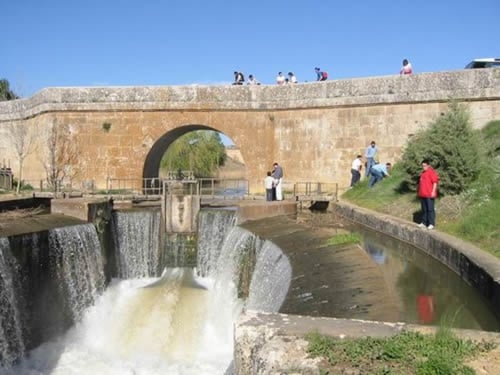
A series of docks were also built for activities related to shipping, such as loading and unloading, as well as a few reservoirs used for irrigation in the area.
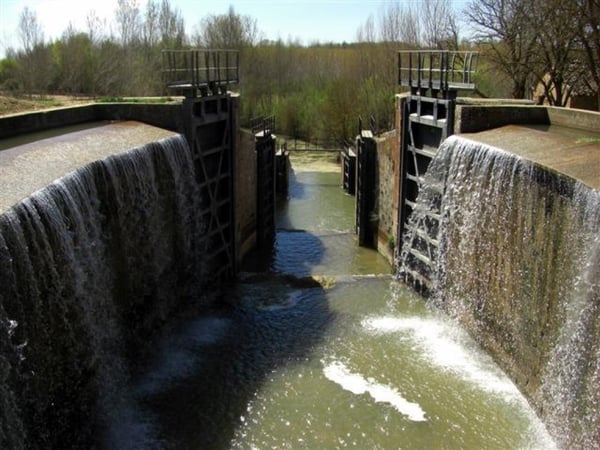
One of the most notable features of this Spanish hydraulic engineering project is its locks. These allow ships to navigate even when there is a 150-meter elevation gain. There are a total of 49 locks along the entire 207-kilometer length of the Canal de Castilla.