The word «container» refers to the large containers commonly seen at seaports or on long stretches of railroad track, but do we really understand the entire multimodal system that revolves around them? Today we’ll try to explain it to you—be sure to pay close attention.
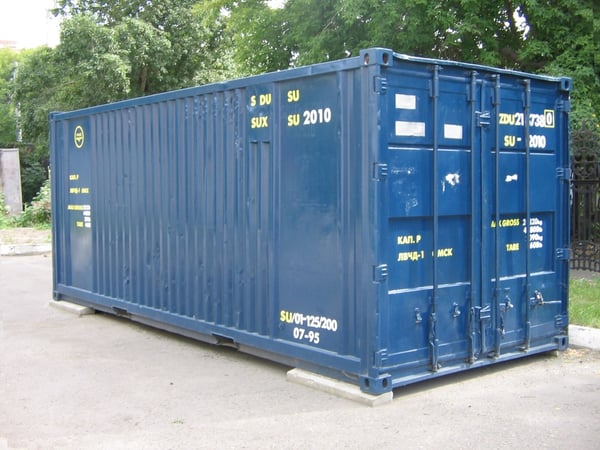
The aforementioned container represents the basic unit of multimodal transport, whose dimensions are standardized to facilitate their use in various modes of transportation. Physically, it consists of a metal container into which the items to be transported are placed, thus providing a protected and optimal space for them; in some cases, these containers are refrigerated and watertight.
The size of these elements is given in TEUs (Twenty-foot Equivalent Unit), that is, a 20-foot container. This figure refers to dimensions of 6.1 m long by 2.4 m wide by 2.6 m high, which form the basis for the measurement system. For example, there are 2-TEU containers, or, as they are commonly referred to, 1-FEU (Forty-foot Equivalent Unit) containers.
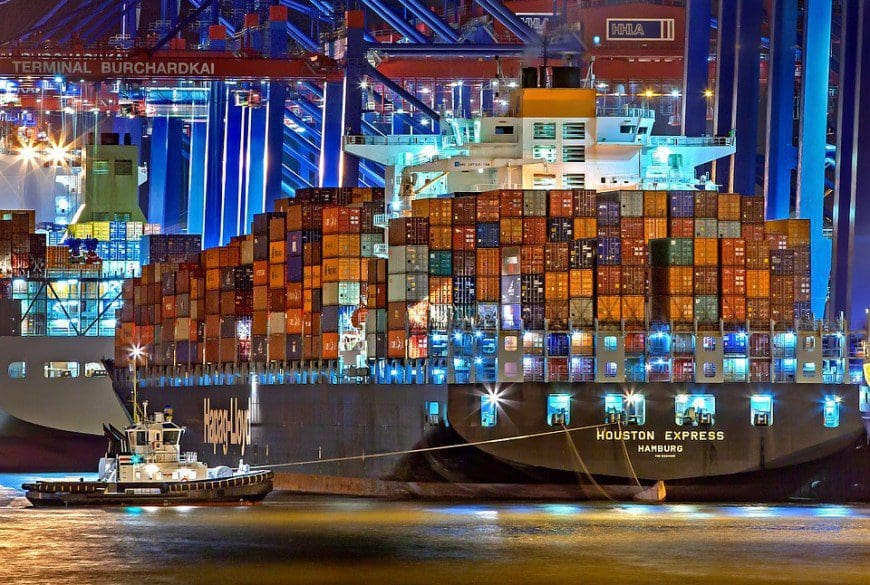
Consequently, in an increasingly globalized world, this results in a high volume of port traffic, since A container ship can carry about 20,000 containers. This is the case with the MOL Triumph, the largest in the world, with overall dimensions of 400 meters in length and 60 meters in beam.
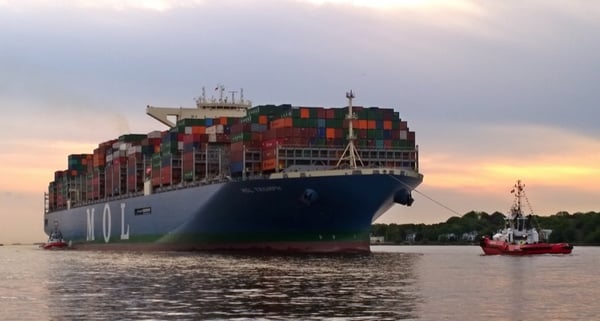
Once the cargo reaches its destination, the containers must be properly unloaded and transferred to another mode of transportation, a ship, or within the port itself (a task known as stowage) takes place over a short period of time, facilitating a quick transfer of content.
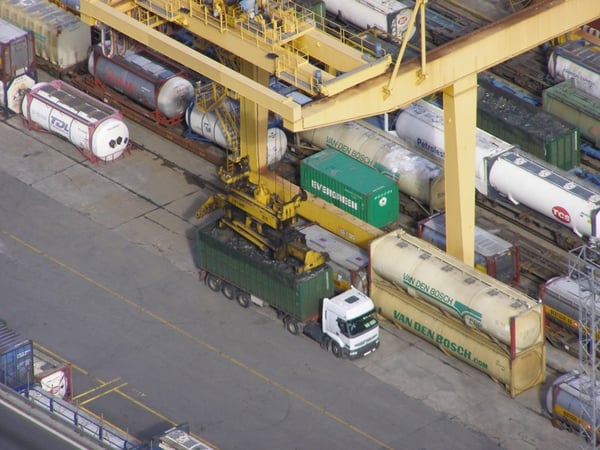
As a result, it is common to see, in the vicinity of major ports, a a long line of trucks who are walking with one of these containers on their backs; as well as long trains that run parallel to these transportation routes.
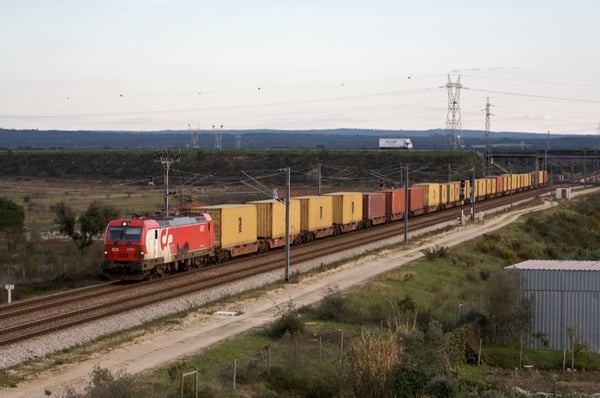
The importance of multimodal transportation lies in the smooth flow of goods as they are transferred from one mode of transportation to another, which is made possible by the so-called «container.».