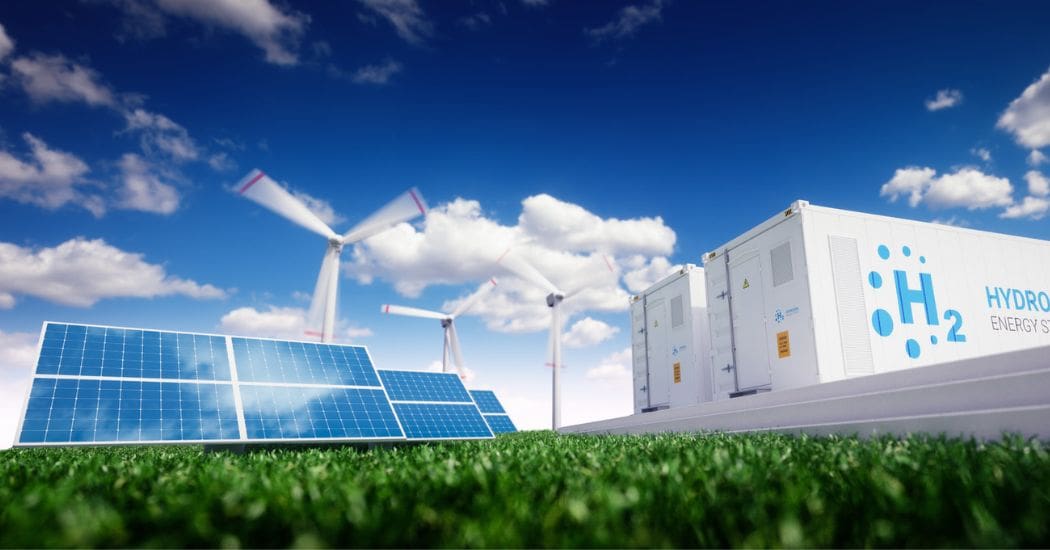
Find out how the hydrogen electrolyzers contribute to a future with clean energy in this article.
.
What types of electrolyzers are there?
There are different types of devices that perform this function, each with specific features and applications. Among the most common are:
1. Ion-Exchange Membrane (IEM) Electrolyzers
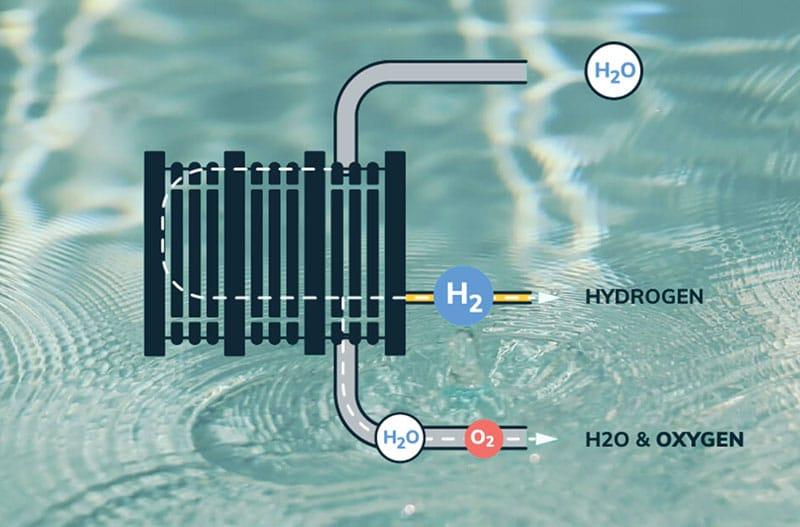
They are the most widely used in the industry due to their efficiency and stability in the electrolysis process. They use a membrane to separate hydrogen and oxygen ions, resulting in higher-purity hydrogen.
2. Acid Electrolyzers
These devices use an acid as an electrolyte and are best suited for applications that require a larger amount of hydrogen. However, they typically require more maintenance and are less efficient than MEI electrolyzers.
3. Alkalinity Electrolyzers
These batteries use an alkaline solution as the electrolyte and are best suited for applications that require a greater amount of oxygen.
4. Plasma electrolyzers
They are the least commonly used due to their high complexity and cost. They use plasma to break down water into hydrogen and oxygen, and they allow for greater efficiency in the electrolysis process.
This is how needs-based electrolysers are marketed
Electrolyzers designed for hydrogen production are marketed through various channels, depending on the end use of the hydrogen produced.
Some of the most common uses are:
-
Hydrogen Sales: Once hydrogen is produced, it can be sold to companies or industries that use it as fuel for engines in trains and vehicles in general.
- Electricity generation: In this case, the hydrogen produced generates electricity through a chemical process. This electricity can be sold to power grids or to industrial customers.
- Energy storage: Electrolyzers can also be used to store renewable energy, such as solar or wind power. In this case, excess energy is used to produce hydrogen, which can then be used as fuel when needed.
-
Self-consumption: A factory could use an electrolyzer to produce hydrogen and use it as fuel for its production processes.
Why is hydrogen such a good option for clean energy?
If one had to highlight one main characteristic, it would be that hydrogen is an ideal option for clean energy, which, in turn, can be used to generate other renewable energy sources, such as solar energy and wind power. This means it does not contribute to greenhouse gas emissions.
-
It is versatile. It can be used in a wide variety of applications, such as transportation, power generation, energy storage, and industry.
- It is sure. It can be stored and transported safely. This is because it is non-toxic, non-flammable at low pressure, and does not produce toxic gases.
- It is highly efficient thanks to its high energy density. This means that it can store a lot in small spaces.
Who are the leaders in the field of hydrogen electrolyzers?
There are several pioneering companies that are using hydrogen as a source of clean energy. Today, we can find examples of its application in areas such as oil refining, as well as in steel production and electricity generation.
As a result, there are companies dedicated to hydrogen production. One of them is Linde PCL, which announced in July 2021 that it would begin operations at its new plant in Liquid H2 in Texas. With this facility, the company claims to have the capacity to supply more than 30 metric tons of high-purity liquid H2 per day.
Likewise, the Messer Group, a partner of Siemens Energy in promoting H2 projects green in the range of 5 to 50 megawatts (MW). The goal is to develop mobility and industrial applications.
In addition to these, there are other names such as Air Liquide International S.A.., Air Products and Chemicals, Inc. And also Reliance Industries, Ltd.., Cummins Inc.. and Parker Hannifin Corporation. These companies are investing in hydrogen production and distribution to drive the transition to clean energy.
Finally, the use of hydrogen electrolyzers to produce green hydrogen is a growing trend that will continue to expand in the future. This is due to the need to find clean, reliable, and sustainable energy alternatives to meet energy demand.
At this point, hydrogen electrolysers are the key to providing a viable solution for producing green hydrogen. To learn more about this topic, feel free to enroll in programs offered by the knowledge and the skills needed to successfully tackle any type of related project, from the conceptual phase through the strategic phase. With these advances and knowledge, we will be able to achieve a future with lower emissions and less carbon footprint and better air quality.