This test is conducted to determine the strength of a soil sample subjected to various forces, simulating the conditions that will exist in the field.
It's normal to rehearse 3 or more samples, under different normal loads, determining its shear strength, displacement resistance, and strength properties based on the Mohr–Coulomb envelopes.
The soil sample will deform when a force is applied at a controlled rate, resulting in the formation of a failure plane. Through this test, we can determine the strength properties of drained and consolidated materials relatively quickly.
Within this test, various types of tests can be performed: consolidated-drained, consolidated-undrained, unconsolidated-undrained, and multi-pass tests after failure.
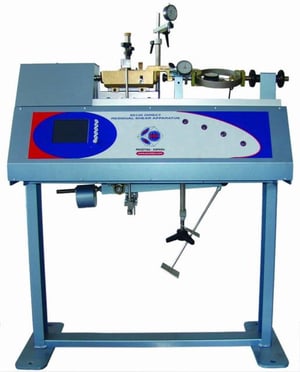
The instrument used for the strength test is specifically designed for this purpose and is known as direct-cut machine. This instrument must provide the ideal conditions for applying normal forces to the faces of the specimen and be capable of applying a shear force to the specimen along a shear plane parallel to the faces, while also measuring the resulting displacement.
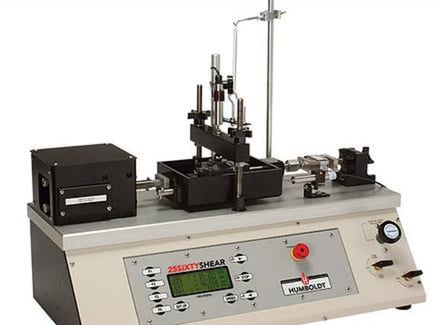
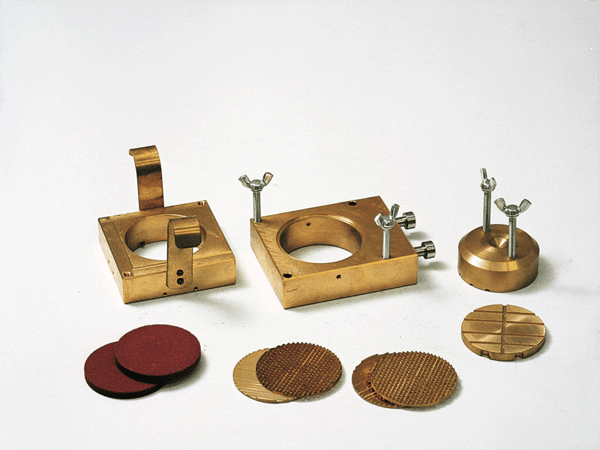
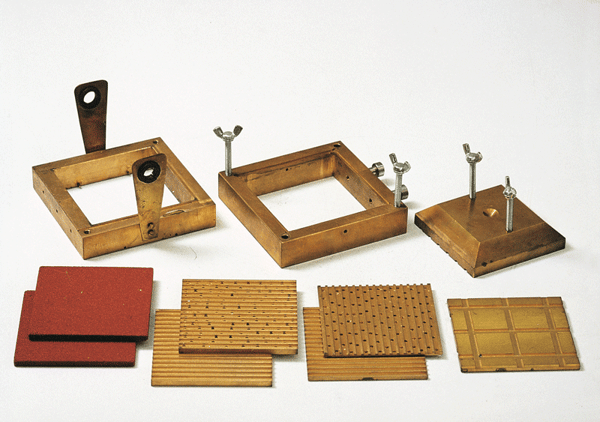
The cutting box It can be made of stainless steel, bronze, or aluminum, and can be circular or square. This housing has drainage openings at the top and bottom and is divided horizontally into two sections. It has spacer screws that control the gap between these two halves, other screws that secure the two halves to the housing, and alignment screws, which are designed to keep the two halves tightly fitted together.