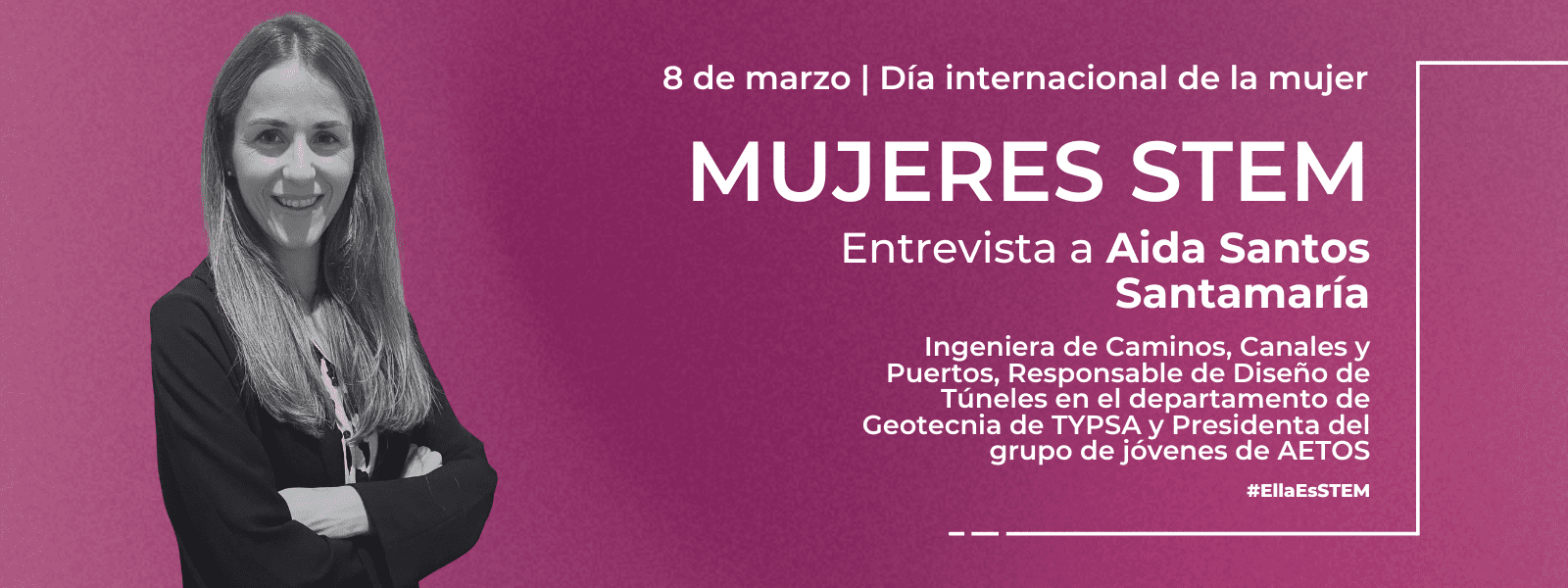
EllaEsSTEM: Women Leading Engineering and Innovation
In a world where infrastructure defines progress, civil engineering plays a key role in transforming our cities and connecting regions. However, despite its impact, the engineering and construction sector continues to face challenges regarding gender equity. Although more and more women are choosing careers in STEM (Science, Technology, Engineering, and Mathematics), their representation in leadership positions remains a challenge to be overcome.
As part of the International Women's Day, Structuralia Launches the Campaign #EllaEsSTEM, an initiative that aims to highlight women who are making a difference in the sector. Through interviews with outstanding alumnae and faculty members, we want to inspire new generations and demonstrate that women’s talent is a key driver of innovation and development.
Today we'll learn about the story of Aida Santos Santamaría, a leading figure in the field of civil engineering and tunnel design. A civil engineer with a degree from the Polytechnic University of Madrid and a master’s degree in BIM applied to civil engineering, Aida has participated in the design of more than 20 tunnels both nationally and internationally. Currently, He heads the tunnel design division in TYPSA's Geotechnical Engineering Department, and in 2022 it was recognized with the prestigious “35 Under 35” award, which recognizes the best Spanish civil engineers and architects under the age of 35. In addition, chairs the youth group of the Spanish Association of Tunnels and Underground Works (AETOS) and is a member of the youth committee of the International Tunneling Association (ITA).
Her career is a testament to perseverance, leadership, and a passion for engineering. In this interview, Aida shares her views on the role of women in STEM, the challenges she has faced in her career, and her perspective on the future of engineering.
Discover how this woman in STEM is redefining the future of underground engineering.
How would you describe your journey into the STEM field?
«My journey into the STEM field has been a mix of passion, dedication, and continuous learning. While studying civil engineering, I had the opportunity to do an internship at a company specializing in tunnel design, which sparked a particular interest in this field. From that moment on, I knew I wanted to devote myself to the design of tunnels and underground structures.
Throughout my career, I have worked on challenging projects both nationally and internationally, in countries as diverse as Chile, Argentina, Canada, Saudi Arabia, and Australia, among many others. Collaborating with professionals from various disciplines has enriched my experience and allowed me to grow both personally and professionally.»
What motivated you to choose a career in Civil Engineering, Road Engineering, and BIM?
«I chose civil engineering because, among the various engineering fields, it is one of the ones that offers the widest range of options for shaping my future career. In addition, I was drawn to the idea of building infrastructure that improves people's quality of life.
BIM came into my life during my professional career. More and more projects required the use of this methodology, so I decided to get training in this field. These days, almost all projects require us to use BIM. Technology is advancing rapidly, and It's crucial to stay up to date so you don't fall behind.«
What have been the main challenges you've faced in your career?
«The tunnel industry, like geotechnical engineering, is characterized by its dynamism. Every project forces you to reinvent yourself and design new solutions because no two projects are alike, which is a challenge, especially when moving to a different country.". Dealing with different terrain conditions, new regulations, and reference documentation, Often, the fact that it is in an unfamiliar language adds to the complexity.
Fortunately, I've always had wonderful colleagues from whom I could learn. Thanks to them, the challenges I've faced throughout my professional career have allowed me to grow and develop continuously.
One of the most beautiful—but also one of the most complex—projects was the Renovation of the Christ the Redeemer Tunnel. This A mountain pass beneath the Andes mountain range connects Chile with Argentina, and the tunnel design had to contend with high overburden, fault zones, expansive soils, and the complexity of working within the regulatory frameworks of two countries.»
What have been the key moments in your career that have motivated you to keep going?
«One of the key moments in my career was my first job at Geocontrol, where I worked for 7 years. Geocontrol is a company that specializes in the tunnel sector and I had the opportunity to work on major international projects. This experience allowed me to learn a great deal and develop a very solid technical foundation on which to build my career
Equally important was my move to TYPSA a couple of years ago, where I am building on the technical foundation I already had with new responsibilities, particularly in project and team management.
In addition, my involvement in associations has been essential. Joining the Spanish Association of Tunnels and Underground Works (AETOS) and helping to establish the youth group allowed me to connect with other professionals in the industry, to raise awareness through university classes and presentations, attend international conferences, and gain visibility in the sector. For the past year, I am a member of the International Tunneling Association (ITA) Youth Steering Committee, »which has given me additional opportunities to continue growing and contributing to the industry."
What kind of support do you think is essential for more women to thrive in STEM?
«I think that, regardless of genre, It is essential to have teachers who motivate students in school and make their subjects interesting. In addition, it is It is crucial to bring in industry professionals to share their insights with the students, in an inspiring way, what they do in their work, as this can motivate students to choose one career path over another.
Finally, once in the workplace, it is essential to cHaving mentors and more experienced colleagues who can teach and guide you throughout your career.»
What are the most interesting opportunities you see in the industry for professional growth?
«The STEM field, and engineering in particular, offers a wide range of opportunities for professional growth. One of the most promising areas is adoption of new technologies. Digitization and the use of advanced tools such as BIM, artificial intelligence, and automation are revolutionizing the way engineering projects are designed and managed. This opens up opportunities to specialize in these technologies and lead innovative projects.
In addition, the growing demand for more complex, resilient, and sustainable infrastructure This is creating a need for engineers who can design and build projects that minimize environmental impact and improve energy efficiency. Sustainability is a booming field.
Globalization also offers unique opportunities. Working on international projects allows engineers to gain experience in different contexts and regulatory environments, which enriches their knowledge and skills. This international experience is highly valued by companies.
For all of this, Continuing education is essential »In a field that is constantly evolving, where innovation is key to success, staying up to date and acquiring new skills enables engineers to be prepared and make the most of emerging opportunities."
How has your perception of the industry changed from when you started until now?
«My perception of the engineering field has evolved significantly since I began my career. At first, I viewed these fields primarily as technical disciplines focused on solving specific problems and developing infrastructure and technologies. However, over time, I have come to appreciate their scope and the impact they have on society. In addition, The sector has become more dynamic and open to new ideas and technologies, »that are transforming the way we work, allowing us to tackle increasingly complex infrastructures."
What message would you have liked to hear when you first started out in STEM?
«The best advice I can give is Choose something you really like and that motivates you. We spend many hours working, and it's important to devote that time to something we're passionate about. The satisfaction and enthusiasm you feel for what you do will make all the difference in your career and your life.
In addition, We shouldn't be afraid of challenges and difficulties. Every obstacle is an opportunity to learn and grow. »Engineering and the sciences are fields that are constantly evolving, so it is essential to pursue ongoing education and adapt to new technologies."
What skills do you think have been key to your growth in this industry?
«Technical skills are essential, but so are languages and “soft skills” such as communication, teamwork, and leadership. The ability to adapt to new challenges, to innovate, and to work collaboratively with professionals from various disciplines has been key to my development. In addition,, perseverance, and passion »What I do has helped me overcome obstacles and continue to move forward in my career."
How do you envision the future of women in STEM?
«I think that rather than a future, it's already a reality. More and more women are pursuing degrees in engineering and the sciences. Just look back at our parents' generation, when lWomen enrolled in engineering programs accounted for less than 1% of all enrolled students. Today, we see more and more women taking on leadership roles at all levels. This visibility of Successful women in these fields will serve as an inspiration to future generations.«
Aida Santos Santamaría She is a clear example of how talent and passion can break down barriers in the engineering field. Her story, like that of many other women in STEM, reminds us of the importance of promoting equity and highlighting role models who inspire future generations.
At Structuralia, we remain committed to this mission through the #EllaEsSTEM campaign, highlighting women who are transforming the world through their knowledge and leadership. Because the future of engineering, technology, and innovation is built on diversity and on having more women leading the way
If you'd like to continue exploring current and relevant topics in the engineering sector, we invite you to read our article on the liquefaction phenomenon.