In this interview, find out how the digital skills and competencies are reshaping success in today's professional world. Don't miss it!
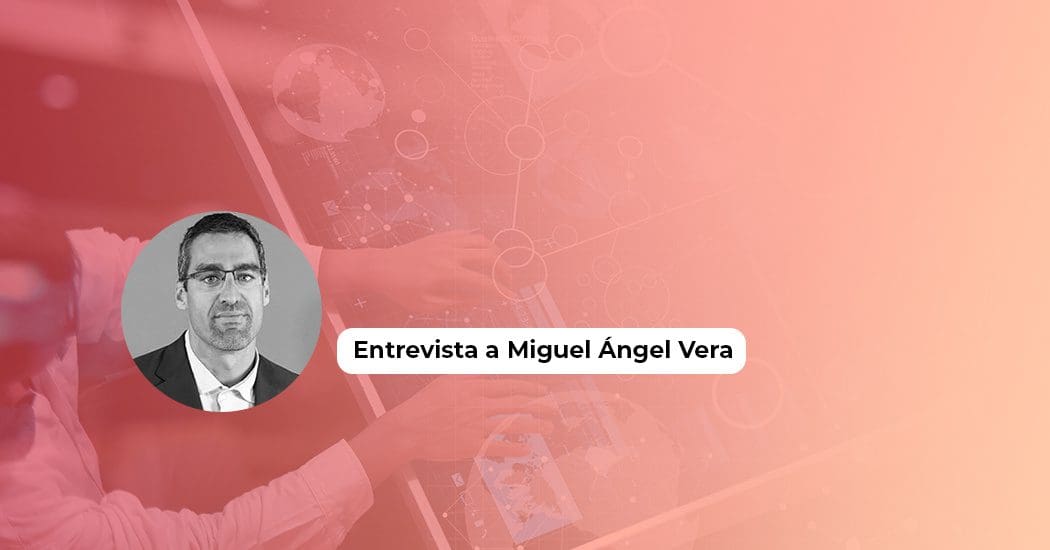
We had the great opportunity to interview a leading expert in the digital world: Miguel Ángel Vera, Director of the Master's Degree in Digital Skills and Competencies. Miguel Ángel has a strong background in the digital field, coupled with extensive experience leading digital transformation projects and developing key skills in a constantly evolving environment. His innovative approach and passion for continuous learning make him an authoritative voice on the importance of adapting to the new demands of the job market.
Interview: Digital Skills and Competencies
Don't miss this chance to check out this interview and learn firsthand How have digital skills evolved in recent years?, What skills are essential today, why it is It's crucial to stay up to date in this field, and what are the emerging trends that will shape the the future of work. Don't miss it!
Could you briefly tell us about your professional background and what your current job entails?
«Currently, my career path is twofold: on the one hand, Consulting Partnerships for Corporate Streamlining, that is, to help companies transform their culture and work processes so they can respond in a timely and appropriate manner to the demands of the rapid digital transformation we are experiencing across all industries. And second, training It has always been a calling for me, and a good example is the master's program in digital skills and competencies that I direct at Structuraria.«
With your extensive experience in project management and certifications such as PMP, ACP, and ITIL Expert… How do you think these traditional skills complement the new digital skills you teach as the Director of the Master's Program in Digital Skills and Competencies?
«While we might think that official certifications such as PMP or ITIL pertain to traditional skills, in reality, the content of these certifications is also tied to the new reality we need: project and service management in a context of high uncertainty and rapid change, and, furthermore, with the urgent need to obtain the immediate maximum performance all technological advances, such as artificial intelligence, blockchain, digital twins…«
In your opinion. What are the digital skills currently in highest demand in the job market, and why do you think they have become so important?
«Digital skills aren't just about knowing technology, but rather about knowing how to..." How to Derive Value from Technology. This means that we need the ability to understand what it means to innovate in a practical and effective way within the company; we need to understand the realities of the digital transformation landscape from an executive perspective; we need to Learn about the digital economy and smart contracts as vehicles for conducting digital business in the future—and indeed, already in the present—as well as the possibility of tokenization in facilitating business. And, of course, the fundamentals of agile project management and technology-related service management. Let’s remember that the context of digital transformation refers to transformation within the digital world.«

Artificial intelligence and machine learning are trends that are revolutionizing various industries. What role do these technologies play in the program, and how do you prepare students to deal with them?
«There is a very important issue related to the artificial intelligencel, and the goal is to answer the much-feared question of whether this technology will take away our jobs: Indeed, in the medium term and especially in the long term, if it's going to take our jobs away, or at least any kind of task that can be performed more quickly, with fewer errors, and based on learning from existing data. We can't deny this reality, so The challenge is to understand how we can continue to add value so that artificial intelligence doesn't take away our pay even though it does free us from a good portion of our work. Having the ability to continue adding value in order to continue receiving compensation is the crux of the matter.«
There has been a lot of talk recently about automation and how it could displace many workers. What is your perspective on this issue, and how should professionals prepare to remain relevant in an increasingly automated market?
«As I mentioned earlier, the gradual implementation of automation is an innovation that makes perfect sense: if a task can be performed more quickly, prevents people from becoming bored because it is too repetitive, and a professional cannot add value even if they want to in that type of work, it is not merely an academic question to consider that automation is a good idea in these cases—it is also a best practice. There are jobs in which we will continue to be needed as professionals, and the key is to develop skills in areas such as agile project management and business knowledge in order to implement innovations that will make us more competitive, have the team management skills that increase productivity of these teams while reducing employee turnover, managing risks in project and service management… And, in general, anything that reinforces the value contributed by the people who make up companies; the incorporation of large-scale automation and artificial intelligence should not make us forget that companies are made up of professionals, whose capabilities must also be managed and leveraged by professionals.«
You've worked in various industries and roles throughout your career. What do you consider to be the biggest challenge you've faced in integrating digital skills into a traditional corporate environment?
«There are certainly many challenges, and they depend on each industry and even on each company. But I think the biggest challenge It is the cultural shift involved in incorporating an agile culture and style of work and decision-making into day-to-day operations: This involves accepting that there is a high level of uncertainty, which, for example, will force us to work with far less information than we would like to have every time we make a decision. If we accept this reality, we come to the conclusion that we must increasingly adopt a work approach based on short iterations, ensuring a certain degree of success in each one. In other words, it’s about thinking of a long journey as a series of steps, so that each step is stable and secure enough to take the next one without making major mistakes. And the best tool we have for doing this is data. So, in conclusion, it's all about build an agile, data-driven work culture, And this is, quite simply, the definition of what a data-driven company should be.«
In recent months, we have seen a rise in concerns about privacy and the ethical use of personal data. What is your opinion on the balance between digital innovation and the protection of user privacy?
«In this regard, I must say that I see a significant imbalance between the potential risk and the actual concern: as users of countless digital applications, we spend our days accepting cookies without bothering to actually read what terms and conditions we’re agreeing to and what data we’re not only facilitating but also generating. But at the same time, we constantly come across opinions from many people who believe their personal data will be stolen for truly shady purposes… And of course, there have been isolated cases, and there will continue to be, since crimes are committed in this field as well as in countless others, but we must remember that the first thing we do with data—in order to extract business value from it—is to anonymize it. In other words, it’s not about knowing exactly who bought which product, at what price, where, and when; rather, it’s about developing models that, for example, help us define marketing plans targeting specific profiles or demographic groups, whose collective response is what generates profitability—and in no case the response of an individual. In other words, concern for the protection of personal data should not come from the companies that create models and exploit the data that we ourselves allow and generate; if anything, it should be a concern on the same level as our concern for our own physical safety, that of our vehicle, or that of our home.»

What advice would you give to someone who wants to develop their digital skills to secure a prominent position in the future job market?
«I think the best advice is accept the fact that we need to learn something new every day. Neither artificial intelligence nor other current and future digital innovations are our enemies; on the contrary, what we should do as professionals is develop our digital skills to make the most of these innovations, rather than fighting against them. I believe that this is where the difference lies between the professionals who will succeed in the digital economy and those who will not. And it is up to us to accept realities such as the innate advantage that digital natives have in understanding and adapting to this reality.«
In closing… What would you say to the professionals of the future, and why would you recommend that they pursue the Master’s in Digital Skills and Competencies?
«Because this master’s program provides you with a comprehensive perspective to answer a truly difficult question: What aspects do I need to understand, master, and apply to perform at the highest level as a professional in the context of digital transformation? What are the «must-haves» required of me as a professional in a company that wants to compete successfully in the digital economy? How can I continue to add value in a context where automation and artificial intelligence are being applied on a large scale? This training program is specifically designed to help answer all these questions.»
We sincerely thank Miguel Ángel Vera for sharing your valuable experience and insights in this interview. Your perspectives on digital skills and competencies—and their impact on today’s workplace—have been extremely enlightening. We are confident that his advice and insights will be of great use to all those seeking to stay current in an increasingly digital world. We wish him every success in his future projects and in his ongoing work as Director of the Master's Degree in Digital Skills and Competencies. Thank you, Miguel Ángel, for your time and for inspiring us to keep learning and innovating!