Has the BIM methodology to take control of the virtual environment in architecture? Are you familiar with the project? BIM Dictionary? We'll tell you in this interview., Engineer Tutor from Master's Programs in BIM in Structuralia, Who will tell us more about this? digital transformation and about his participation in the BIM Dictionary Project.

Could you briefly tell us about your current job and your career path?
«I am Civil Engineer, I studied at La Salle University in Colombia. There, I became involved in research projects and worked on building a prototype pedestrian bridge made of guadua for hard-to-reach areas. This was my first experience with a real engineering project. I met many professionals, and after finishing my studies, I began working at the company owned by my thesis advisor, Andean Lynx, a structural design firm. After that, I worked in public administration, specifically at the Infrastructure Department of the municipality of Tabio, where I not only oversaw ongoing construction projects but also began developing projects from scratch.
Given the experience I had gained from these projects, I moved from Colombia to Spain because I was offered the opportunity to study a Master's Degree in Project Managementyes, which was supposed to end there.
While I was in Spain, I had the opportunity to take a Postgraduate Program in BIM Management, which I successfully completed and which ultimately led to a job opportunity at Stucturalia as a Mentor Engineer.
As a teacher, I try to pass on the knowledge I have acquired to my students. I don’t just guide them and answer their questions; I also try to help them get the most out of their educational experience. In other words, I aim to go beyond theoretical study so that they can gain practical value from it. «
Are there any issues that you've noticed students frequently worry about when thinking about their professional future?
«One of the biggest concerns for Structuralia students—and, no doubt, students in other fields as well—is the the speed at which the industry, technology, the market, and the construction sector are evolving.
Their goal isn't just to get an education; they want to contribute to technological progress, in innovation management. They want go beyond study and training.
They want enroll in a program that is up-to-date »and that allows them to expand their knowledge so they can do their part and innovate."
What can you tell us about the BIM Dictionary?
«Well, BIM originated as a set of technologies, processes, and policies that enable multiple parties involved in design, construction, and operations to collaborate using different tools in a virtual space.
Therefore, the use of this virtual space requires the creation of a set of terms to identify the activities carried out; all of these terms were compiled and defined.
That is where the BIM dictionary, an open-source project that is free to use, part of the initiative BIMe, and which expanded through the efforts of volunteer sponsors and the official sponsor Bilal Succar who is the editor-in-chief.
The original dictionary is in English, and various countries—including Spain—have embraced the idea and decided to translate those terms into their respective languages.
David Marco, who is the one who leads the Spain initiative, He invited us to collaborate, we divided up the terms, set some deadlines, and began translating.
We wrapped things up in Spain about a month ago. It was a tremendous amount of work that required a lot of dedication. And it’s not about standing out, but about sharing. It’s a wonderful challenge because it’s a collaborative and volunteer-driven effort.«

Did you follow any kind of methodology or structure when creating the dictionary?
«I believe the structure has been organized based on the original framework used to create these terms. The goal was for each volunteer to be an engineer or architect, that they be familiar with the terminology we use.
Overall, this collaborative project has encouraged people to set aside a couple of hours to contribute, and it has fostered a sense of belonging that goes beyond the dictionary definition of the term.«
Thanks to technology, we are reimagining concepts such as the linear city currently being planned in Saudi Arabia. What is your perspective on this architecture-technology pairing?
«I think that all those megaprojects we're seeing aren't projects of the future, The future is now. Engineering and architecture have advanced tremendously, and I think that That future will be driven by artificial intelligence and shared virtual spaces.
BIM is a good example. People often think that BIM is just that 3D drawing, but it’s actually much more than that. The future lies in being able to share all these technologies so they aren’t limited to just those who created them.
For example, the Ciudad Lineal, that it doesn't just stay there, in Saudi Arabia, but is replicated elsewhere. That's what will be interesting, how that exchange of information will take place. Since technology already allows us to reach any level, the challenge will be how to share information.«
The philosophy of sharing that we're talking about… Is it well-established in the industry?
«It's a difficult adjustment for everyone. It's true that it's been a little easier for the younger generations because We're used to working with shared tools. But it's also starting to become the norm for more experienced professionals.
These initiatives aren't limited to the private sector; for example, right now In a public bid, they also require you to have BIM professionals, that your project is based on BIM.
This means you have to share all the information. That way, the next person who wins the bid or takes over the project will have all the necessary information.
BIM makes it easier at the end of a project, when maintenance is needed, access to all the data is available, »without incurring additional expenses, which is what has led to cost overruns in the public administration of the infrastructure thus far."
What other advantages do you think BIM has? Why is that boom?
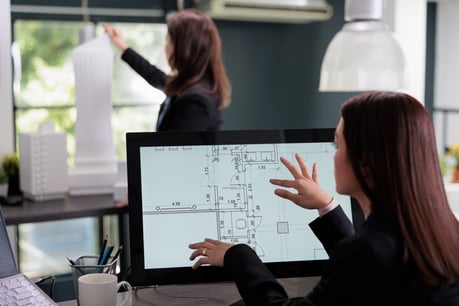
«I think that The BIM boom is taking place in the virtual environment. Thanks to BIM, you can visualize your project and see the site without having laid a single grain of sand—you can say what you like, what you don't like, what you want to change about the site, the costs, the timeline, and so on.
The best thing about BIM is that Engineers, architects, and the various professionals involved in projects can work together, so it is done It's easier to visualize the problem or the solution. And, therefore, »This reduces both project timelines and costs."
Do you think professionals just starting out can do without this discipline?
«No, the BIM is a point of no return, an essential requirement in both the private and public sectors. You don't need to know how to use all BIM tools, but you do need to understand how these tools interact with one another and which ones are most suitable for a project.
From Structuralia, we would like to thank Yenny her tremendous willingness to participate and her contributions in this interview, as well as her dedication to sharing all her knowledge as a tutor with all the students in this great Structuralia community.