The ARES (Advanced Rail Energy Storage) project explores the possibility of storing excess renewable energy generated at certain times. This project has the potential to increase the utilization of this renewable energy.
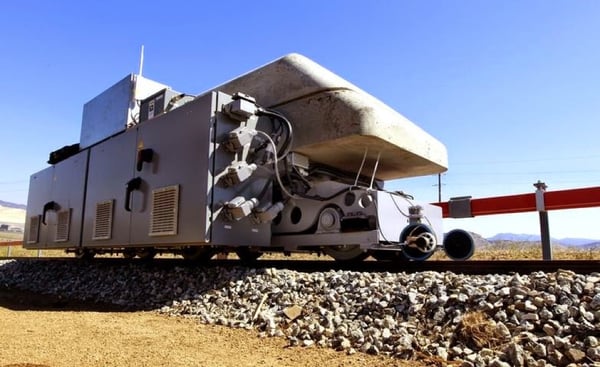
The process is seemingly simple and consists of a a train car traveling along a single track about 8 kilometers long, going up and down a hill, where railroad cars travel one by one, loaded with rock and concrete.
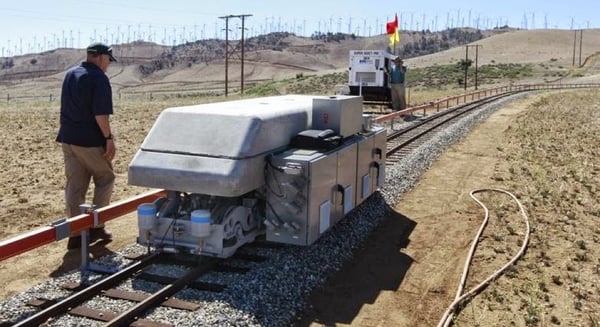
Surrounding it are a number of solar panels and wind turbines, which generate renewable energy. When there is a surplus of electrical energy, the cars begin to move, traveling to the top of the hill, where they come to a stop. When this energy is needed, the cars will slide down from the top of the hill.
These cars are equipped with motors that act as electric generators when they go downhill, releasing the energy needed at that moment.
This is one of the major challenges facing the renewable energy sector: being able to store excess electricity so it can be used during periods of lower production.
The ARES project has been underway since 2010. The project aims to support the development of energy generation from renewable sources, ensuring safety and reliability.
ARES is beginning to conduct its tests in southwestern Nevada, in the United States. It is estimated that Advanced Rail Energy Storage projects could have a capacity ranging from 50 MW and 1 GW, approximately.