Water Treatment Plant (WTP) and Wastewater Treatment Plant (WWTP): Two Key Processes in Any City
Without a doubt, the supply of drinking water and wastewater management have been two concerns for humankind since the dawn of history. This is where the concepts of WTP and WWTP. The fact is that engineering has made it possible to develop ways to ensure urban water supply, as well as the efficient treatment of wastewater.
What are drinking water treatment plants (ETAP) and wastewater treatment plants (EDAR)?
To better understand the concepts of WTP and WWTP, we must start with the meaning of the acronym.
Thus, the former refer to drinking water treatment plant. As such, these are facilities where water is treated to make it safe for drinking (which is why they are also called water treatment plants). Their purpose is to treat raw water—which comes from reservoirs and other surface and groundwater sources—so that it can be used for human consumption.
In other words, they collect the water and, after treating it, make it safe for us to drink. They are usually located between the main water sources (primarily wells and reservoirs) and the storage tanks and piping systems that will ultimately distribute the water to homes.
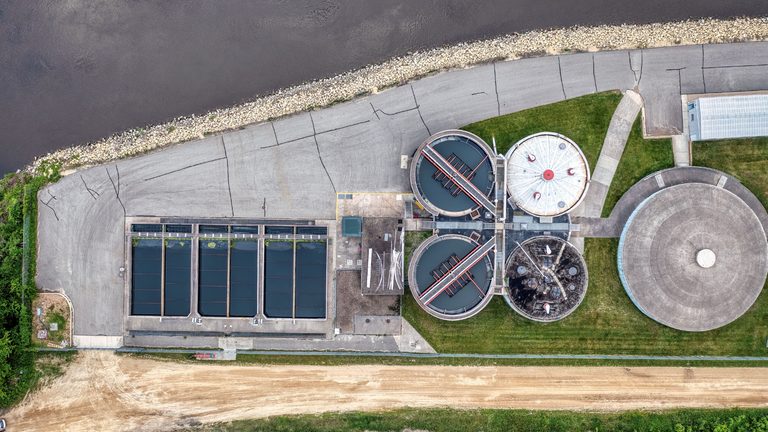
For its part, a WWTP (Wastewater Treatment Plant) It consists of a facility that collects and treats wastewater and industrial effluents. As such, it removes waste, floating oils, grease, sand, and other coarse materials contained in the water so that can be returned to nature.
How does it work?
Just as The air requires a specific treatment, and water also requires very specific systems.
Generally speaking, a drinking water treatment plant operates differently depending on the method it uses:
- Oxidation-Based Processes: Ozonation, pre-oxidation, and final disinfection.
- Processes Based on Flocculation and Sedimentation: Flocculation, coagulation, and settling.
- Filtration Processes: On charcoal briquettes and sand.
- Refining Processes: Softening and neutralization.
In the case of a wastewater treatment plant, the steps are as follows:
- Pre-treatment: Separate bulky solids using screens.
- Primary treatment: Physicochemical processes that cause suspended solids to settle and precipitate.
- Secondary treatment: Biological processes that reduce organic matter in water.
- Tertiary treatment: A set of advanced chemical, biological, and physical methods that remove nitrogen, heavy metals, phosphorus, and pathogens.
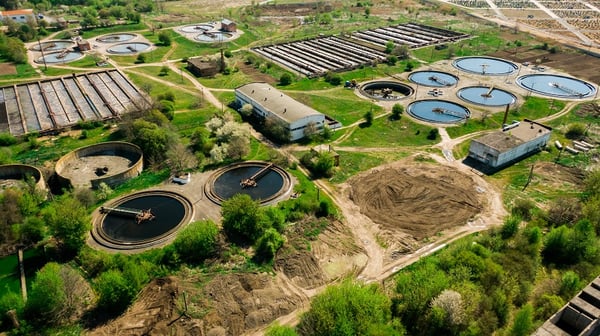 Water treatment facilities. Large water filters
Why are they essential in urban areas?
As we mentioned in the introduction, since the dawn of time, the search for processes that would allow for the drinking water supply to communities It was a constant concern. Today, large urban areas require complex systems designed to ensure water safety. This involves both ensuring that the available water is safe to drink and in sufficient supply, as well as the proper management and treatment of wastewater.
The enormous importance of such processes is demonstrated, among other things, by ongoing public investment in the construction of this type of infrastructure, which leads to the movement of large amounts of capital.
In conclusion, we can state that the concepts of Water treatment plants (WTPs) and wastewater treatment plants (WWTPs) are essential in modern civilization, especially in urban settings. That is why pursuing an education in this field is an excellent investment in the future. In fact, it will enable us to thoroughly understand and analyze the mechanisms of the water cycle. As such, only specialized schools are capable of providing this education. The Master’s Degree in Comprehensive Water Cycle Engineeringa that we offer at Structuralia It ensures a comprehensive theoretical and practical education in this important sector.