After a four-year stint, I decided that the best way to continue advancing my professional career was to return to a large company and once again become part of a strong team of engineers. So, I joined the British engineering firm Mott MacDonald as a tunnel engineer, a role in which I continue to be involved in tunnel engineering through projects such as the High-speed rail in the United Kingdom (HS2).
Currently, my work is heavily focused on the design, planning, and analysis of tunnels. This includes, among other things, the Structural analysis of retaining structures and linings, the study of convergences, and the determination of ground movements. To carry out this work, my primary tool is complex numerical modeling using finite elements or finite differences.«
Throughout his career, he has led numerous highly complex projects. Could you share a particularly challenging experience and the lessons you learned that you still apply in your daily work?
«Aside from the technical complexity—both in design and construction—I believe that one of the most challenging aspects of large-scale engineering projects, particularly on the international stage, is the the process of adapting to a work methodology, an environment, a culture, and regulations that are very different from what we are used to. For me, working on projects like Crossrail, the SR-99 tunnel, or HS2, which involve thousands of engineers at the same time It's quite a challenge because it's like having to adapt to a new “law of the jungle.”.
When you participate in this type of project, you enter a whole new world where you have to learn specific procedures and processes, such as document control, quality control, review systems, work platforms, document formats, and so on. You have to be very aware of all the requirements, plans, and standards that underpin the project’s dynamics and try to catch up with those who have been on the project longer as quickly as possible.
Therefore, one of the most valuable lessons I've learned—and one that I still apply in my daily work, especially when participating in or joining a new project—is to try to keep an open mind, free of barriers, that's willing to learn new things every day. I try to avoid thinking that I already know everything, and in this way to try to get up to speed with the project as quickly and effectively as possible.«
With the growing demand for sustainable construction practices. How is geotechnical engineering evolving to align with these objectives, and what specific challenges does foundation engineering face in this context?
«When it comes to sustainability—and even though it may seem like a contradiction—I think it's very important to point out that You cannot aspire to be sustainable without building the appropriate infrastructure. In some cases, there may be a perception that, in order to achieve sustainable development, construction must be halted to avoid pollution, earthmoving, heavy machinery that requires high fuel consumption, etc.
While it is true that construction involves a certain level of pollution—at least until the project is completed—it is no less true that without investing in the right infrastructure, or properly upgrading existing infrastructure, we will never achieve sustainable development. All forms of renewable energy (wind, hydro, solar, etc.), as well as the decarbonization of transportation by promoting the use of rail, involve building certain types of infrastructure and carrying out work (excavations, clearing, etc.) that they carry a certain carbon footprint which is, let's say, a small price to pay in the short term, but one that is completely worth it when you consider the long-term benefits. Since infrastructure, of whatever kind, ultimately rests on the ground, Geotechnical engineering contributes to the sustainability of infrastructure.
From a geotechnical perspective, including foundations, the sustainability of the structure and sustainable construction are pursued primarily through the following aspects:
-
-
By obtaining a good characterization of the soil behavior, which ultimately allows for a more optimized design in terms of dimensions, thicknesses, reinforcement requirements, etc.
-
Use of the appropriate materials and techniques in order to protect the components from wear, corrosion, chemical attack, erosion (in the case of earthen structures), and, above all, the effects of water.
- Gradual Improvement in Construction Equipment. As with cars, there is a growing trend toward electrification.
»Finally, with regard to sustainable development, tunnels and underground projects have become increasingly important today, as they allow for the underground installation of utilities and transportation networks, thereby mitigating impacts on the surface and freeing up space for other uses (creation of green spaces, reforestation, etc.)."
-

With weather patterns becoming increasingly unpredictable. How are geotechnical engineers adapting foundation techniques to ensure long-term structural stability?
«Rather than the foundations, we can say that the entire Geotechnical engineering is adapting to new climate patterns. In particular, climate change is being taken into account in design and construction by considering the following aspects.
-
-
Detailed statistical analyses of historical time series and the development of predictive models, with the aim of determine the potential rise in sea level in the coming years, which can have a significant impact on infrastructure built in or near coastal areas by affecting the water table in those areas.
-
In line with the above, analyses are being conducted of the potential fluctuations in the water table, both rises and falls. These fluctuations in the water table are taken into account in the designs to ensure the structure functions properly under any future conditions.
-
Similarly, the following are studied: rain patterns and wind in order to adapt the structures to these elements and protect them from their erosive effects. This is particularly important in earthworks (embankments and cuttings), for which appropriate drainage and water discharge systems must be designed.
-
Calculation Guidelines It is gradually being adapted so that extreme events resulting from climate change are appropriately taken into account in the designs.
-
Adapting to new weather patterns won't happen overnight and will take time, especially since those weather patterns need to be studied thoroughly, but work is already well underway, and, most importantly, there is a strong awareness of the need to take them into account.
It is important to note that climate change should not only be taken into account in new construction. It is very important adapt existing infrastructure to new weather patterns in order to ensure their viability, operation, and safety.«
How is artificial intelligence impacting geotechnical engineering and foundations? Could you share a case study where AI has optimized processes in your field?
«As in other fields of civil engineering, lArtificial intelligence (AI), and, in particular, the methods of machine learning, have begun to be applied in geotechnical engineering. Specifically, using machine learning techniques and optimization algorithms, The goal is to create reliable predictive models based on big data analysis, which will ultimately enable optimal infrastructure design. At this point, I believe that AI’s main contribution will be to enable the analysis and processing of large volumes of data in a very short time, and to reduce the uncertainty associated with the behavior of a natural material such as soil.
As a practical example, I would highlight the case of SAALG, which has developed a software program called Daarwin which, essentially, by analyzing large amounts of auscultation and instrumentation data using machine learning algorithms, enables get the values of the soil parameters that more closely reflect actual behavior that is being observed. In this way, by eliminating or reducing uncertainty and the degree of conservatism, more optimized designs or construction procedures are achieved. My company, Mott MacDonald, has used Darwin on a number of projects, such as the high-speed rail project (HS2) in the United Kingdom.«
What recent innovations in deep foundation technologies do you think will have a significant impact on the industry in the coming years?
«When it comes to foundation techniques, I believe the innovations that will have the greatest impact in the coming years will be:
-
-
Development of new machinery, fully electric or powered by next-generation fuels, with the aim of reducing environmental impact and the carbon footprint.
-
Use of New Low-Carbon Concrete. Specifically, in these concretes, cement (which accounts for most of concrete's carbon emissions) is replaced by other materials such as blast furnace slag and fly ash.
-
Use of recycled materials to eliminate the need to extract new materials (and their corresponding cost, environmental impact, and carbon footprint). Recycled materials include concrete itself (properly treated), as well as industrial waste, steel mill slag, and waste from soil treatment processes such as jet grouting.«
-
Regarding the future of foundations in densely populated urban areas. What are the main challenges and innovative solutions for foundation design in cities with high population density and limited space?
«In urban environments, indeed The main problem is the limited space. which determines the size and number of machines that can be used, the space required for storing and stockpiling materials, as well as for setting up treatment plants, concrete pouring, etc.
In this regard, two foundation techniques that I find particularly interesting are:
-
-
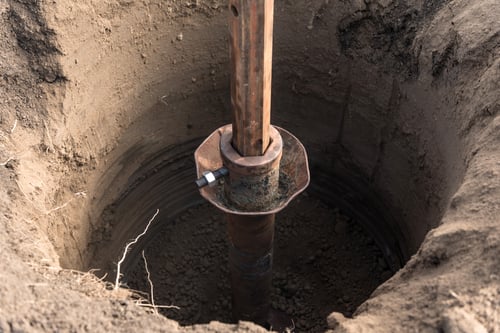
Piles driven and backfilled through the shaft. These are precast concrete piles that, after being driven into the ground, are grouted through a longitudinal pipe and a series of transverse pipes in order to significantly increase their shaft strength. This allows for a significant reduction in the pile’s length and cross-sectional area, as well as in construction time and installation costs.
-
Screw-shaped or helical piles. These are concrete piles that, instead of having a smooth surface, feature a threaded shape similar to that of a screw. This shape provides greater strength along the shaft, which allows for a reduction in the pile’s length and cross-sectional area—and, ultimately, the amount of concrete used.«
-
Given your experience as a leader in the field. What are the most important ethical considerations facing geotechnical engineers today, especially in large-scale projects?
«From an ethical standpoint, I understand that engineers—not just geotechnical engineers, but all civil engineers—must consider the following aspects:
-
-
Durability: Infrastructure must be designed and built to last and remain in service for as long as possible.
-
Sustainability: We must ensure that they are sustainable and have the lowest possible environmental impact and carbon footprint.
-
Aesthetics: The structure being built must blend in with its surroundings and be visually appealing. It must not create any barriers or physical obstacles for wildlife, vegetation, natural watercourses, or the flow of groundwater.
-
Safety.
-
Economy: Since resources are limited, we must ensure that infrastructure is built at the lowest possible cost, without neglecting any of the aspects I mentioned earlier
-
None of these criteria is more important than the others. Engineers must always seek a balance and proportion among these requirements, without prioritizing one over another.«
As the director of a master's program in geotechnical engineering and foundations. What skills and knowledge do you consider essential for future engineers in this field? How has the program been adapted to prepare students for the new demands of the job market?
«It is very important for the geotechnical engineer to have a very a clear understanding of the principles and fundamentals of soil and rock mechanics, as well as continuum mechanics, fluid mechanics (covering all aspects related to water in the ground), strength of materials, and structural analysis. All of these aspects are given careful consideration and are emphasized in the master’s program.
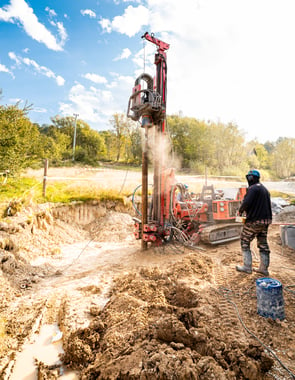 Nowadays, it’s very common to hear the typical phrase, “You don’t need to know the theory—a computer does it all now.” It’s true that computers and specialized software are essential tools for engineers today, but we must also keep in mind another very important aspect, which is summed up perfectly by the saying “garbage in, garbage out.” (Trash in, trash out). Ultimately, a computer receives input data provided by an engineer, performs a series of analyses and calculations using that input data, and finally produces results.
If the engineer lacks the necessary knowledge to provide the computer with appropriate and reliable input data, it won’t matter what calculations and results the computer produces, because they will be incorrect. On the other hand, if the engineer is unfamiliar with the techniques, methodologies, processes, and operations the computer uses to obtain results, he or she will not be able to create models correctly or detect errors. Finally, if the engineer does not know how to interpret, analyze, and process the results provided by the computer (stresses, strains, yielding, etc.), he or she will not be able to produce a sound infrastructure design. Therefore, theTechnical knowledge is essential, regardless of how you use the computer.
With regard to numerical modeling, Given its importance today, an entire module of the master’s program has been dedicated to providing students with firsthand experience of this technique. The program also covers in detail the advanced constitutive models that enable computer-aided calculations for both soils and rocks.
In addition, the goal is for students to be able to gain a comprehensive understanding of the geotechnical problem and identify the effects and impact of a project may exist not only in their immediate surroundings, but also in more distant areas. To that end, great emphasis is placed on the importance ofand analyze the risks associated with the geotechnical problem and define mitigation measures for those risks in order to meet all requirements regarding sustainability, durability, safety, aesthetics, and cost-effectiveness.
Other skills required of a geotechnical engineer—especially if they plan to work on large infrastructure projects—include the teamwork (and eventually team management), defining and monitoring the work schedule and budget, project management, and business skills. These are all skills that are acquired and strengthened through experience.
We would like to thank Ángel Silvestre Ordaz, Director of the International Master's Degree in Geotechnical Engineering and Foundations, for sharing their valuable experience and knowledge about the evolution of this sector. Their insights offer us a deep understanding of the current challenges and emerging opportunities in the field of geotechnical engineering. Undoubtedly, his focus on sustainability, innovation, and continuing education is essential for addressing future challenges in such a demanding and constantly evolving field.