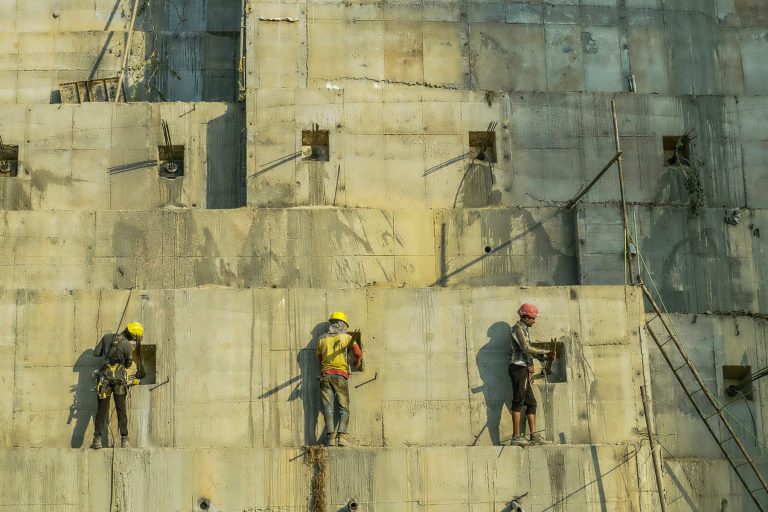
The technical project management has changed in nature in recent years. Shorter deadlines, distributed teams, changing requirements, and increasing technical complexity have rendered many of the approaches used to manage engineering projects a decade ago obsolete. Anyone who continues to use the same management tools as in 2015 will see the impact on their results.
Why Technical Project Management Is Becoming Increasingly Complex
The complexity of engineering projects It is not due to a single factor, but rather to a combination of several: greater interdependence among disciplines, more stringent regulations, clients who change their requirements midway through a project, and teams that no longer work in the same physical location.
In projects involving infrastructure management, This calls for much closer coordination among civil engineering, building systems, sustainability, and digitalization. Each discipline progresses at its own pace, and the role of the project manager increasingly involves synchronizing these efforts, not just planning them.
Traditional Methodologies vs. Agile Approaches in Engineering
The debate between Waterfall and Agile Methodologies in Technical Projects There is no single answer. The traditional approach remains the most appropriate for projects with stable requirements, a strong regulatory component, and clearly defined sequential phases, such as most civil engineering projects.
The Agile methodologies in engineering They add value where there is uncertainty, constant iteration, or a need for rapid adaptation: product development, industrial digitization projects, or applied R&D. The real trend is not to replace one model with another, but to combine them depending on the nature of each phase of the project.
The Role of the PMO in Engineering and Construction Companies
One PMO at an engineering firm It is not a bureaucratic department; rather, it is the structure that provides consistency to how projects are managed throughout the organization. Without a technical project management office, each team applies its own criteria, which increases risk and makes it difficult to compare projects.
The most common functions of a PMO include standardizing processes, tracking metrics across projects, and providing methodological support to project managers. In construction companies with multiple simultaneous projects, this function becomes critical for maintaining control.
Digital Tools for the Efficient Management of Technical Projects
The technical project management software It has evolved far beyond Gantt charts. Today's platforms integrate planning, document management, cost control, communication with stakeholders, and change tracking into a single environment.
For engineering projects, the most highly regarded tools combine traditional management capabilities with specific modules for BIM, regulatory compliance, and technical risk management. The right tool does not replace the manager’s judgment, but it drastically reduces the time spent on administrative tasks.
Key Skills for Technical Project Managers
The Skills of a Technical Project Manager They combine engineering knowledge with management skills that aren't always taught in a technical degree program. Among the most in-demand:
- Ability to negotiate with customers, suppliers, and government agencies.
- Management of multidisciplinary teams with very different skill sets.
- Effective communication of risks and deviations to management.
- Decision-making under pressure with incomplete information.
- A systemic perspective to anticipate the impact of a change in one discipline on the rest of the project.
The Management Skills for Engineers The ability to take on management roles is increasingly the factor that distinguishes a good technician from a good project manager.
Most Valued Certifications in Technical Project Management
The PMP certification It remains the most widely recognized international standard for project management, with a robust focus on processes, risks, and stakeholders. PRINCE2 It provides a more structured framework, which is particularly valued in projects with a strong governance component, as is the case in many public companies and large European corporations.
For teams that use agile methodologies, certifications such as PMI-ACP or Scrum-specific certifications demonstrate proficiency in iterative environments. The choice between one certification or the other depends on the type of projects each professional manages, not on which one sounds better on a resume.
How to Train Your Teams in Complex Project Management
Identifying Profiles with PM Potential
Not all technically brilliant engineers have what it takes to be project managers. Identifying who possesses leadership skills, communication skills, and a big-picture perspective is the first step before invest in training.
Training Pathways by Level
A project management training program Effective training is not a one-size-fits-all program. Tailoring learning paths based on each participant’s experience and level of responsibility improves learning retention and practical application.
Practical and Applied Training
The most effective project management training is the kind that draws on real-world cases from the company itself. Structuralia develops technical project management programs with instructors who are currently working at companies such as Ferrovial and Acciona, who share real-world construction and project scenarios—not just textbook theory.
Trends in Technical Project Management: AI, Data, and Agility
The Project Management Trends for 2025 and 2026 point to a the growing integration of artificial intelligence in predictive planning, early detection of deviations, and risk analysis. The use of real-time data for decision-making is shifting from a competitive advantage to an industry standard.
The management of complex technical projects no longer depends solely on the manager's individual experience, but rather on a combination of methodology, appropriate tools, and well-trained teams. Does your company manage projects using the same approach as it did five years ago, or has it adapted its way of working to today's complexities?