We continue with this series of three articles in which we will highlight the key characteristics for identifying the main types of rock relevant to engineering and construction. We’ve already discussed the Identification of Igneous Rocks in the Previous Post, so today we'll show you the details of some of the most common metamorphic rocks used in construction.
As we mentioned earlier, A site survey is essential when planning and carrying out a construction project, since the presence of certain minerals can affect the soil’s bearing capacity and the potential hazards associated with it. In order to address any problems that may arise—or simply to properly plan a construction project—the first step will always be a site survey.
In this case, metamorphic rocks result from the transformation of existing rocks, which have undergone structural and mineralogical changes due to physical and chemical processes. Based on this, there are three types of metamorphism:
- Dynamic metamorphism: Due to high pressures, no chemical changes or appreciable recrystallization occur, but the minerals align parallel to one another within the rock, perpendicular to the direction of the pressure, resulting in the formation of planes of schistosity.
- Thermal or contact metamorphism: This is due primarily to the rise in temperature, which causes the rock to recrystallize, resulting in a fine-grained texture due to rapid cooling. These rocks are known as hornfels.
- Regional metamorphism: This process, which affects the vast majority of metamorphic rocks, occurs at great depths where rocks are subjected to the most extreme temperatures, pressures, and deformations on Earth.
Now that we have clarified the possible origins of our rocks, we will move on to identifying them. The first step will be to compare the rock under study with the images shown below to subsequently verify that it meets any of the characteristics we will mention and, in this way, identify the rock we encounter on site.
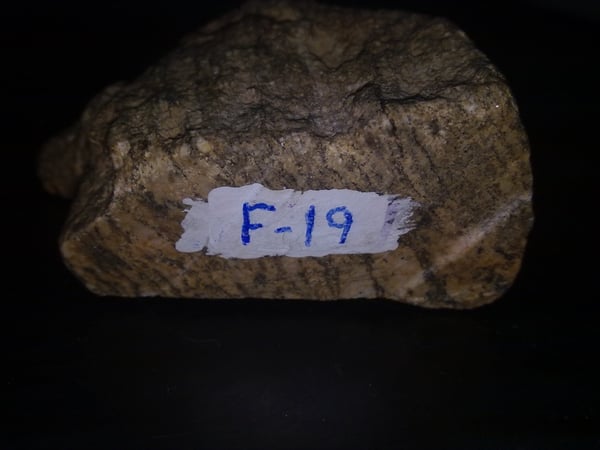
Gneiss (F19):
Equigranular rock. Coarse-grained. Similar to granite (the two differ in that gneiss exhibits banding). Gray in color (darker than granite). A hard, dense rock.
Minerals: quartz, feldspar, and micas.
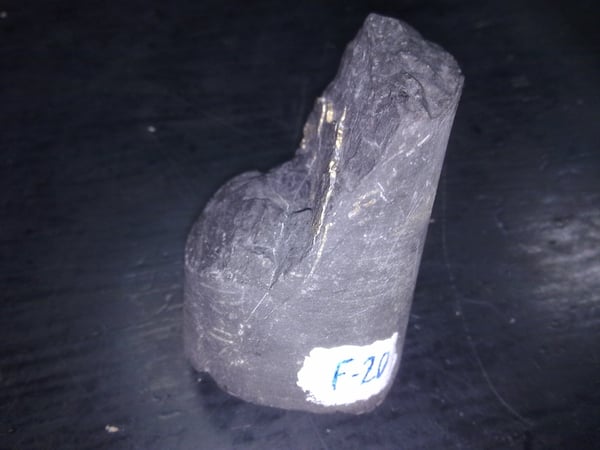
Whiteboard (F20):
Pronounced foliation (schistosity). Dark color (unweathered) and light and brown colors (weathered). Rough, splintered surface (in cross-section). Low hardness.
Minerals: Quartz, mica, graphite, magnetite, pyrite, and chalcopyrite.
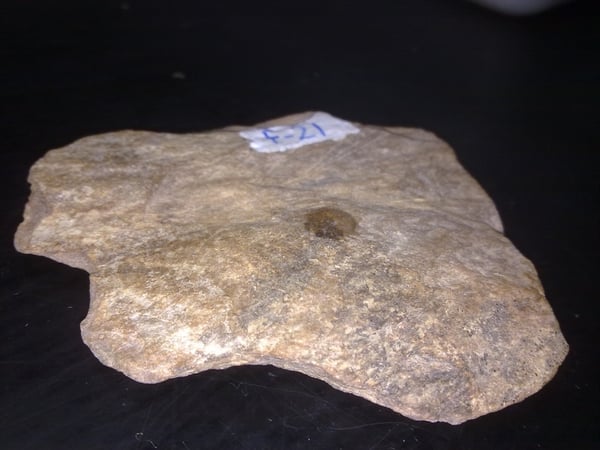
Altered slate (F21):
Slate weathered by atmospheric conditions.
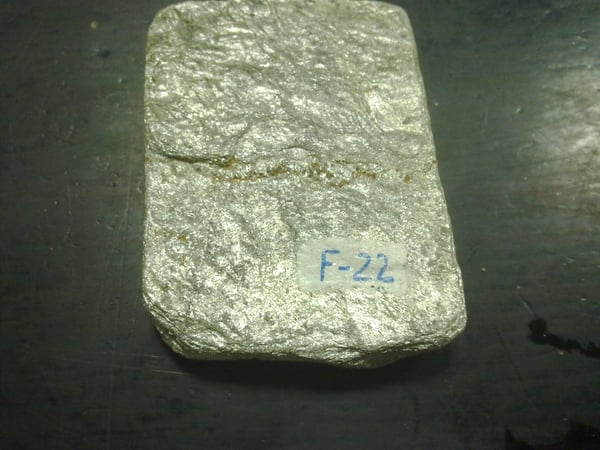
Filita (F22):
The difference from slate is that the schistosity planes are smooth and shiny, and the difference from schist is that the components of the schist are visible to the naked eye. It has a bright dark green color when exposed to light and feels very smooth to the touch.
Minerals: Muscovite, chlorite, sericite, talc, and quartz.
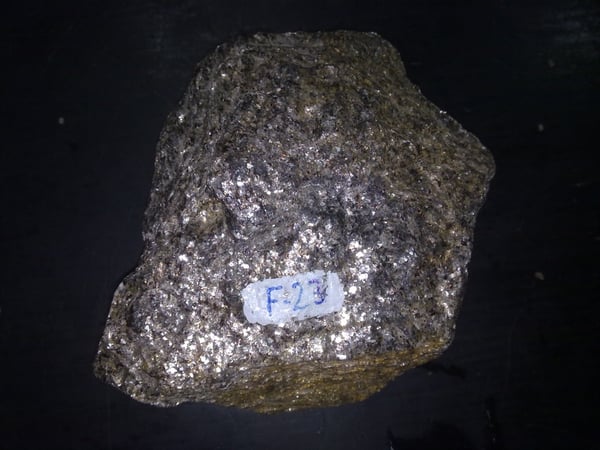
Micacite (F23): (mica schist)
It differs from filite in that its grains are larger and visible to the naked eye. It exhibits foliation (schistosity). The foliation is slab-like.
Minerals: Quartz, mica, chlorite, and talc.
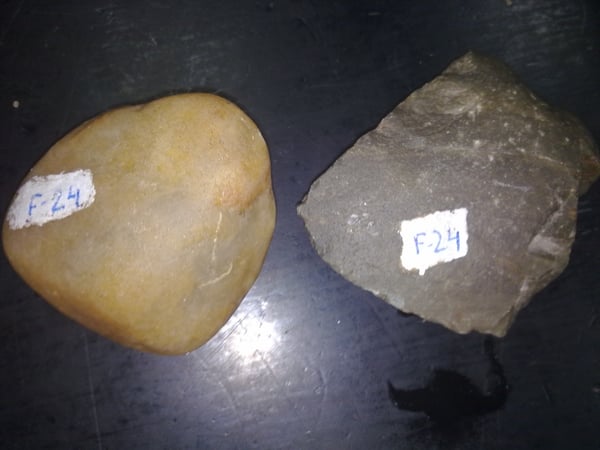
Quartzite (F24):
Multicolored. Hard rock (it does not scratch when scraped with steel; steel leaves a pencil-like mark on the rock). Sharp edges when broken. Smooth surfaces on rounded pebbles. The crystals are not visible to the naked eye.
Minerals: 90% Quartz, feldspar, magnetite, granote, and sillimantite.
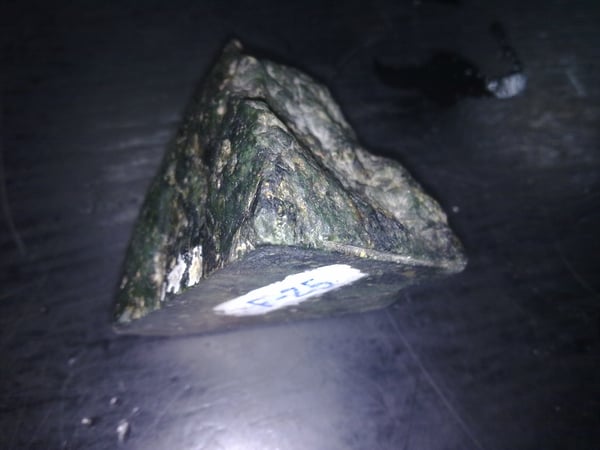
Serpentine or serpentinite (F25):
Its colors range from green to greenish black. It forms as a result of the alteration of olivines and pyroxenes. It has medium hardness.
Minerals: antigorite, chrysotile, lizardite.
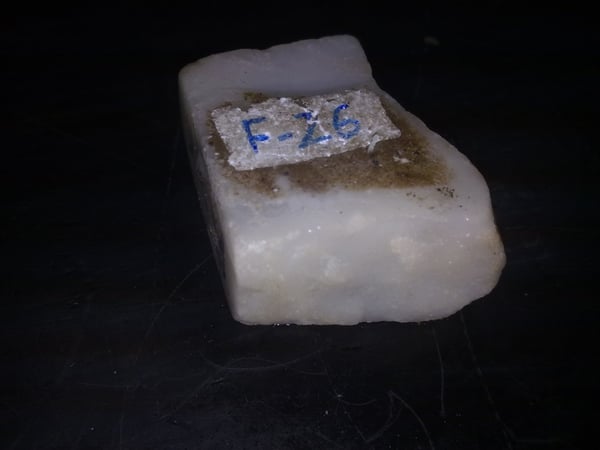
Marble (F26):
It is formed by the metamorphism of limestones and dolomites. Saccharoidal texture. Variegated. A hard rock, but it can be scratched with steel. It reacts with hydrochloric acid. Holocrystalline (grains visible to the naked eye).
Minerals: Carbonates 95%, calcite, and dolomite.
With this, we hope that identifying metamorphic rocks will no longer be a challenge for you.