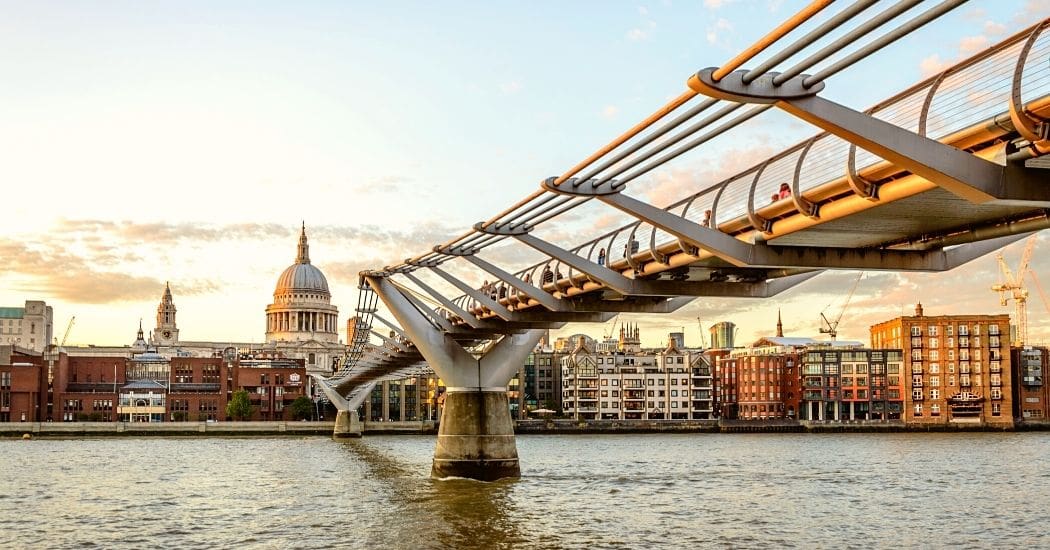
Meet Sir Norman Foster, one of the world's leading exponents of the High-Tech architecture also known as late-modern architecture.
In the early 20th century, Modernism emerged to challenge everything that was known or thought to be architecture; it proposed a formal precision and functional clarity that had never been considered before. Like any a radical and revolutionary proposal, It attracted a significant number of critics and gave rise to various offshoots of this architectural movement.
One of these variants, which traces its roots to Modernism, is the High-Tech architecture also known as late-modern architecture, which reached its peak in the 1960s. In this post, we’ve already explained the context in which it emerged and who its leading figures are worldwide; but this time we’ll focus on Sir Norman Foster.
Norman Foster
Foster is a British architect Born in Manchester in 1935, he studied architecture at the University of Manchester and completed his studies at Yale University. As a young architect, he worked with the well-known Richard Buckminster Fuller, co-founded together with Richard Rogers the study titled Team 4, to finally establish Foster + Partners in 1967.
At the helm of his own firm, Foster began to realize that the way he would captivate people through his architecture did not lie in the to reference forms from the past or from Modernism, but rather would find it in the the language of modern materials in a highly industrialized world. Find a architectural style where the primary mode of expression is the interplay between the “skin” and the “the building's ”framework”.
Renault Distribution Center
Completed in 1983, it is one of the first major buildings in which Foster began to showcase his architectural style, based on the Externalization of structure as a method of aesthetic expression. It is a horizontally oriented building composed of repeating structural modules from which the roof is suspended, conveying a very clear message about mass production and the use of state-of-the-art materials.
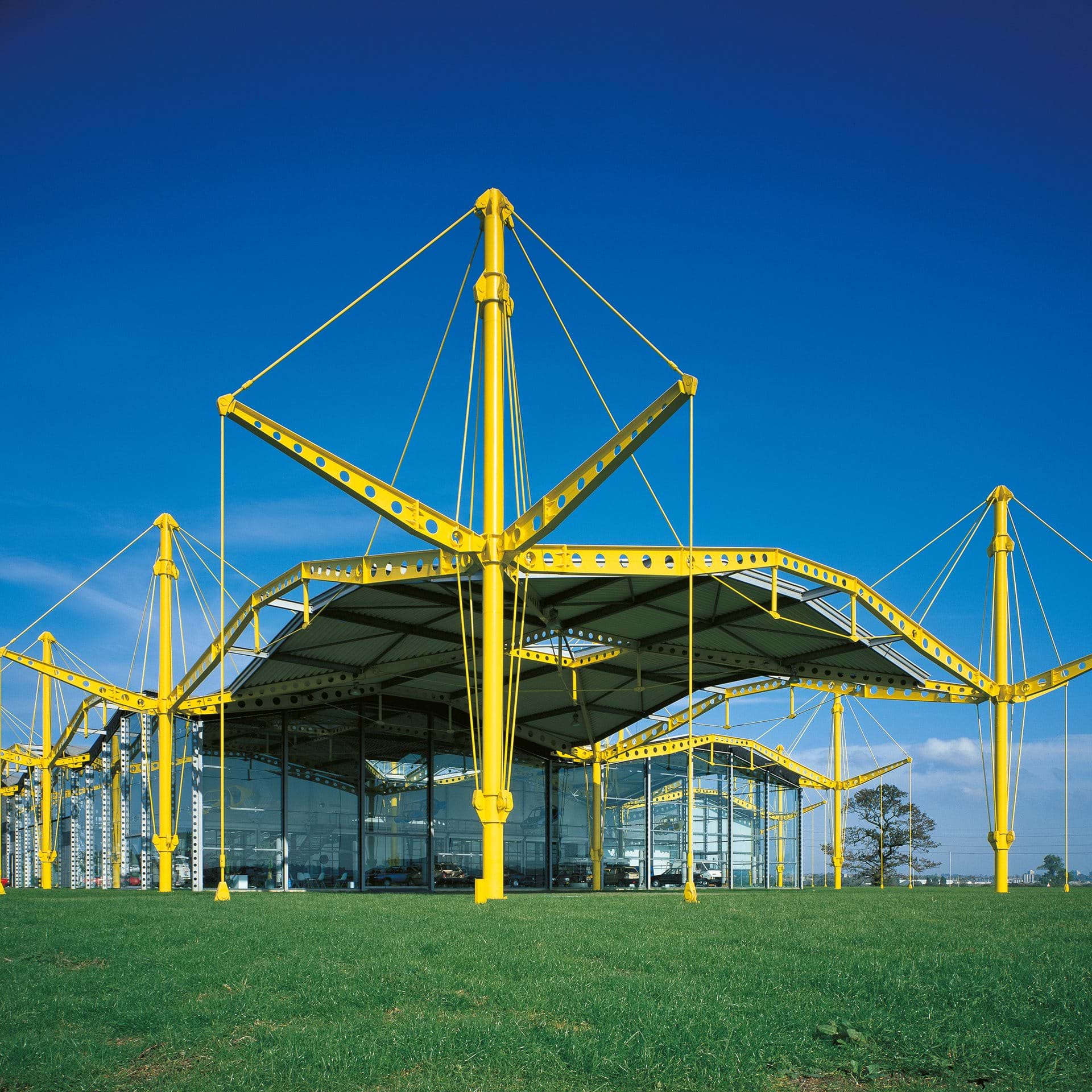 Photo of the Renault distribution center. Foster + Partners
Hong Kong and Shanghai Banking Corporation
In this skyscraper, built in 1986, Foster puts his forays into the Hi-tech architecture in a vertical format, facing new challenges that the task of build a skyscraper in Hong Kong. He would solve this by once again using modular repetition and, in his own words, based on aerospace manufacturing technologies.
The result is a spectacular tower complex consisting of three buildings with 28, 35, and 41 stories, respectively, aesthetically resembling the Structures used at Cape Canaveral for launching space rockets.
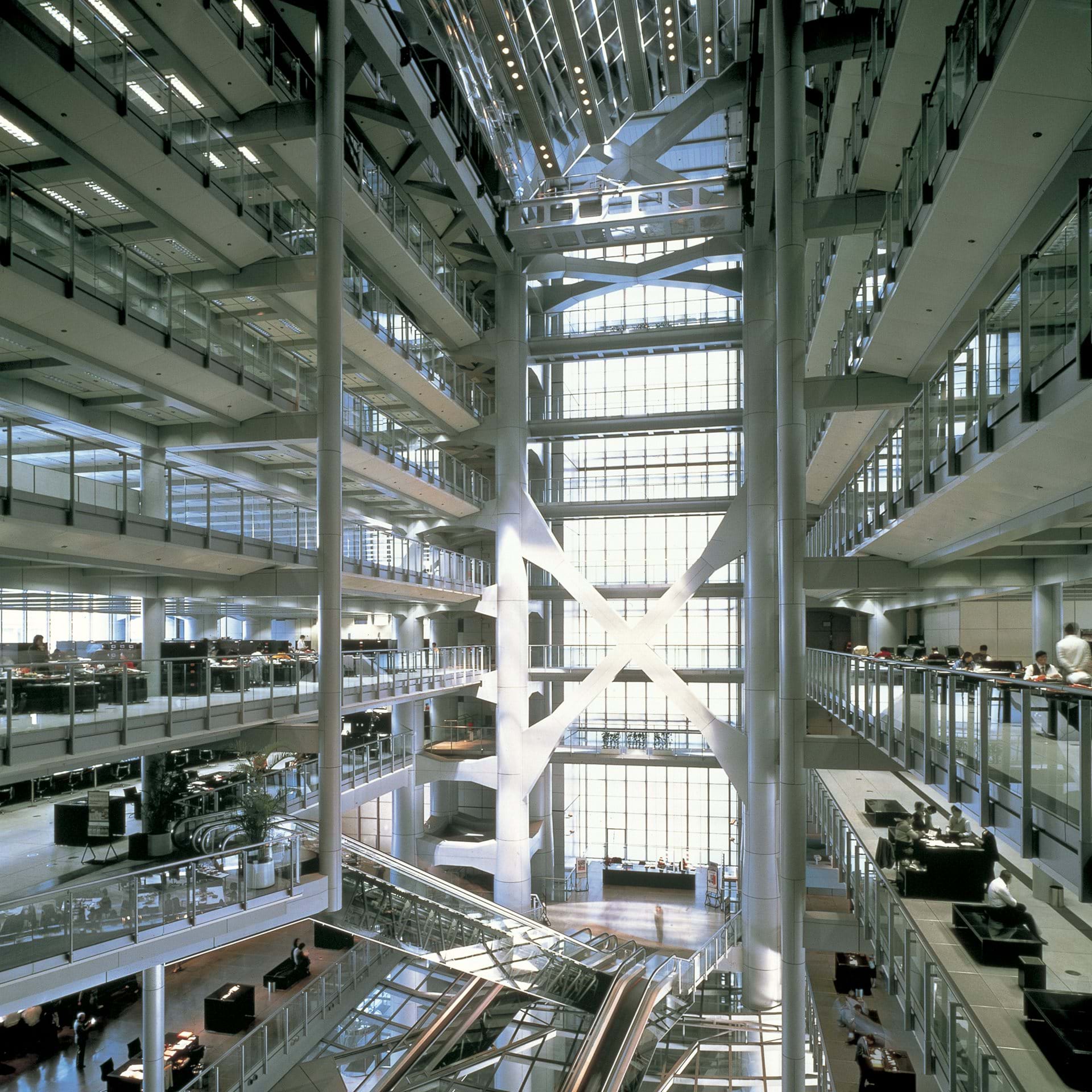 Photograph of the Hong Kong and Shanghai Banking Corporation. Foster + Partners
Stansted Airport Terminal
For this project, Foster returns to a clearly horizontal layout, and—just as he did with the Renault distribution center—he uses a repetition of structural modules, which this time take the form of arches; their two-dimensional repetition forms flattened domes. The building’s side envelope is designed to highlight the beauty of the most technologically advanced mode of transportation to date—the aircraft—as it provides a direct view of the runways.
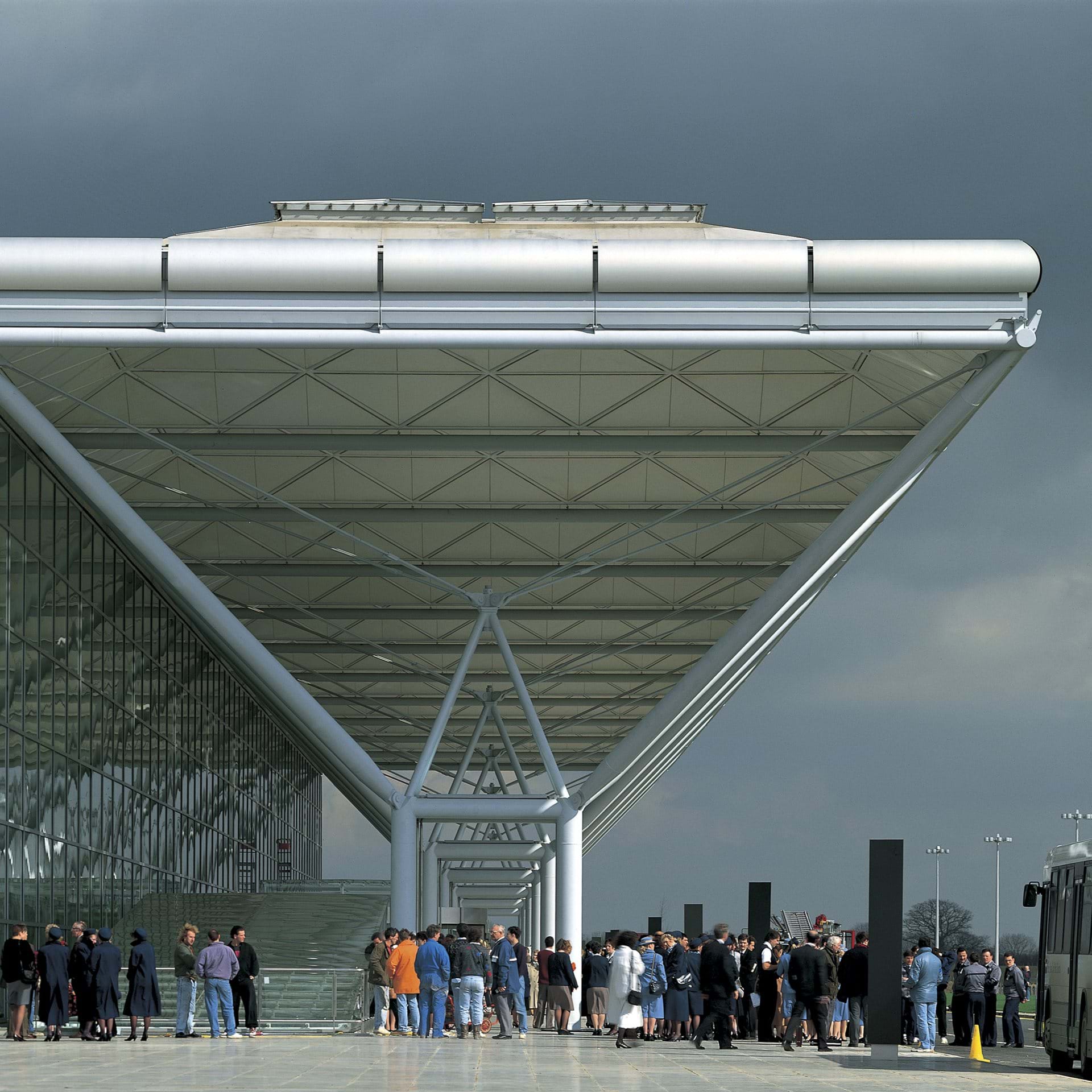 Photo of the Stansted Airport Terminal. Foster + Partners
Ultimately, this aesthetic aspect of Hi-Tech architecture would, in a way, dissolve into the Foster style Over the years, without ever going so far as to hide the “skeleton,” but allowing for a greater sense of organic integration between the building’s exterior and its other components—perhaps as a result of a greater awareness of the context.