In the History of 3D Printing It is evident that this technology has become more affordable and is being used more widely in homes and offices around the world
The 3D printing It is the latest advancement in the manufacturing industry. In this article, we will explain What is it?, how it works y which has been his historical development since its invention. You'll also learn what they are its uses and why it has become so popular.
What is 3D printing, and how does it work?
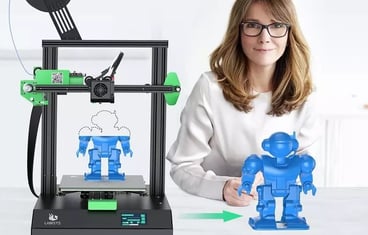
3D printing, also known as additive manufacturing, is a process that uses the design of a digital model created on a computer to make a object physical three-dimensional using various materials such as molten plastic, metals, or powders, by applying successive layers in a transverse and horizontal pattern on a construction platform. These three-dimensional objects They can take any form, from a toy to human organs.
This system runs using the stereolithography, which is a process that uses an ultraviolet laser to selectively cure a liquid photopolymer resin. The device originally used two crossed halogen lamps.
The American engineer Chuck Hull He discovered that using a single lamp could significantly improve the resolution of the models. The process was improved by adding support material and then developing properties resin-sensitive, which made it possible to create much simpler and more efficient support materials.
3D printing has also been used to create products with thin layers with a specific texture or surface finish rather than being carved from a single block of material, as in the case of the milling o carved. It can also be used to produce free-form objects from a wide range of materials, such as metal, plastic, and ceramics.
Although 3D printers are currently more expensive than traditional printers, they have evolved quickly in price, quality y ease of use. In general, the price of 3D printers has been steadily decreasing, and new, high-quality models are available
Applications of 3D Printing
3D printing is used in a a variety of industries that manufacture automobiles, household goods, toys, phones, aerospace parts, military parts, jewelry, works of art, clothing, footwear, and even food.
Currently, this technology is not only used to make prototypes; it is also being used in various fields, such as dentistry, education, medicine, and engineering and architecture.
This tool offers a cost-effective way for companies to produce customized products that meet high standards of quality a low costs.
The services 3D printing technologies are revolutionizing the industry by providing a new form of manufacturing; they have been around since the 1980, but recently they have become more affordable for small and medium-sized businesses.
Why is 3D printing so important?
The Impression 3D is an emerging technology that is revolutionizing the way people create physical objects. This tool enables the manufacture of complex shapes and products with a range of features. In the past, it was predicted that the ability to «print» objects virtually would have far-reaching effects on society, including a change in the way we work and live, and that is already happening; we can see it in the major advances in medicine, where, for example, prosthetic replacements are made for limbs that a person has lost. Today, their use is so commonplace that they can even be used in homes to produce everything from simple prints to high-quality ones.
The History of 3D Printing: A Timeline
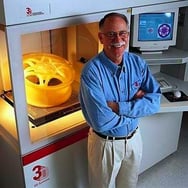 The history of 3D printing began in the 1980s when Chuck Hull, founder of 3D Systems, first developed the stereolithography and invented 3D printing. He was granted the first patent for this technology in 1988.
The use of 3D printers has been on the rise in recent years. The Technology Policy Institute estimated that about 1% of all manufacturing worldwide is done using 3D printing.
In 2013, a significant portion of commercial manufacturing was carried out using additive manufacturing (AM). However, not many companies were using 3D printing, as the costs were higher than those of other methods.
If we take a brief look at the history of 3D printing, we can find some key facts about this important technology:
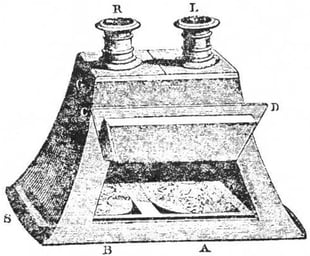
- 1840 – Charles Wheatstone invents the stereoscope, a device used to view three-dimensional images.
- 1976 – Some equipment and materials for manufacturing additives are being developed, which would later be used in this technology.
- 1981 – Hideo Kodama of Japan files the first patent for a 3D printing device.

-
1983 – Chuck Hull, an American, created the first 3D-printed object using stereolithography.
- 1984 – The Frenchmen Alain Le Méhauté, Olivier de Witte, and Jean Claude André filed their patent for the stereolithography process, but the French company General Electric and CILAS rejected it, citing business-related flaws.
- 1984 – Chuck Hull of the United States filed his patent for the stereolithography process three weeks after the French inventors had filed theirs.
- 1988 – The first patent for 3D printing is granted to Chuck Hull of the United States.
- 1991-1994 – Laser sintering technology is born.
- 1995 – The first was introduced MakerBot, which is a platform that uses 3D printing to upload, organize, and print files and track their progress from any device.
- 1996 – The first commercial use of 3D printers in dental laboratories is recorded.
- 1997 – Stereolithography (SLA) and fused deposition modeling (FDM) technologies are introduced. Rapid prototyping, commercially available with the launch of Dimensión SST, is also implemented.
- Among 1999-2000 – Powder-bed fusion (PBF) and selective laser sintering (SLS) technologies are incorporated.
-
Decade of 2010 until the News – Laser direct metal sintering, selective laser melting, and continuous liquid interface production (CLIP) are added.
.jpg)
3D printing is a interesting technology which has been around for several decades. The latest trends in 3D printing focus on make it easier to use y understanding by the consumers. Technology is becoming increasingly affordable for people, who will be able to create their own objects at home or at the office.
The process is complex and requires a lot of time and energy; however, with a little guidance and knowledge You can start your journey into 3D printing.