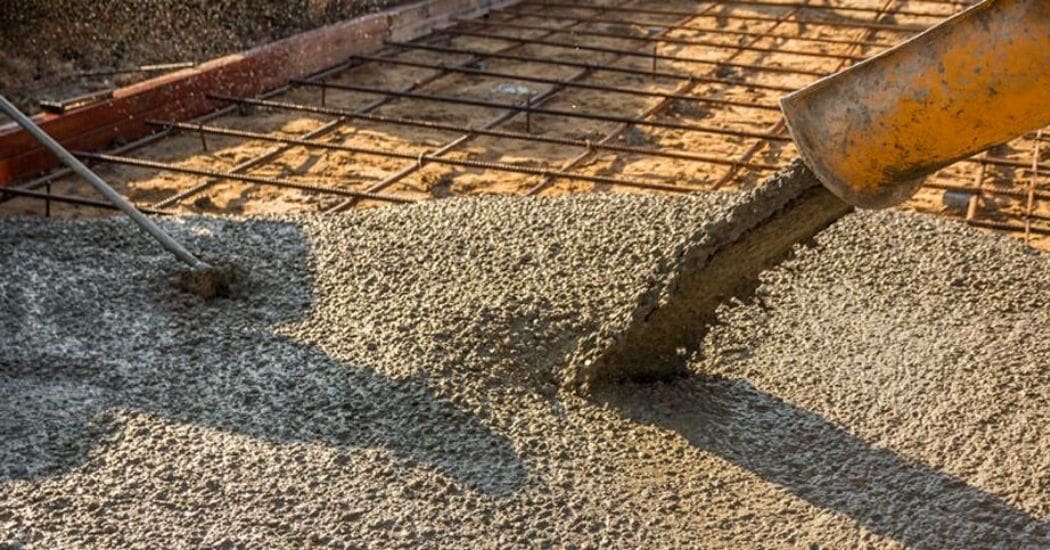
Concrete is, without a doubt, one of the most widely used materials in construction worldwide, and this is due to its affordability and practicality. But since it is a material that, in its most common form, comes from the mixture of a binder, with granular materials and a few additive. Different types can be produced by varying the proportions of the mixtures and additives, such as, for example, the self-healing concrete.
This time, we'll focus on concrete made from high-density or heavy. Which have a density greater than 3,200 kg/m3, while conventional concrete remains close to the 2400 kg/m3. This is because they are made from denser granules than usual, namely barite, magnetite, hematite, and a few others.
Uses of High-Density Concrete
It's normal to ask yourself that question What are the uses of heavier concrete?, at a time when there is a constant drive to make construction materials lighter and stronger. Contrary to that premise, the main characteristic of heavy concrete is that it has a greater weight for a smaller volume, and in most cases this does not result in an increase in the material’s mechanical properties.
Application of High-Density Concrete
But the reason for using this very specific type of concrete has little to do with its structural mechanical properties. It is a concrete used in armor for banks and safes, because it is so compact and difficult to penetrate; and, of course, it is widely used as counterweight in cranes, and in specific applications in structures to balance loads and increase mass without affecting the volume.
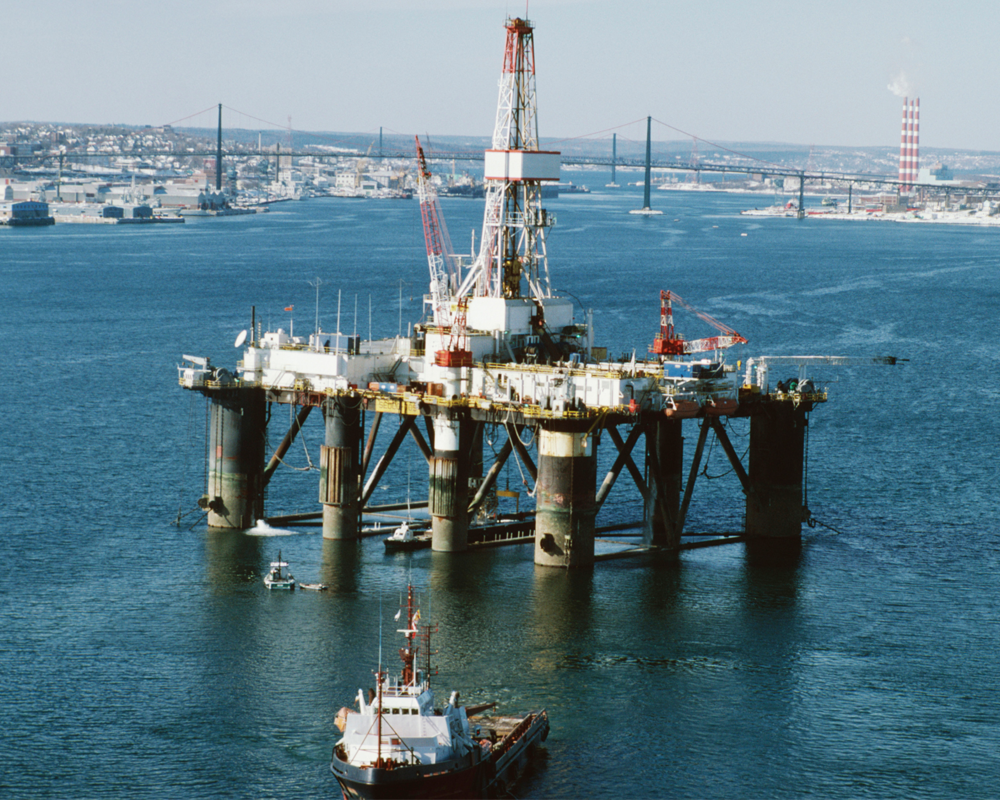
These features are also very useful in the construction of structural support and bracing elements underwater, due to the material's durability and its resistance to the corrosive agents in saltwater. Furthermore, high-density concrete is highly resistant to radiation, which is why it is commonly found in certain areas of hospitals and in Operating and decommissioned nuclear power plants, such as the case of the famous “The Chernobyl Sarcophagus”.
Considerations When Using High-Density Concrete
Mechanical Strength
As we mentioned earlier, the increase in the density of a heavy concrete mix, compared to an average concrete mix, does not imply a proportional increase in its mechanical properties such as compressive strength, impact resistance, abrasion resistance, tensile strength, etc. This means that, depending on the situation, additives must be added to the mix to help meet the mechanical requirements of the structure to be built with heavy concrete.
Protection against external factors
Because its primary applications are in biological protection, such as at a nuclear power plant or a structure built on the seabed; It must be taken into account that this type of concrete will be exposed to much more extreme external conditions than in ordinary structures. We are referring to the effects of large temperature variations, water retention capacity, thermal conductivity, specific heat, and coefficient of linear expansion.
Purity and Consistency
As for the mixing phase, measures must be taken to ensure that the large quantities of aggregates used—such as barite, magnetite, hematite, etc.—, do not generate excessive dust that could affect the properties of the concrete. In addition, of course, to taking the necessary precautions to ensure that the material's high weight does not affect its transport or application.
In short, although this type of concrete is not extremely common and does not have a particularly efficient strength-to-weight ratio, its main characteristic—high weight in a small volume—makes it suitable for very specific applications. But since it performs so well in these applications, we can expect that this material is far from disappearing.