Find out just how serious the the environmental impact of fossil fuels and CO2 on the atmosphere.
The Environmental Impact of Fossil Fuels and CO2
As engineers and professionals of all kinds, one issue that stands out as an inescapable reality is the environmental impact of fossil fuels. These natural resources—in the form of oil, natural gas, and coal—have been for decades the backbone of our modern society and they are present in virtually every aspect of our daily lives. From the transportation that takes us to work to the energy that powers our homes, Fossil fuels have driven progress and the comforts we enjoy today.
However, along with its invaluable usefulness, Fossil fuels have also led to significant and concerning environmental consequences. As professionals, we have a responsibility to address this challenge and mitigate the environmental impact it causes. In this article, we explore this complex and pressing problem on the environmental impact of fossil fuels, its implications for the environment, and the urgent need to find sustainable solutions that ensure a cleaner and more balanced future for future generations.
Why is the environmental impact of fossil fuels so harmful?
The environmental impact of fossil fuels is undeniable and manifests itself in various ways that threaten the integrity of our ecosystem. First, the burning of fossil fuels releases large amounts of carbon dioxide (CO2) and others greenhouse gases into the atmosphere, exacerbating global warming and climate change. This process causes extreme weather events, such as soil desertification, more intense storms, and the accelerated melting of glaciers, which are having a negative impact on biodiversity and natural ecosystems.
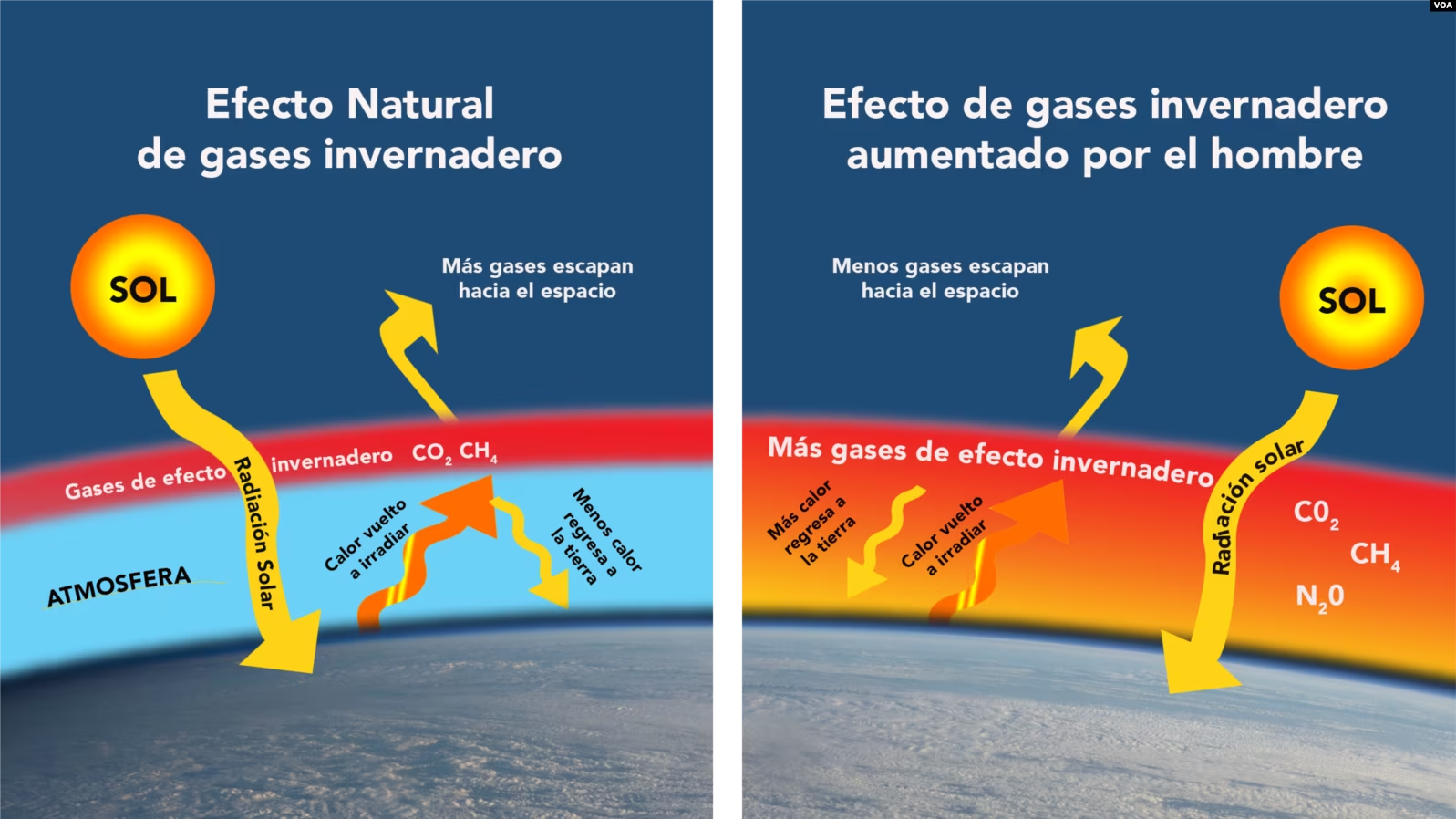
Diagram showing how greenhouse gases affect the atmosphere as a result of the environmental impact of fossil fuels. Vozdeamerica.com
In addition to the CO2, fossil fuels also release air pollutants, such as nitrogen oxides (NOx) y fine particles, which are harmful to human health and contribute to air pollution and toxic smog. The exploitation of these resources can also result in oil spills in oceans and seas, causing serious damage to marine life and coastal ecosystems. Furthermore, the extraction of coal and natural gas often leads to the destruction of natural habitats and landscapes, with devastating effects on the flora and fauna.
Major fossil fuels that are harmful to the environment
There are three main fossil fuels that have a significant negative impact on the environment. They stand out because are used on a massive scale on the planet even today, and they are the primary focus when it comes to mitigating the environmental impact caused by the use of fossil fuels.
1. Coal
-
-
Source: Coal is a sedimentary rock formed by the accumulation and decomposition of plant matter under anaerobic conditions over millions of years.
- Main Uses: It is used primarily to generate electricity in thermal power plants and as a source of heat in industry.
-
Environmental Impact: Burning coal releases large amounts of carbon dioxide (CO2), the primary greenhouse gas responsible for climate change. In addition, it emits sulfur oxides (SOx) and nitrogen oxides (NOx), contributing to acid rain and air pollution. Coal mining can also cause soil degradation and water pollution, negatively affecting biodiversity and ecosystems.
-
2. Oil
-
-
Source: Oil is a liquid fossil fuel formed from the decomposition of organic matter under specific geological conditions.
- Main Uses: It is widely used as fuel in transportation (gasoline, diesel, kerosene) and for the production of petrochemical products, such as plastics and industrial chemicals.
- Environmental Impact: The extraction, transportation, and burning of oil have devastating consequences for the environment. Oil spills in seas and oceans cause serious damage to marine life and coastal ecosystems. In addition, emissions of CO2 and other air pollutants during combustion contribute to global warming and air pollution.
-
.jpeg) Oil drilling platform, a major contributor to the environmental impact of fossil fuels.xataka.com
Oil drilling platform, a major contributor to the environmental impact of fossil fuels.xataka.com
3. Natural Gas
-
-
Source: Natural gas forms alongside oil and coal, but its extraction is primarily focused on underground natural gas deposits.
- Main Uses: It is used as an energy source for electricity generation, heating, cooking, and in industry.
-
Environmental Impact: Although its combustion emits less CO2 than coal and oil, natural gas is a significant source of methane, a greenhouse gas with a global warming potential much higher than that of CO2. Methane leaks during production and transportation contribute to climate change. In addition, natural gas extraction can disrupt local ecosystems and affect nearby communities.
-
What is their environmental impact?
The environmental impact of fossil fuels is growing every day and is causing a number of negative effects, such as the following:
1. Greenhouse gas emissions
According to data from the United Nations (UN), carbon dioxide (CO2) emissions rose dramatically by 62% between 1990 and 2019.
The World Health Organization (WHO) estimated in 2022 that the99% of the world's population breathes polluted air.This is due to unhealthy levels of nitrogen dioxide, which are primarily caused by the combustion of fossil fuels.
2. Water Pollution
The combustion of these natural resources releases high concentrations of sulfur and nitrogen; when these combine with gases in the atmosphere, they precipitate as acids, causing ocean acidification.
3. Loss of natural landscapes
Natural gas and oil extraction activities radically alter the landscape. This is because such activities destroy green areas that are sources of clean oxygen.
How can we reduce the environmental impact of fossil fuels?
When faced with any problem, we will always seek alternative solutions to minimize all of the aforementioned impacts, such as the following:
-
Become more aware of our electricity usage; to do this, we must choose renewable energy sources such as solar, hydro, or wind power.
- First and foremost, prioritize cycling and only use vehicles when necessary.
- Instead of using petroleum, let's start using biodiesel, which is made from vegetable oils and animal fats.
-
Hydrogen can be used in vehicles; it is an excellent option because it does not emit pollutants.
What are the benefits of reducing its use?
Reducing our use of fossil fuels benefits not only the environment but also our health.
- Pollution of the air, soil, and water bodies will be reduced.
- Lower greenhouse gas emissions will help slow the effects of climate change.
- Natural areas will flourish, and the landscape will be green again
-
Health will improve, and respiratory and cardiovascular problems will decrease.
As professionals committed to sustainability, we must promote the development and implementation of renewable energy, the increase in the energy efficiency and the adoption of responsible practices in the industry. Promoting sound environmental policies and education to raise awareness about the environmental impact of fossil fuels They are also essential for driving positive change in society.
Now that you know about the environmental impact of fossil fuels And if you're interested in this field—and are willing to explore it and learn more—we have great news for you! We're happy to share that Structuralia has theMaster's Degree in Energy Efficiency and Renewable Energy, where you'll learn how to approach an energy project in a sustainable way. A great opportunity to advance your career.
You can read our article about the coastal dynamics.