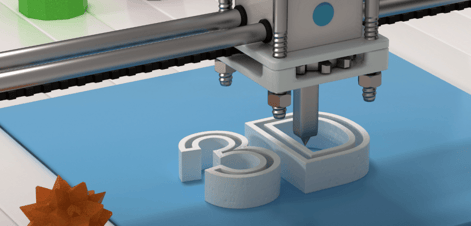
Advantages of 3D Printing in Various Applications
This technological advancement It has been very useful for various disciplines, which have been able to take advantage of its many benefits, such as:
- The product manufacturing tailored to individual needs.
- Optimize the surgical planning, which also makes it possible to explain the procedure to patients in advance.
- It facilitates the risk analysis thanks to the development of scale models.
- Simplifies the evaluation of the product functionality to start manufacturing from the very first unit without having to produce thousands.
What are the applications of 3D printing?
3D printing was originally used primarily to create prototypes of products for sale. Today, it has become a powerful tool for various disciplines that have made the most of this technology. Among its current applications, we can mention
1. In the field of medicine
3D printing has been widely adopted in this industry, thanks to the versatility and customization capabilities of this technology.
For example, in dentistry, models are created that achieve greater accuracy, uniformity, and precision—something that was unthinkable in the past. These include dental prostheses, molds for clear aligners, and rapidly produced castable patterns for crowns and bridges, among others.
In audiology, 3D printing has contributed to the production of ergonomic models for hearing aids, earplugs, and headphones.
In addition, it is used in the custom fabrication of prosthetic devices to replace a limb that a person has lost or is missing, resulting in models that are more anatomically accurate and comfortable.
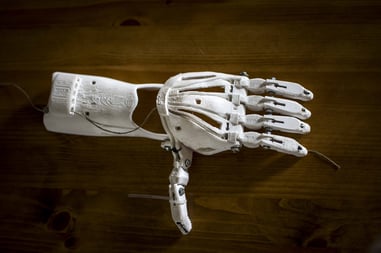
3D printing also allows doctors to scan a patient before surgery and create custom anatomical models to plan and practice before the surgery.
2. In the field of engineering
One of the areas that has also benefited greatly from 3D printing is engineering, because it has been able to improve manufacturing processes—not only in the design of products and tools, but also in prototype management, which allows for greater control over processes and a significant reduction in response times, enabling us to meet the required delivery deadlines.
It can be said that some of the engineering fields that make the most use of 3D printing are electronics, automotive, civil, and mechatronics.
3. In the field of architecture
The production of large-scale models that allow architects to analyze in advance The ability to predict with a high degree of certainty the effects of certain design features has been extremely useful in architecture.
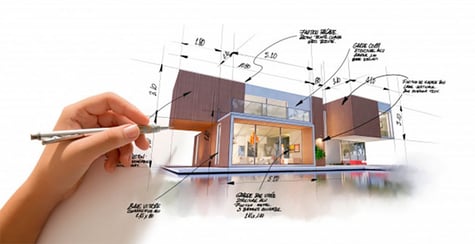
Having such an accurate model also helps companies boost their sales, since they can showcase all the features of their product designs with a simple 3D print.
With regard to housing construction, this technique has helped architects select materials for their projects that meet the criteria for sustainable, low-cost housing.
4. In space
The aerospace industryIt is no exception when it comes to using this wonderful technology; in fact, it is considered to have been the first field to begin using it—in the construction of spacecraft and spacesuits.
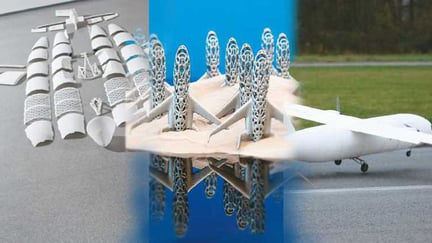
The aerospace industry requires the creation of parts with complex geometries that are lighter and stronger. 3D printing has emerged to meet that need.
Thanks to this technology, it has been possible to manufacture all kinds of components—from the simplest to the most complex—using a wide variety of materials such as steel, aluminum, titanium, and various types of plastics.
5. In the field of the arts
3D printing techniques have also been used to create works of art physical objects by scanning photos and even sculptures.
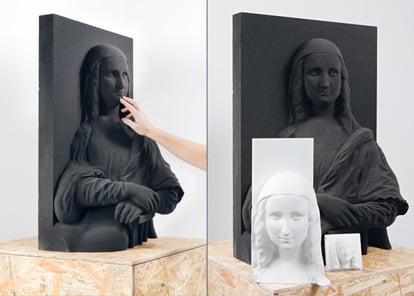
Also in the manufacture of physical components for visual effects In the film industry, 3D printing has been used extensively, making it easier, faster, and more precise to carry out the vast amount of handcrafted work that was previously required. For example, there are the fantastical creatures we see in many science fiction movies. This technique is also used to create costumes for various film productions.
3D printing has made a major contribution to the restoration of works artworks, many of which have regained their former splendor.
6. In the field of education
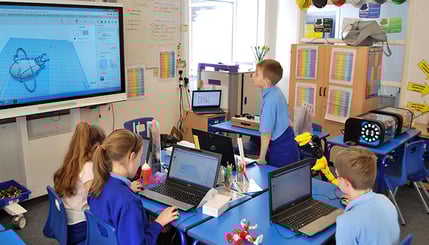
3D printing promotes student creativity, and it also allows them to analyze the subjects they are studying—such as plants, human organs, and models, among others—in greater detail.
7. In the culinary field
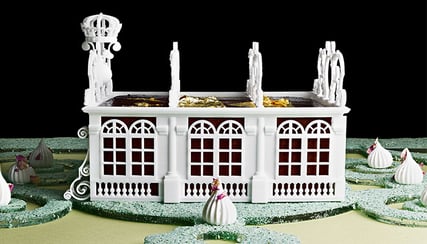
3D technology has made it possible to food printing to analyze its components, thereby helping to select or separate its ingredients in order to identify, for example, allergens, specific types of proteins that some people may require, the viscosity and temperature of the food, etc. With the 3D printers All of these factors can be modified to create healthier foods that are easier to swallow.
We can conclude that 3D printing has been a major technological breakthrough that has revolutionized all disciplines, improving their processes in terms of material use and turnaround time.
The multiple The applications of this technology don't stop there; little by little, it has been making inroads into other areas such as the manufacture of clothing, footwear, jewelry, and so on, demonstrating that there are countless ways to continue making use of this wonderful discovery.