The Electrical installations in homes It is the set of systems that distributes electrical power from the distribution network to the various points of consumption within the building. Its design must ensure safety, efficiency, and proper operation in accordance with the Low-Voltage Electrotechnical Regulations (REBT).
In Spain, the regulatory framework is the Low-Voltage Electrotechnical Regulations (REBT). In Latin America, each country has its own electrical regulations (RETIE in Colombia, NOM-001-SEDE-2012 in Mexico, IRAM/AEA in Argentina, NCh in Chile, among others), but they all share common principles: overload protection, ground fault protection, proper distribution of independent circuits, and appropriate sizing of the installed power capacity.
If you want to understand how a residential electrical system is structured, what components it consists of, and how to properly size it according to international technical standards, this is the article for you.
What Should You Know About Electrical Installations?
Every electrical installation in a home must comply with three universal technical principles:
- Protection of people against direct and indirect contact.
- Overload and short-circuit protection.
- Guarantee of proper operation of the electrical circuitry.
In the case of Spain, the ITC-BT-25 sets forth the minimum requirements for indoor installations in residential buildings.
In Latin America, although regulations vary by country, the fundamental criteria are the same:
- Definition of degrees or levels of electrification.
- Division into independent circuits.
- Protection provided by circuit breakers.
- Residual current protection.
- Overload Limitation.
A residential electrical installation that does not meet these criteria compromises safety and may be technically unfeasible or legally invalid.
In addition to regulatory compliance, it is advisable to follow best professional practices, as promoted by the National Federation of Electrical Installation Companies in Spain.
Levels of Electrification: Defining Basic and Advanced Electrification
When you begin designing a Electrical Installation in a Home, the first crucial technical decision is to determine the Degree of Electrification. This rating depends on the total floor area of the home and the intended use of electrical appliances and the estimation of simultaneous power demand.
The following is established: Basic Electrification (EB) as the minimum required by the REBT, applicable to homes with floor areas of less than 160 m² and where intensive use of high-power appliances is not anticipated. For this rating, the minimum rated power is 5,750 W (25 A).
On the other hand, the High-Voltage Electrification (EE) It is mandatory not only for homes with a floor area exceeding 160 m2, but also for those that, regardless of their size, are designed to include high-energy-consumption systems, such as a standalone dryer, central heating, or central air conditioning. In this case, the residential electrical system It must provide for a minimum of 9,200 W (40 A). A defining criterion is that the mere need to install an additional circuit beyond the five required basic circuits automatically raises the rating to EE.
Components of an Electrical System
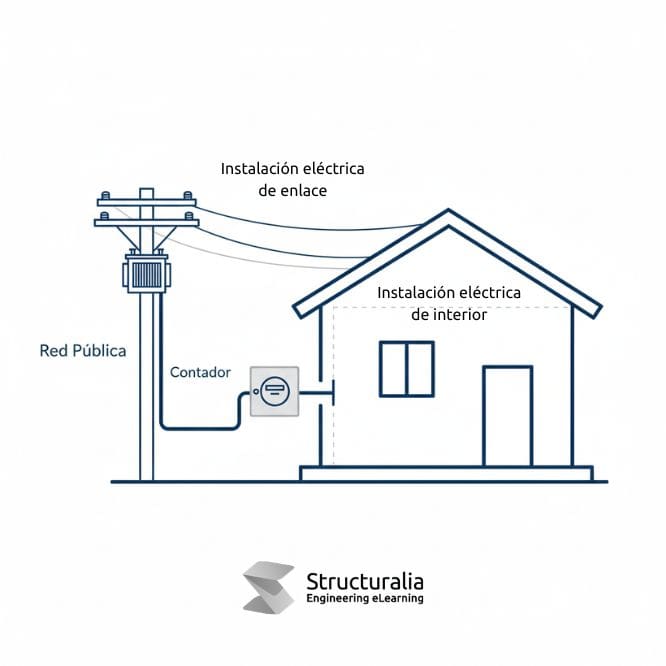
From a technical standpoint, the facility is divided into two main sections:
- Electrical Connection Installation (from the public grid to the home).
- Indoor Electrical Installation (internal distribution).
Electrical Connection Installation
This is the section that connects the distribution network to the building's internal system.
Includes:
- Rush.
- General safety measures.
- Meter or counter.
- Individual branch circuit to the electrical panel.
Its function is transmit electrical energy safely to the main control and protection system.
Nightlight
It is the electricity delivery point by the utility company. This is where the meter that records energy consumption is located.
Practical Example
Imagine the metal cabinet or niche which is usually located on the front of a single-family home or in the utility room of a building. Inside is the meter (counter) digital. That device is the perfect example: it's where the company «releases» the energy and measures how much it's going to charge you.
Nexo Light
It is the connection between the meter and the indoor electrical panel, allowing the electrical current to flow to the control and protection systems.
Practical Example
In an apartment building, it is the set of cables that run up through the central duct of the building (the wiring) from the meter room on the ground floor to the door of your apartment. You can't see these wires because they run inside the wall, but they're what carry electricity specifically to your home.
Light at the End of the Tunnel
It represents the point where The wiring installation is integrated with the interior electrical system, usually in the main electrical panel.
Practical Example
It is the switch box (the «circuit breakers») that are usually located right behind your front door. When the power «trips» because you’ve plugged in too many appliances, this is where you’ll flip the switch. It’s the point where the outdoor wiring ends and the indoor wiring to your rooms begins.
Indoor Electrical Installation
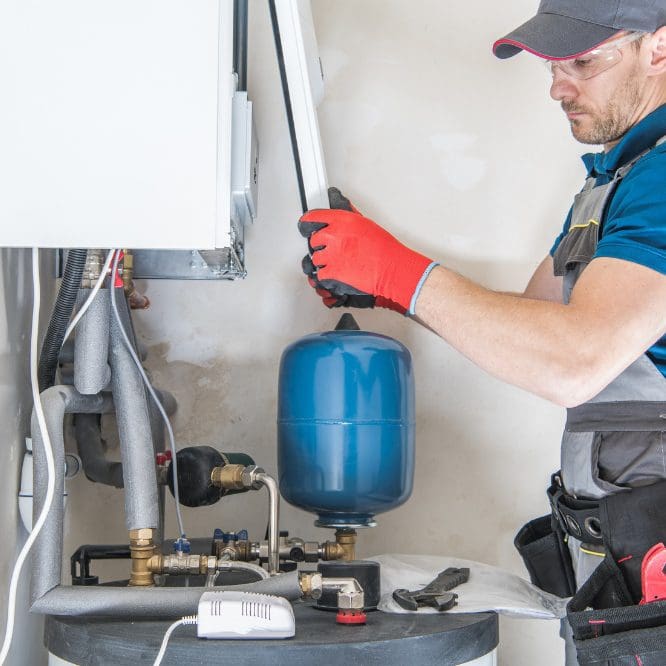
It is the a set of electrical circuits that distribute power throughout the home.
Includes:
- Electrical panel.
- Drivers.
- Electrical outlets.
- Lighting points.
- Control and Protection Devices.
Separate electrical circuits in the home
The division into independent circuits is a universal technical principle. In the REBT model (Spain), the basic electrification It establishes five minimum circuits:
- C1 – Lighting (PIA 10 A).
- C2 – General-purpose outlets (PIA 16 A).
- C3 – Stove and Oven (PIA 25 A).
- C4 – Washing machine, dishwasher, and electric water heater (PIA 20 A).
- C5 – Outlets in wet areas and kitchen utility areas (PIA 16 A).
In Latin America, although the terminology may vary, the functional segmentation is the same: lighting, general-purpose outlets, and dedicated high-power circuits.
When required, additional circuits are added for air conditioning, dryers, electric heating, or automation.
Interior Electrical Wiring
Conductor sizing must be performed in accordance with:
- Rated current of the circuit.
- Length of the section.
- Permissible voltage drop.
- Grounding system.
In the REBT model, the lighting circuit (C1) is limited to a maximum of 30 light fixtures. In addition, each ground-fault circuit interrupter can protect up to five independent circuits.
These technical criteria have equivalents in Latin American regulations, although the specific values may vary.
Levels of Home Electrification
The concept of the degree of electrification corresponds to the projected installed capacity. In Spain:
- Basic Electrification (EB) → 5,750 W (25 A).
- High-Voltage Electrification (EE) → 9,200 W (40 A).
In Latin America, although the same terminology is not always used, sizing based on simultaneous demand and area is equally mandatory.
The addition of extra circuits or high-power equipment requires a recalculation of the expected power and the sizing of the electrical panel.
Electrical System Diagrams
The single-line diagram of the electrical panel allows you to represent:
- Main circuit breaker.
- Ground-fault circuit interrupter.
- Surge protection.
- Circuit-by-circuit circuit breakers.
You can view the detailed diagram of the entire electrical panel here: Diagram of the Home's Electrical Panel
Graphical representation is essential for inspection, maintenance, and future expansions.
Basic Electrical Circuits in the Home
Each circuit has its own circuit breaker. In the REBT model, each ground-fault circuit interrupter can protect one a maximum of five circuits. If these limits are exceeded, additional residual current devices must be installed to prevent a leak from cutting off power to the entire home.
This Principle of Selectivity and Sectorization This is common in technical regulations in Latin America.
Verification and Certification
Once installation is complete, the electrical system in a home must undergo a rigorous technical inspection. The goal is to ensure proper operation and compliance with the regulations in effect in each country.
Among the mandatory checks These include:
- Measuring ground resistance.
- Checking the continuity of the protective conductor.
- Sensitivity and tripping test of the ground-fault circuit interrupter.
- Testing the operation of circuit breakers in response to overcurrent conditions.
A professional installer is required to have a detailed understanding of each of the Supplementary Technical Instructions (ITC), since they specify critical parameters, ranging from the minimum conductor cross-sectional areas to the minimum number of electrical outlets per room.
A residential electrical installation that does not comply with these regulatory requirements is considered unsafe and illegal, putting both property and, most importantly, the lives of users at risk by compromising the proper functioning of essential protection systems.
To comply with regulations, it is advisable to have qualified personnel who possess the Low-Voltage Certificate (Electrical Installer License).
In Spain, the process culminates with the Issuance of the Installation Certificate (Report) by an authorized installer. In Latin America, although the term varies by country, the principle is the same: only a licensed professional can legally certify an electrical installation.
Conclusion
The electrical installation in a home is a regulated technical system that requires knowledge of regulations, the ability to perform calculations, and proficiency with control and protection devices. The correct sizing of individual circuits, the proper configuration of the electrical panel, and verification of compliance with regulations are key factors in ensuring safety, legal compliance, and the continuity of power supply.
Professional work on low-voltage systems leaves no room for improvisation. Regulations establish specific requirements regarding conductor cross-sections, ground-fault protection, power capacity, and final certification. Therefore, to carry out a complete electrical installation in a residence, it is essential to hold the appropriate certification as an authorized installer.
If you want to get the Electrical Installer License and to ensure you're fully prepared to pass the official exam, you can further your education through the Certification in Low-Voltage Installations (Preparation Course + Official Exam).
Specialized training in low-voltage systems not only ensures compliance with legal requirements but also builds the technical skills essential for working with professional rigor in the electrical sector, both in Spain and in Latin America.