Originally published on May 31, 2016; updated on November 21, 2024.
Learn about the Tokyo SkyTree Communications Tower one of the tallest and most interesting communications towers in the world.
Tokyo Skytree: Japan's Great Communications Tower
As part of the World Television Day, celebrated every November 21, it is fitting to reflect on the significance of communication towers in our modern society. These imposing structures, which soar toward the sky, have been fundamental to The evolution of television as we know it today. Telecommunications towers Not only do they enable the transmission of signals over long distances, but they also support a wide range of technologies that form the backbone of global communication. In this context, the Tokyo Sky Tree, one of the the world's tallest telecommunications towers, is an outstanding example of how modern engineering continues to push the boundaries to improve our lives.
What is a television and radio broadcast tower?
Television and radio broadcast towers are structures built to to broadcast radio and television signals over a wide area. These towers function by housing antennas and transmission equipment at the top of their structure, allowing signals to travel greater distances with minimal interference. The height of these towers is crucial for maximize signal range, ensuring optimal coverage even in uneven or densely populated areas. In addition, telecommunications towers such as the Tokyo Sky Tree Not only do they facilitate television broadcasting, but they also support services such as radio, the Internet, and mobile telecommunications, making them an essential pillar of the global communications infrastructure.
Tokyo Sky Tree: A Colossus of Technology and Architecture
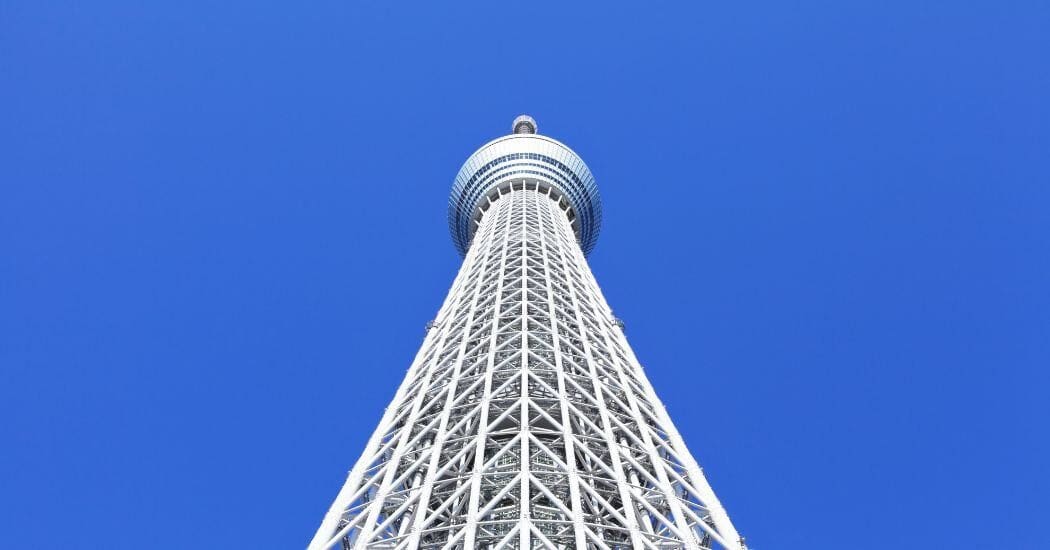
The Tokyo Sky Tree, located in the heart of Tokyo, Japan, is one of the most impressive telecommunications towers in the world. Opened in 2012, this tower rises to an astonishing height of 634 meters, making it the tallest structure in Japan and one of the tallest in the world. Its construction, which took just over three years, is a testament to the skill and vision of the engineers and architects who worked on it. Designed to withstand earthquakes and typhoons, the Tokyo Sky Tree It is equipped with advanced earthquake-resistant technology, making it one of the safest structures in a country prone to natural disasters.
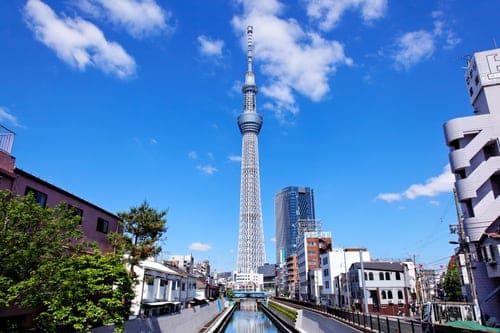
A view from the city of the Tokyo SkyTree, one of the tallest communication towers in the world. The Gate
The architectural design of the Tokyo Sky Tree It is not only functional, but also reflects traditional Japanese aesthetics. Inspired by the pagoda With five levels, the tower features a central damping system which acts like a pendulum, reducing oscillations during an earthquake. This approach combines modern technology with elements of traditional design, creating an icon which not only serves its purpose as a telecommunications tower but is also a symbol of Japanese innovation and resilience.
The Future of Television and Radio Towers
We believe that the future of television and radio broadcast towers will be shaped by a greater integration of digital and sustainable technologies. The shift toward 5G communication networks and the growing demand for real-time streaming services are driving the development of more advanced and efficient towers. These towers not only they should be taller and sturdier, but they will also have to implement systems that minimize their environmental impact. In addition, multifunctionality will be key, with towers that support not only television and radio broadcasting, but also a wide range of telecommunications services, such as the Internet of Things (IoT) and high-speed data transmission. Undoubtedly, structures such as the Tokyo Sky Tree will continue to be an inspiration to future generations of engineers and architects.
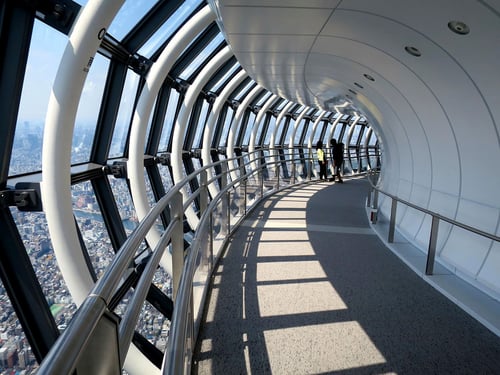
Inside the public area of the Tokyo Sky Tree. GajinPot
In this World Television Day, it is essential to recognize the vital role that telecommunications towers play in modern society, and how they continue to evolve to meet the demands of the future. The Tokyo Sky Tree It is a prime example of what can be achieved when engineering and architecture come together with a common purpose: improving quality of life through technology. We invite all engineers and architects to never stop learning and specializing in areas that can contribute to the development of more efficient and sustainable infrastructure. An excellent way to do this is to explore the catalog of online courses and master’s programs offered by Structuralia, which focus on engineering and innovation, so that together we can build a better future for society.