
The implementation of The Phases of the Scrum Methodology It can improve time management and product quality at your company.
Roles and Profiles in the Scrum Methodology
Within the methodology, each team member plays a a key role in ensuring success. The main ones include:
-
Scrum team: Their collaboration and commitment drive the project forward.
- Product Owner: Act as an advocate for the client's goals.
-
Scrum Master: His role is to facilitate the workflow and solve problems.
These professionals form a dynamic and highly efficient team that drives the delivery of exceptional results.
Benefits of Implementing Scrum
Integrate the phases of the methodology Scrum Incorporating it into a company's workflow offers numerous benefits, including:
- The time management and resources.
- More realistic and precise delivery deadlines are established.
- Enhance the quality and value of the product or service end.
- This leads to greater customer satisfaction and stronger partnerships.
- It fosters a more positive and proactive work environment.
-
In general, there is an increase in the productivity and competitiveness business.
Understanding the Phases of the Scrum Methodology
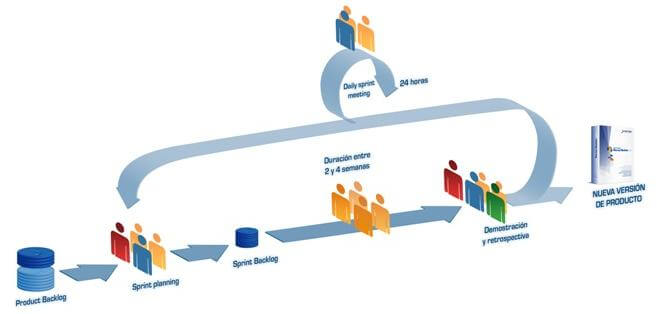
The Methodology Scrum It is divided into several phases that serve a crucial purpose in the project management process.
1. Sprint Planning
Planning for the sprint marks the beginning. Specific tasks are assigned to members, so it is essential to establish a roadmap clear and realistic to ensure effectiveness at all times.
2. Team Meetings
Short, daily meetings allow teams to assess their progress, identify potential obstacles, and set priorities for the day. Clear and consistent communication is the key to success.
3. Refining the Backlog
The backlog is a to-do list that is reviewed regularly to assess progress. The Product Owner plays a crucial role in this phase, as it ensures that tasks are managed and problems are resolved.
4. Sprint Review
This phase involves meetings with the client to present the results obtained so far. The feedback Customer satisfaction ensures a positive outcome and strengthens the customer-company relationship.
5. Retrospective
Once the project is complete, it is essential to conduct a thorough review of the entire process. Identify the strengths and weaknesses The project provides valuable information for improving future approaches.
Make the Most of Your Scrum Experience
If you'd like to gain a deeper understanding of Scrum and other agile methodologies, we invite you to explore our Master's Degree in Agile Project Management. With a wide range of educational resources and courses, Structuralia offers you the opportunity to develop the skills needed to lead and manage projects efficiently and effectively.
Scrum It is much more than just a project management methodology; it is a collaborative approach that drives efficiency and business success. By adopting the various practices and the phases of the methodology Scrum, Companies can improve their ability to deliver projects effectively. This enhances their competitiveness in a constantly evolving business market.
Discover 3 agile methodologies to succeed in digital transformation.