Find out how a student analyzes a bid for a road project under a public-private partnership (PPP)From the perspective of an investment fund.
Master's Thesis: Executive Report on Bid No. 1/2016 for the Public-Private Partnership Highway Project “Design, Construction, Operation, and Financing of Road Infrastructure on Routes No. 12, 54, 55, 57, and the construction of the Carmelo City Bypass, CIRCUIT 1, in Uruguay.”.
Master's Thesis Project: Master's Thesis for the International Master's Degree in Public-Private Partnership Projects
This Master's Thesis for the International Master's Program in Public-Private Partnership Projects consisted of setting out to inside the shoes of a financial analyst at an investment fund dedicated to investing in public-private partnership (PPP) projects through project finance. The client was a company engaged in the development of highway concession projects that sought financing from the Fund to participate in a public tender for the design, construction, operation, and financing of certain routes in the city of Carmelo, Uruguay, in 2016. To this end, the bidding documents had to be carefully analyzed to identify red flags regarding the project’s financial viability, but above all with regard to the repayment of the debt to the Fund, that is, a feasibility and risk analysis from the financier's perspective. What an interesting perspective!
1. Description of the Road Concession Project
The project includes the design, construction and/or rehabilitation, maintenance, and financing of 17 subsections within the 4 sections mentioned and the bypass, totaling 260.27 km. In this regard, it is important to note that the project includes a section greenfield where new road projects that do not yet exist must be designed, planned, built, and maintained; yellowfield where the facilities require major expansions and renovations; and brownfield where certain sections exist and are operational, and must be brought up to standard in accordance with the requested and maintained service indicators.
The contract is in effect for a 20-year term and the maximum bid amount is 3,000,000,000 Indexed Units (Uruguayan currency indexed to the dollar to offset inflation, which has reached a cumulative total of 530% over its 22-year history). The bidding documents for participation in the
Payment to the contractor is made using formulas based on three components—A, B, and C—that take into account service indicator variables through technical coefficients, the completed infrastructure, and traffic on the sections that have been repaired, rehabilitated, constructed, maintained, and repaired, which indicates that Revenue includes a portion that is uncertain fluctuations in the automotive market, posing a risk to a lender regarding debt repayment.
The public bidding process involves prequalification of interested parties, followed by the submission of a technical proposal based on 30% of the qualification criteria. and a price quote for 70%, showing that productivity and price are the main deciding factors.
Figure 1: Documents Analyzed by MTOP Uruguay
2. Project Risk Analysis
A risk weighting was performed based on the methodology applied by Ecuador’s Ministry of Economy and Finance. The methodology assigns a score between 1 and 9 to each risk, where 0 indicates the absence of risk and 10 indicates a risk that has materialized and has a high impact, making it impossible to manage or mitigate. The methodology is summarized in the following chart and consists of multiplying the probability score by the impact score to obtain a risk score:
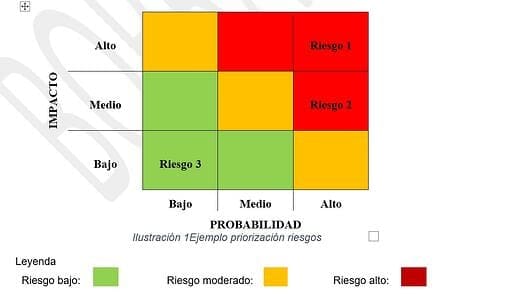
Figure 2: MEF EC Risk Methodology
The rating of overall project risk, where the simple average of all the weightings for the various risks is was 3.56, equivalent to a project with moderate risk, in addition to the fact that In May 2022, Uruguay's EMBI (JP Morgan Emerging Markets Bond Index) reached 1.53 Since the region has an average of 4.18 and the global average is 3.85, the country faces slight macroeconomic risks.
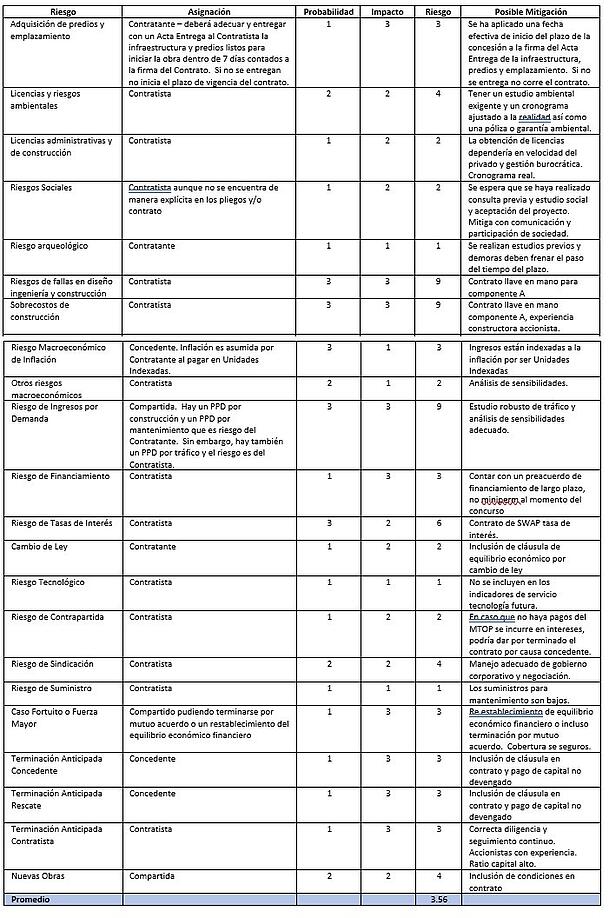 Figure 3: Project Risk Weighting
With regard to risk distribution, it is concluded that, in principle, the following is followed: international best-practice guidelines and although the project involves a high transfer of risk to the contractor, an analysis was conducted of certain risks deemed significant by the Fund:
- The most complex aspect is the assumption of the litigation risk (revenue that depends on traffic volume) as one of the three components of availability-based payment, which effectively amounts to a pay-per-use fee or shadow toll. This means that financial models must demonstrate viability even with a revenue reduction of up to 10%, without jeopardizing debt repayment.
- It should be noted that, in the event of strikes or social unrest, would not be considered force majeure, and these risks may fall directly on the contractor; therefore, it is important to obtain feedback on public acceptance of the project and to conduct prior consultation.
- Repayment of the debt to the lender is secured as a first priority, and step-in rights are guaranteed, subject to the contracting entity’s approval. However, Please be advised that in the event of early termination Performance guarantees will be used to repay the senior debt; however, if any balance remains, it must be paid by the shareholders, which is why direct guarantees or collateral from the shareholders will be required.
- The bidding documents provide for arbitration in Uruguay—as an alternative to the ordinary courts of Uruguay—as a means of dispute resolution, whereby the arbitral award will be final and non-appealable. This option for domestic arbitration constitutes a potentially unacceptable risk since there could be a bias in the arbitration, and it is not in line with standard practice to hold an international arbitration in New York or London
3. Analysis of the Information Provided (from the lender's perspective)
An analysis was conducted of the information provided in order to identify necessary studies or missing information needed to make a reasonable decision regarding the project’s funding:
- The bid documents included a traffic study per day and per section, based on information collected over the years regarding the existing sections; however, it is necessary to commission a robust traffic study from a highly reputable company, preferably an international one. The study will help confirm or provide new estimates and, above all, future projections. This is essential for defining the parameters of the financial model regarding revenue declines and maximum financing levels.
- Since this is a highway with greenfield components, it is important to request a a preliminary analysis of potential environmental and social impacts that could entail reputational risks, unplanned remediation costs, and, in addition, possible resettlements of people and social protests against the project.
- A request must be submitted due diligence regarding the existing infrastructure, the legal status of the properties, and the legal framework for the bidding process. This analysis will be commissioned to a local firm with knowledge of local laws. It will also be necessary to estimate the time required to obtain construction permits, environmental permits, and other necessary approvals to ensure that deadlines can be met, particularly with regard to the operation of the infrastructure.
- The client company should be asked to provide a study of cost prefeasibility study operating and maintenance costs, as well as construction costs. This study is a vital part of the process that private bidders must complete before submitting a bid. The information gathered, along with a contingency for unexpected risks, would be used to prepare the financial business model and develop the Economic and Financial Plan and, based on this, the final proposal, both technical and financial. Although this study must be conducted by the private bidder—to avoid agency problems—the fund will require an audit or verification of the studies.
In conclusion, regarding the information provided, although the project is well structured, the demand risk is quite high, and the financial conditions and policies that will be imposed on the private sector—and which will be reflected in the financial model—depend on vital information that must be supplemented or gathered, such as: a traffic study, a socio-environmental study, due diligence on the necessary infrastructure and land, and pre-feasibility-level cost estimates. Without these studies, a financing proposal could not be submitted for the bidding process.
4. Other Project Conditions (for the contractor and financier)
When preparing the financial model and economic and financial plan, it is important for the Investment Fund to take the following considerations into account:
- Minimum Paid-in Capital The contract terms stipulate that shareholders must contribute at least 15% of share capital to the Special Purpose Project Company out of the total required CAPEX, and that 25% of this amount must be contributed at the time of formation, with the remaining 75% of share capital within 4 months. This means that financing must cover no more than 75% of the CAPEX.
- Limit on the Reduction of Net Worth Under no circumstances during the term of the contract may the share capital and equity belonging to the SPV’s private sector be reduced; should this occur, it may be considered grounds for termination by the concessionaire if prior, justified authorization from the Contracting Entity has not been obtained.
- Authorization in the Event of the Issuance of Bonds or Other Debt Instruments If it is decided to finance the project with bonds or other debt instruments, approval must be obtained from the contracting entity prior to signing the contract.
- Authorization and Prohibition on the Transfer of Shares The transfer of shares is prohibited until construction of the project is completed. Such transfers may only be made with the contracting entity’s authorization for a maximum of 20%, provided that the SPV maintains the solvency ratios required for the bid. These requirements are a liquidity ratio of 1, a maximum leverage ratio of 2, and a profitability ratio of 5% for the main shareholder construction company.
- Required Collateral and Reserve Fund A performance bond in the amount of $1,600,000 U.S. dollars and a repair fund of $1,600,000 U.S. dollars are required for the construction and commissioning phase. For the operation and maintenance phase, a performance bond of $2,500,000 dollars is required, which must be maintained for up to 12 months after the asset is returned. A minimum of 1.5% will be withheld from the availability payment and placed into a provision fund to be used to compensate for any conditions not met at the time of asset delivery in accordance with the required terms. This amount will be returned up to 2 years after the final delivery of the assets.
- Cost of the Trust The contractor must deposit $1,700,000 indexed units into the trust fund annually, which will be used to cover the costs of the comptroller or auditor.
Conclusions Regarding the Financial Information on the Contractor and the Lender
The conditions presented here impose limitations on both the financing and management strategies of the project’s special-purpose entity, which must be taken into account by both the financier and the contractor. In addition, costs—particularly those related to guarantees, funds, and trusts—must be incurred, which reduce operating cash flows; these must be factored into investment and maintenance costs, thereby reducing the cash flow available for debt service. This must be included in the financial model in order to calculate the necessary debt coverage ratios and even in the sensitivity analyses that the Fund must require the contractor to provide.
5. Sensitivities of the Proponents' Financial Model (for the financier)
The project specifications require a summary providing information on the results of applying different sensitivities to selected variables and their impact on other selected variables. The sensitivities applied must reflect the impact on the following variables using the financial model: Shareholder IRR, Project IRR, and ratios of debt service coverage – DSCR (minimum and average).
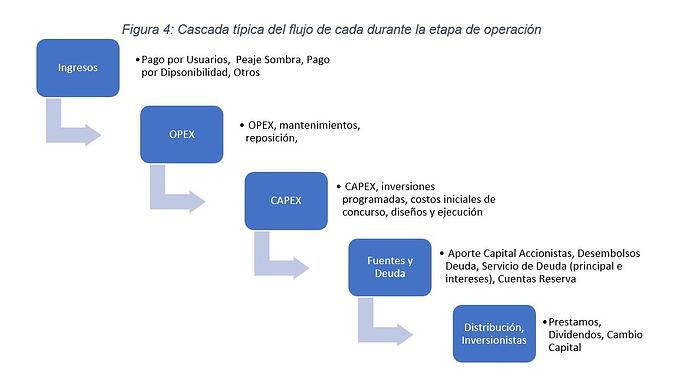 Figure 4: Cash Flow Waterfall for Project Finance
The variables and the magnitude chosen for the sensitivity analyses are:
- Variation in initial construction costs by ±15% (this is understood to be the total CAPEX required for the first phase for components A, B, and C). A CAPEX increase of 25% should be considered, as road construction may result in significant cost overruns.
- Variation in investments related to major maintenance during the operational phase by ±15% of CAPEX. It is concluded that they are sufficient.
- Reduction in the PPD's annual revenue by 5% due to deductions (this would be the total PPD). This is considered insufficient for the financier. It is understood that if a reduction of -8% occurs for two consecutive years, this would constitute grounds for termination by the concessionaire. For the lenders’ purposes, a decline of -10% in the PPD should be considered, which could occur due to an overestimation in traffic projections.
- Sensitivity to an increase in the 15% funding rate. It is considered unnecessary as long as the cost of implementing the interest rate swap is included in the operating and financing cash flows.
Although the key impact variables have been requested for the financier's use, the additional variables should include:
- Loan-to-Life Coverage Ratio – the ratio of the present value of revenues over the repayment period of the financing to the total net present value of the overall debt service
- Project Life Coverage Ratio – the ratio of the present value of revenues over the total project period to the net present value of total debt service
These variables would help ensure that the financier's risk comfort limits are not exceeded, with the LLCR being the most stringent.
In addition to the required sensitivities, the financier must request a sensitivity analysis and an assessment of its impact on the aforementioned variables (shareholder and project IRR, minimum and average DSCR, PLCR, and LLCR) based on the following variables:
- Impact of a Increase in OPEX in 10% that was not previously taken into account and may occur due to inflation or cost overestimation.
- Present a pessimistic scenario including: +15% in initial CAPEX, -10% in PPD, +5% in repair CAPEX, and +5% in OPEX
- You could run a sensitivity analysis using the variables standard stochastic model Monte Carlo to determine whether the "No Funding" scenarios are less than 10%.
6. Conclusion and Recommendation
Based on the summary and analysis presented in the Master’s Thesis, it is concluded that the investment opportunity for the Investment Fund for highway concessions in Uruguay is moderate risk and would be attractive because Uruguay's MTOP is an entity with a proven track record. Furthermore, Uruguay does not have a country risk rating below investment grade, and the project is properly structured.
In this regard, the Fund’s analyst’s financial and economic analysis should recommend to continue working with the client and request additional tests required. Once this information is available, the agreed-upon financial model can be completed and financial terms can be included to mitigate market risk due to PPD, such as shareholder loans, as well as the difference between the outstanding debt each year and the concessionaire’s performance guarantee, and finally include a debt service reserve account for 1 year.
AUTHOR'S REVIEW:
Santiago Martín Ramírez Chiriboga is an economist I am an Ecuadorian graduate of the University of San Francisco in Quito with more than 10 years of professional experience and 5 years specializing in loans for social, environmental, and infrastructure development. With a Master of Science in Economics by the University of Amsterdam in the Netherlands and a Master's Degree in Finance from EUDE Business School in Spain. I recently earned the degree of International Master's Degree in Public-Private Partnership Projects issued by Structuralia and accredited by Isabel I University in Spain.
I have held positions in economics, finance, statistics, and strategy in the areas of Risk, Credit, and Investments, market intelligence, program and project management, social and environmental development, and technical assistance at development banks, the Ecuadorian Ministry of Economy and Finance, and the United Nations Development Program (UNDP). I currently serve as Expert in Structuring and Risks of Public-Private Partnerships (PPPs) for the U.S. Department of the Treasury in its mission to support the Government of Ecuador.
AUTHOR'S STATEMENT:
1. Why did you choose Structuralia?
«I chose this program after researching online and finding that it offered the best value for the money, since the price is affordable—especially with the OAS scholarship opportunities—the subject matter and courses are quite specific and therefore professional, and its online learning platform is functional and user-friendly on both computers and smartphones. Furthermore, as I explored Structuralia, I was drawn to the fact that it is an institution largely dedicated to engineering; therefore, from my background in finance and economics, it represents an opportunity, since public-private partnerships essentially require knowledge of economics, engineering, finance, and law.”.«
2. What would you highlight most about the master's program?
«The most notable aspect of the master’s program is the Master’s Thesis. The courses cover a lot of literature, and I took the time to try to absorb all the content and relate it to previous literature and my professional experience. When it came time to write the Master’s Thesis—which required a banking analysis of the specifications for a public-private partnership (PPP) highway project—I initially thought it would be a major challenge, since it involved the actual tasks an investment bank would require. However, as I worked on it, I realized that my judgment had improved, and the tools I had learned were extremely useful in producing a high-quality, professional piece of work on par with that of any senior analyst at an investment bank specializing in Public-Private Partnerships and infrastructure projects financed through project finance.«
3. How has it helped you, or how do you think it could help you, in your current or future professional development?
«Earning the master’s degree helped me strengthen and expand my knowledge in this highly specialized field, for which there are few academic programs. It also helped me gain insight into the different perspectives of the various stakeholders (investors, industrialists, the government)—which are often conflicting, but there is a point of balance where everyone’s incentives align. Finally, I hope that this knowledge, which has allowed me to specialize in a complex and little-known field, will open doors for me to pursue international career opportunities, which is what I aspire to.»