
The CIM is the next step in the manufacturing sector, We'll tell you about their benefits and their complexity.
What is the CIM? And how is it improving the manufacturing sector?
Every day, the market demands more demanding production schedules and higher quality standards, which is why The manufacturing sector has been forced to seek out new methods production that enable companies to be competitive. One such method is the CIM, the English acronym for Computer-Integrated Manufacturing, which is already being used by large companies around the world, such as Siemens, Autodesk, Dassault Systèmes, etc.; and here we explain everything you need to know about the CIM.
What is CIM?
This work methodology revolves around the integration of technology with traditional production processes, without being limited to the mere production process. In other words, the goal is to monitor and obtain real-time information on any stage or production process, from the beginning through storage and subsequent distribution; this is achieved through the use of various types of sensors and the management of large amounts of data, or Big Data.
To summarize, we can say that the CIM encompasses:
- Computer-Aided Design
- Prototype Manufacturing
- Identification of efficient production methods through profitability calculations based on an analysis of processes, production volume, warehousing, and distribution.
- Order Control to Prevent Waste
- Computer-aided and numerically controlled manufacturing.
- Thorough quality control at every stage of the production process.
- Robot-assisted assembly.
- Automated Storage Monitoring and Control
- Automated product distribution and logistics management.
- Automated control of billing and inventory replenishment tailored to demand.
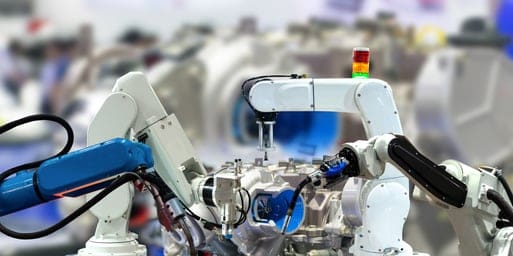
Implementation of collaborative robots on production lines. theforestnext.com
Benefits of the CIM
This level of automation in production processes brings significant improvements to the entire system, with the goal of making all processes more efficient and improving product quality. Among other things, these include The Most Notable Benefits of CIM:
- Greater accuracy: Automating and monitoring production through CIM allows us to pay closer attention to the small details of the production process—or even to enhance quality control for each product.
- Better use of time: A fully automated system allows for 24/7 monitoring and production, requiring staff intervention only when there is a failure or anomaly.
- Process automation: An integrated CIM system enables the complete automation of monotonous and repetitive tasks, allowing staff to focus on what really matters.
- Cost reduction: Although it requires a significant initial investment, an automated and monitored CIM system is much more time-efficient, reduces the need for personnel, and generates valuable information to improve every part of the process; therefore, it is more productive at a lower cost.
Steps for Adopting the CIM
1. Develop a clear vision and a business plan
Before implementing CIM production systems, it is essential to have thoroughly calculate the return on investment and clearly define the project's quality indicators. This will provide clear scenarios for determining whether or not the integration of the CIM is cost-effective.
2. Analysis of Production Problems
It is critical to understand the production process in order to identify its shortcomings and the problems or deficiencies it has. This is followed by an analysis of the investment required for a CIM system, to verify that it is indeed the solution to these production problems and that they do not stem from other potential issues within the company.
3. Ensure the proper implementation of the CIM
The success of this methodology cannot be guaranteed unless it is properly implemented in the production system by qualified professionals in each of the areas that affect product manufacturing. Most companies find it difficult to transition to the management of the Big Data as a Tool for Improvement, and if they are unable to analyze the data collected by the CIM, it is not possible to translate that data into tangible improvements.
Use of Sensors in Production Lines. Atriainnovation
In conclusion, we can state that all methods of automation and computerization, such as CIM, bring significant benefits to production processes within the manufacturing sector. But these methodologies represent a 180-degree shift for some companies, and lacking the proper preparation can mean losing a significant initial investment required by these methodologies; and that’s when The role of engineers and trained professionals becomes indispensable to ensure the success and optimal performance of automated systems.