Originally published on June 20, 2021, Updated on October 13, 2024.
It is important to know the rainwater harvesting systems in order to preserve the planet's most important resource: water.

Rainwater Harvesting Systems: 5 Sustainable Options
On a planet where Water is a vital and scarce resource, architecture plays a fundamental role in its conservation and sustainable management. Today, as we commemorate World Day to Combat Desertification and Drought, we reflect on the importance of this resource and the urgent need to protect it. Architecture, with its capacity for innovation and adaptation, offers solutions that can make a difference in the fight against water shortage. Rainwater harvesting systems are one such solution, making use of an abundant yet underappreciated natural resource.
These systems, depending on various factors, such as the catchment area and the average annual precipitation, They are capable of supplying up to 15% or 30% of domestic water consumption. Another advantage of these systems is that they are based on a fairly simple premise and mechanics, which can to rely solely on gravity to get started, and consists of the following steps:
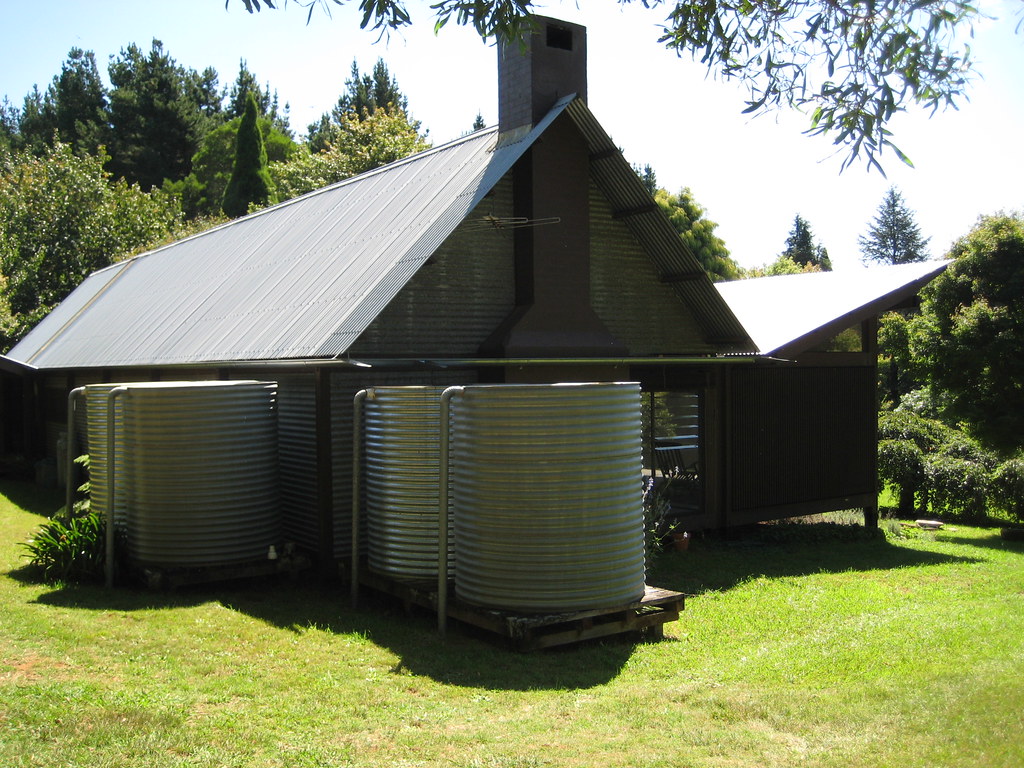
A home specifically designed to improve rainwater harvesting systems. Flickr/Bobzilla_jr
5 Options for Rainwater Harvesting Systems
Once the feasibility of installing a rainwater harvesting system has been verified, based on the number of cubic meters of rainfall per year in the area in question and the available catchment area, You must select which system or systems to adopt according to our needs:
1. Outdoor modular tanks
These types of tanks allow for the storage of large amounts of water for quite a long time without having to undertake major construction or excavation work. They typically store up to 1,000 liters of water per unit and allow multiple units to be connected together if additional storage capacity is needed, thanks to the fact that they are made of lightweight materials that make them easy to install. The disadvantage of this type of tank is that they take up a considerable amount of space and they are an element attached to the building that is difficult to conceal aesthetically.
2. Dispenser Tanks
They are deposited connected to the stormwater drainage system, which allow water to be collected and dispensed as needed, They are designed for low storage capacities for household and gardening use, do not exceed 100 liters, but have the advantage of making the collected water easily accessible and that Its dimensions allow it to be seamlessly integrated and even serve as a decorative piece in its own right.
3. Underground tanks
These tanks They allow for the storage of large amounts of water without affecting the view, but since they are underground, they require a much more complex and expensive installation, so it's best to plan for them at the start of construction. Currently, there are new alternatives, such as the modular underground tanks that have load-bearing capacities and can be installed in the building's own foundation, and its modular design allows it to cover whatever area is needed by adding and connecting modules of approximately 200 liters each.
4. Decorative planters
They are medium-sized structures connected to the stormwater drainage system, but designed with aesthetic and decorative value in mind, which can take the form of large vases or planters, are capable of store even more than 600 liters, some of which, including internal filtration systems to purify water. The limitation of this type of tank is that, due to its aesthetic function, It is difficult to connect them to the water supply system, which is why most of them have their own dispensing system.

A decorative feature integrated into the rainwater collection system. Ekoideas
5. Filters
The more effective the system is at filtering rainwater, the wider the range of uses for the collected water will be. Depending on your needs, there are different types of rainwater filters, The most comprehensive and advanced systems are capable of thoroughly filtering solid particles from the water and discarding the first few liters collected, since they remove surface dirt; some are capable of purifying water. On the other hand, there are also more affordable and easier-to-install options available that allow you to purify the water sufficiently so that it can be used for irrigation and cleaning, while also maintaining the storage system.
Benefits of Rainwater Harvesting
Rainwater harvesting offers a number of benefits for both the environment and the communities that implement it. Here, we highlight some of the main ones:
1. Water Resource Conservation
Rainwater harvesting reduces dependence on non-renewable water sources, such as underground aquifers and reservoirs, thereby preserving these resources for future generations.
2. Reduction of water stress
In drought-prone regions, rainwater harvesting and storage provide an additional supply during.
3. Flood Mitigation
By capturing rainwater instead of allowing it to flow directly into drainage systems, the risk of urban flooding is reduced, especially in areas with a high density of buildings and paved surfaces.
4. Improving Water Quality
Rainwater is naturally purer than many conventional water sources, as it does not contain the contaminants associated with urban runoff. By collecting and using this water, the need for intensive chemical treatment is reduced.
5. Financial Savings
The implementation of rainwater harvesting systems can result in significant savings in drinking water and wastewater treatment costs for users, as well as in the infrastructure required for water management.
6. Promoting Self-Sufficiency
By having access to a local, renewable water source, communities can become more self-sufficient in terms of water supply, reducing their dependence on external sources and their vulnerability to potential disruptions.
7. Additional Environmental Benefits
In addition to the direct benefits for water, rainwater harvesting can help recharge underground aquifers, revitalize local aquatic ecosystems, and reduce the carbon footprint associated with water transportation and treatment.

Underground system for filtering and storing rainwater. Warranty
In this World Day to Combat Desertification and Drought, is more relevant than ever reflect on our practices and seek innovative solutions to address these challenges. Rainwater harvesting is emerging as an effective strategy for cTo conserve this vital resource and mitigate the impacts of water scarcity. We invite all professionals interested in learning more about this topic to explore the Master's Degree in Integrated Water Cycle Engineering offered by Structuralia. This program provides the tools and knowledge necessary to design and manage sustainable water and waste systems, empowering participants to make a significant difference in water conservation and environmental protection.