What is polycarbonate?
The polycarbonate It is a type of thermoplastic polymer that has become quite popular in the construction and architectural design industries thanks to its properties physical and mechanical properties. It is a fairly versatile material due to its transparency, in addition to its impact resistance, a characteristic that sets it apart from both glass and other plastics. The polycarbonate It is a lightweight material that can be molded and worked with relative ease, making it ideal for a wide range of applications, including architectural elements such as roofs. Its chemical structure enables it to withstand high temperatures and resist weathering without degrading in the short term.
One of its most common formulations or designs in the construction industry is the polycarbonate cellular or alveolar, which includes internal air chambers. This configuration reduces the weight of the material and improves its properties thermal insulation, making it very suitable for polycarbonate roofs. On the market, it is available with a variety of added features, countless finishes, and different thicknesses, including models that are even capable of filtering UV radiation.
Applications: polycarbonate roofs and roofing systems
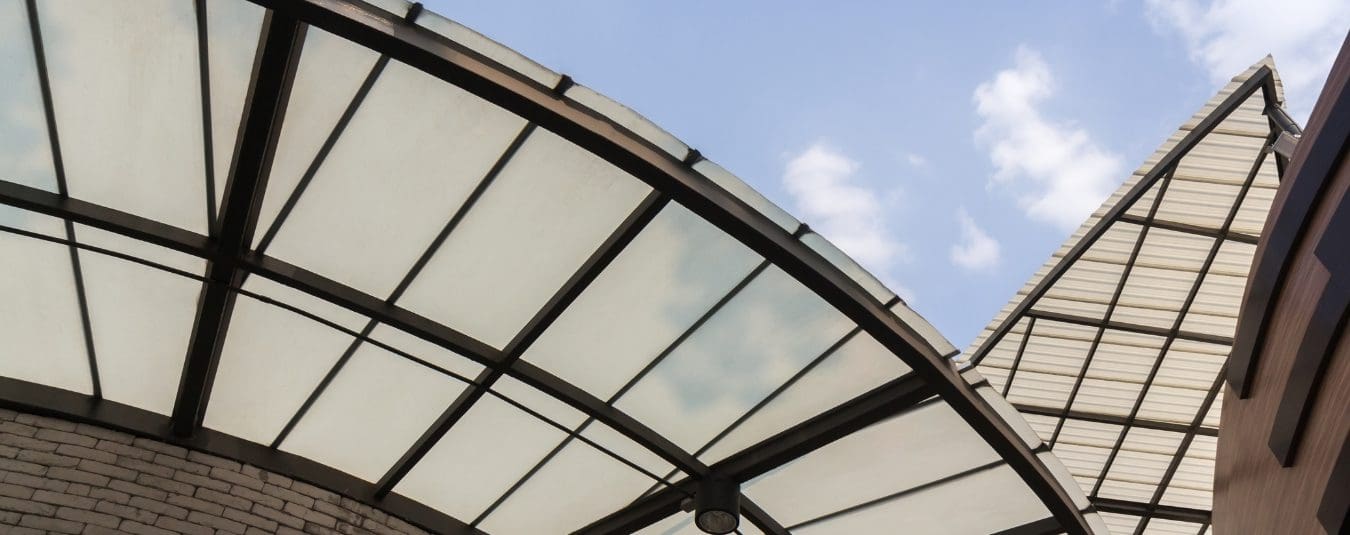
The polycarbonate roofing They have become a very common solution in the design of outdoor spaces where the goal is to make the most of natural light without compromising protection from rain or wind. This type of enclosure is commonly used in greenhouses, canopies, runways o terraces, where the material's transparency and lightness offer both aesthetic and functional advantages.
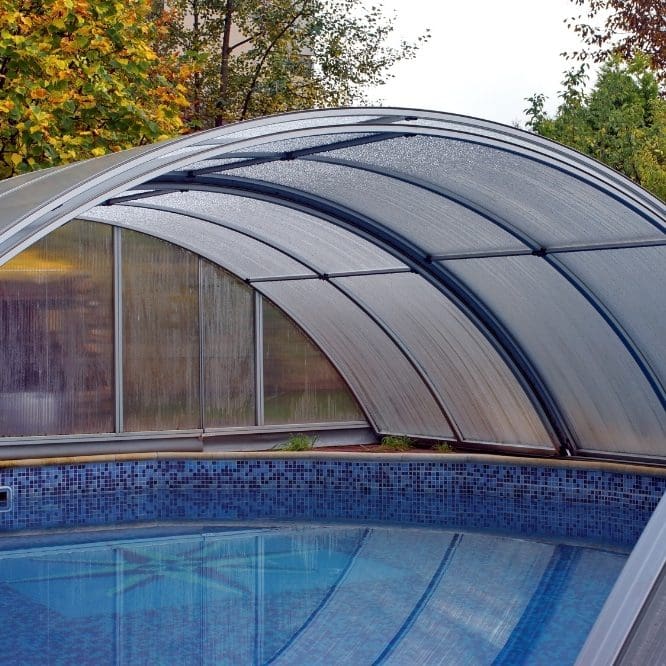
When using polycarbonate for roofing, the specific climate of the installation site must be taken into account to ensure a long service life and good performance. There are different types of polycarbonate sheets polycarbonate for construction purposes, such as solid sheets or hollow-core sheets, which provide better insulation. In any case, the purpose of a polycarbonate roof is to provide a lightweight protective surface and transparent, which allows natural light to pass through it.
Advantages of Polycarbonate for Roofing
The polycarbonate roofs They are one of the most commonly used options, and this is due to a number of advantages:
- High impact resistance, which is higher than that of glass.
- Lightweight, which makes it easier to transport, handle, and assemble.
- Durability weather resistance and UV stability in treated models.
- Versatility in architectural applications and ease of machining.
Disadvantages of Polycarbonate for Roofing
However, the use of a polycarbonate roof It also has certain disadvantages or drawbacks:
- Ease of the material to get high, more so than the glass itself, which can significantly affect its transparency and appearance over time.
- High thermal expansion, which requires that appropriate expansion joints be provided during installation.
- Versatility in architectural applications and ease of machining.
Conclusion
The polycarbonate roofs are a practical solution for enclosures and roofs when brightness, lightness, and durability are needed. Currently, its use is quite popular due to its remarkable properties of this thermoplastic material, such as its impact resistance and its transparency, which make it possible to optimize the architectural design without compromising structural safety.
The choice of polycarbonate type should be based on the weather conditions and preventive use, since factors such as thermal expansion, exposure to UV radiation, or the maintenance frequency directly affect its durability. In any case, this material is an efficient alternative for projects that seek to maximize natural light and improve energy sustainability of built spaces.
If you're interested in learning more about energy-efficiency strategies for buildings and the use of sustainable materials, at Structuralia we have the Master's Degree in Energy Efficiency and Sustainability in Building Construction, through which you can obtain certification as an energy auditor and an energy and environmental assessor in the LEED certifications, BREEAM, and VERDE.
Written by Lucía Carmona Fuentes, an architect specializing in building systems and a contributing writer for Structuralia