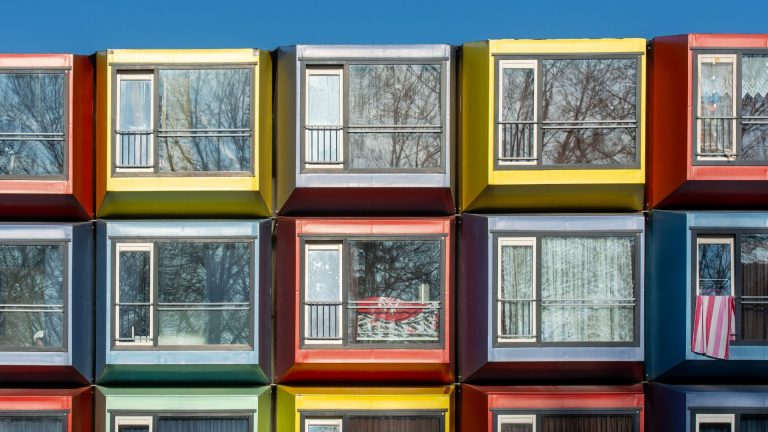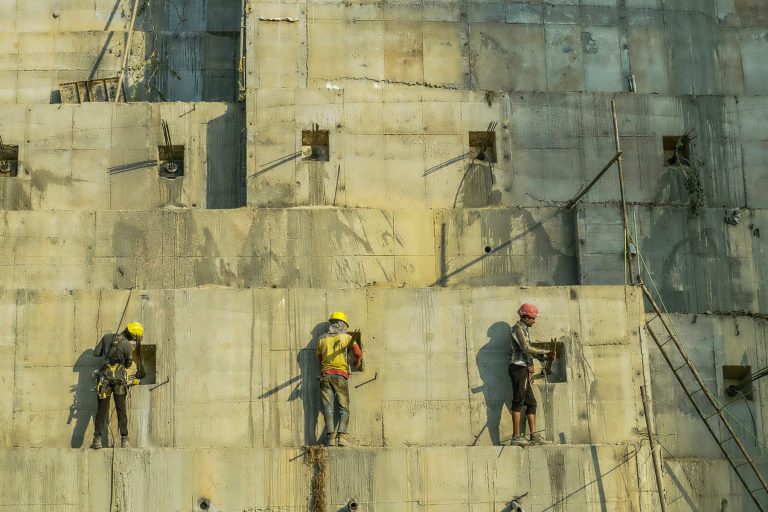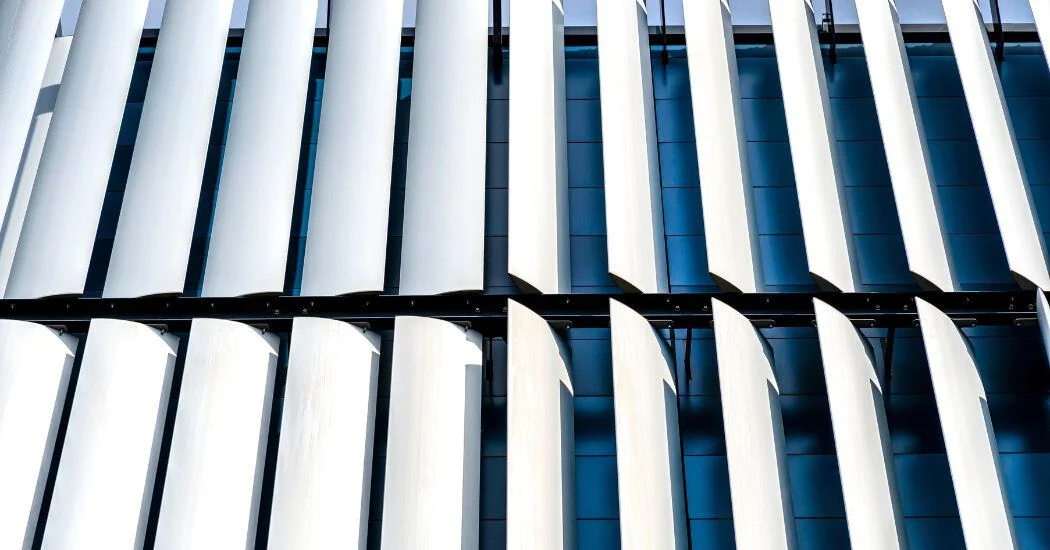
Learn about the main ones Types of Facades (ventilated, lightweight, traditional, prefabricated, and SATE) and find out which one to choose for your architectural project.
Types of facades: ventilated, traditional, SATE. What are the options, and which one should you choose?
Choosing a facade It is important for many reasons that go beyond aesthetics, since it has a significant impact when it comes to insulate a home y improve its energy efficiency.
Below, we analyze the different Types of Facades that are used today in architectural projects, so you'll know which one to choose and what the characteristics of each are.
Guide | What types of facades are used in architecture, and what are their characteristics?
Among the various Types of Facades Among those that exist, we highlight:
1. Ventilated facade:
These days, you may have heard of ventilated facades because of their widespread popularity when building a home. It's one of the most popular choices these days.
A ventilated facade consists of a load-bearing wall, an insulating layer, and a cladding. The ventilated facade is so named because it has a inner tube between the cladding itself and the wall.
This air chamber is useful year-round, since in the summer the warm air rises and is replaced, preventing it from overheating, while in the winter the air does not escape and helps to energy savings at home. This is the main reason why many people choose it—because of its energy efficiency.
- Thermal and acoustic insulation is its main added value.
- It reduces the likelihood of cracks forming on the facade, since its air-chamber system protects it from sudden temperature changes.
- You can use a variety of materials, such as marble, wood, stone, or stoneware, among many others.
- Ventilated facades are more expensive than other types of facades, but they are worth the investment because they also increase the profitability of the homes that incorporate them.
2. Lightweight facade:
Another type of facade to consider is the lightweight facade. In this case, it consists of mullions and transoms that are anchored to the building's structure, forming a lightweight surface. There are two types: panel facades and curtain walls.
Materials such as the following are commonly used in this type of facade: stone, zinc, glass, aluminum, or steel, among others.
- It is useful in buildings of medium or great height.
- They adapt well to the needs of virtually any project.
- They provide light for the home.
- Energy savings are optimal.
- It installs quickly.
- It is more expensive to maintain than other options.
- It is not a good idea in high-traffic or noisy environments, or in areas where there are sudden temperature changes (it is not as effective as SATE or a ventilated facade in terms of thermal and acoustic insulation).
3. Traditional facade
Traditional facades consist of a sheet of drywall, an insulating layer with a a small inner tube with no ventilation, an enclosure and a finish made from a variety of materials to choose from.
They are one of the most commonly used types of facades—a timeless classic. In fact, they are very common in Spain's current housing stock. Of course, ventilated facades are in greater demand these days because of their energy-efficiency features, which is why it's important to have a good understanding of the differences between them.
- Conventional facades are more economical than ventilated facades.
- They are common in our country's current housing stock.
- Thermal insulation does not come close to what a ventilated facade offers, as it is less efficient.
- The result is aesthetically pleasing, because it can be made in a variety of finishes to choose from, such as wood, stone, or concrete, among others.
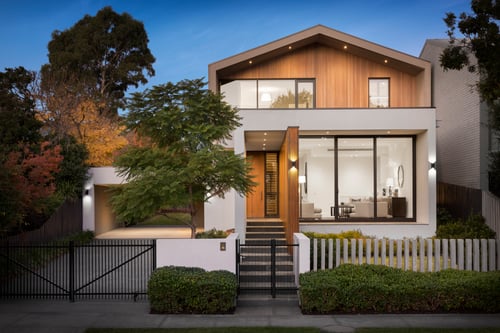
4. Prefabricated facade:
This type of facade, as its name suggests, consists of prefabricated modules. They are manufactured in warehouses and then installed primarily in large buildings, although some people also install them in single-family homes.
Prefabricated facades typically use materials such as steel, concrete, aluminum, or wood. This option has a long service life and is more economical than other popular types of facades, so it’s not a bad choice at all.
- Prefabricated facades can withstand temperature changes well.
- They are lighter than others with similar finishes.
- They are installed faster than similar products.
- The sound insulation is good.
- The design options are more limited.
- It requires transportation to the construction site, so it must be handled with care and may increase the total cost.
5. SATE Facade
SATE is the translation of the Exterior Thermal Insulation System. It is a type of facade that emerged as an alternative to the ventilated facade because, as you can imagine from its name, it offers a certain energy efficiency, which is what customers are looking for most these days when building a home.
Its main feature is that thermal insulation panels are installed on the exterior and attached to the wall. Materials such as polystyrene or mineral wool. As for the insulation, it is covered with a one- or two-layer coating. It is applied directly to the insulation panel.
- This type of facade is very durable because it prevents cracks from forming.
- Unlike conventional systems, SATE systems do offer significant energy savings. Choosing one increases the home's value.
- Condensation and thermal bridges are prevented.
- Installing it on the outside doesn't make the home look any smaller.
- It is more expensive than other solutions.
- SATE facades may also have fewer options in terms of finishes.
- In renovations, it does not replace the isolation Traditionally, it is an accessory.
Now that you know the different types of facades, remember to choose the one that’s best suited to your project and always seek advice.
Today, although traditional methods are still being used in many projects, Ventilated models are becoming the most recommended option in every respect, especially in these times when people are seeking energy efficiency, comfort, and a better long-term investment.
Do you have any questions about the main types of facades? Remember, you can always ask us.