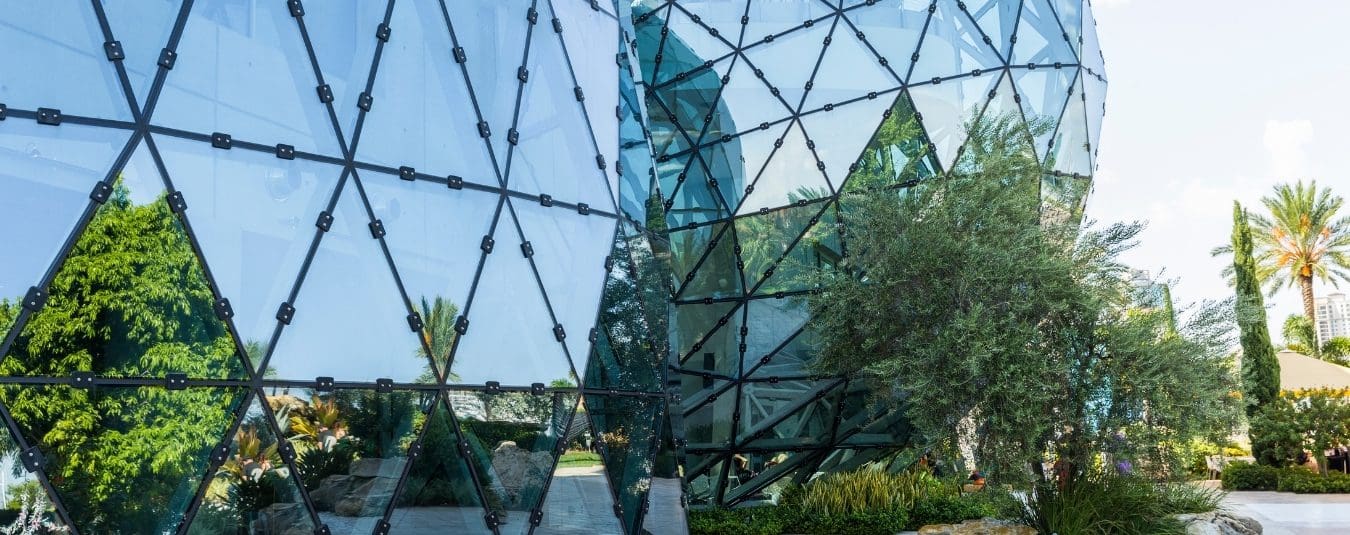
What if a window could adjust to sunlight, save energy, and improve privacy with the push of a button? That's the principle behind the smart glass, a technology that redefines the traditional role of glass in architecture, the automotive industry, and advanced engineering. Beyond its structural and aesthetic functions, this material becomes a dynamic environmental control system.
In this article, we'll explore what it is, how it works, what the latest developments are, and which applications will shape the future of this innovation.
What is smart glass?
The smart glass, also known as switchable glass or smart glass, is a material capable of changing its optical properties (transparency, opacity, light and heat transmission) in response to external stimuli such as electricity, heat, or light. This means that it can change from transparent to translucent to opaque in a controlled manner, usually by applying an electric current.
The main purpose of using smart glass is to provide dynamic solutions for privacy, solar control, and energy efficiency, eliminating the need for curtains, blinds, or fixed partitions.
How does smart glass work?
There are several main smart glass technologies, the most common of which is the polymer-dispersed liquid crystal (PDLC). The operating principle is as follows:
- Off (opaque): From the outside, it's impossible to see through it, which provides instant privacy.
- On state (transparent): An electric current aligns the crystals, allowing light to pass through and making the glass transparent in seconds.
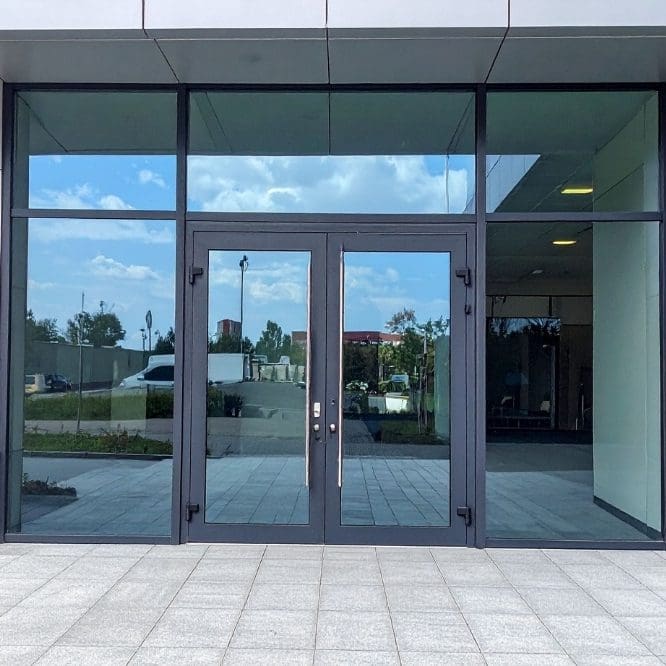
Types of Smart Glass
- Electrochromic glass: changes from transparent to opaque when a small electric current is applied.
- Thermochromic glass: Its transparency varies depending on the ambient temperature.
- Photochromic glass: reacts to the intensity of UV radiation, similar to photochromic sunglasses.
In practical terms, smart glass functions as an active membrane that optimizes comfort, energy efficiency, and privacy in a single system.
Recent Advances in Smart Glass
Over the past decade, research has accelerated the development of smarter, more efficient, durable, and affordable glass.
- Applied Nanotechnology: Coatings based on nanolayers of metal oxides enable faster response times and greater chemical stability.
- IoT Integration: The new models connect to home automation systems and energy management platforms, enabling automated control in smart buildings.
- High-End Automotive: Brands such as Mercedes-Benz and Tesla have incorporated solar roofs and smart windshields with dynamic transparency control.
- Cutting-edge research: the Smart Glass Project 2030 A study by the Technical University of Munich has shown that electrochromic glass can reduce energy consumption for heating, ventilation, and air conditioning in office buildings by up to 30 %.
According to a Markets&Markets report (2024), the global smart glass market is projected to exceed 12 billion USD by 2030, driven primarily by sustainable construction and the energy transition.
Future Applications and Implications
Today, smart glass is used in three key sectors:
- Architecture and Construction: dynamic facades that regulate sunlight and reduce heating and cooling costs.
- Automotive and Transportation: windshields and panoramic roofs that enhance safety and comfort.
- Healthcare and Critical Environments: hospital windows that alternate between transparency and opacity to ensure hygiene and privacy.
In the future, we may see hybrid integrations with photovoltaic solar cells, allowing the glass not only to regulate light but also to generate energy. However, challenges remain: the long-term durability, high cost, and recyclability of these materials.
Will this technology become the standard in smart cities, or will it remain exclusive to premium projects?
Conclusion
Smart glass has evolved from an experimental concept to become one of the key technologies in the transition toward sustainable architecture and energy-efficient systems. Its potential goes beyond aesthetics: it redefines the relationship between spaces, light, and people.
Would you like to lead innovative projects that incorporate technologies such as smart glass? Get trained with our Master's Degree in Agile Methodologies and Project Management and become the professional who transforms the industry.