The insulators on power lines High-voltage components are the elements that mechanically support the conductors that make up the line, keeping them isolated from ground and other conductors. In this post, we’ll introduce you to materials and Types of Electrical Insulators, as well as the key characteristics these components must have in order to be used in the design of power lines.
General Characteristics of Insulators in Power Plants
Electrical insulators must withstand the mechanical load that the driver transmits to the support through them. These must to electrically insulate the support conductors, which carry the load in Normal and Abnormal Conditions and Power Surges up to the maximum values predicted by insulation coordination studies with a certain probability of occurrence. The stress must be borne by the insulating material itself, its surface, and the air surrounding the insulator.
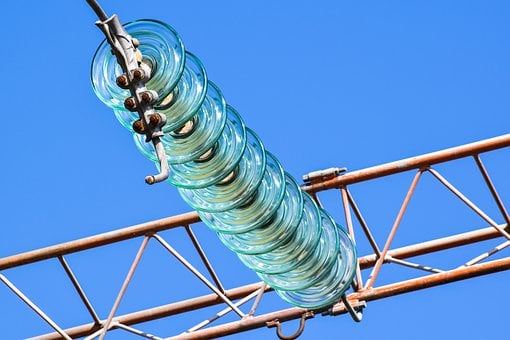
Photo: Barscar90 (Pixabay)
The Required characteristics The insulators used in power lines are:
- Proper drilling pressure: sufficient dielectric strength to ensure that the breakdown voltage is as high as possible.
- Proper contouring tension: Proper arrangement so that the creepage voltage is high and, consequently, no arcing occurs between the conductors and the support via the insulators.
- Resistance to temperature fluctuations, because it is exposed to the elements.
- Absence of aging during the line's service life.
- Appropriate combined resistance to electrical, technical, and mechanical stresses.
Insulator Materials
The materials used in insulators must possess mechanical strength, stability, and insulating properties. These include porcelain, tempered glass, and various polymers. In this regard, the polyurethane It has become a versatile material that combines insulation, strength, and durability, with applications that extend beyond construction to sectors such as energy and industry. However, in the specific case of power line insulators, the most commonly used materials continue to be porcelain, glass, and polymer composites, which we'll discuss next.
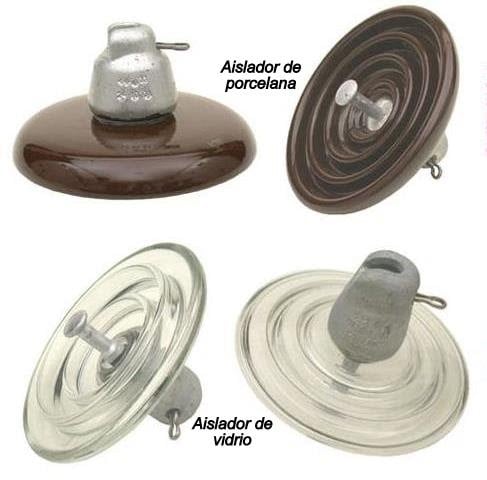
1. Porcelain insulators
Porcelain is a material that is particularly resistant to compression, which is why, over the years, designs have been developed specifically to subject it to compressive stress. In some European countries, such as Germany and Austria, it remains the most widely used material in the manufacture of insulators for overhead power lines.
2. Glass Insulators
This material is characterized by its high hardness, mechanical strength, and stability in the face of temperature changes. Because it is less expensive than porcelain, it is used more commonly in countries such as Spain and France.
3. Composite Insulators
Replacing glass and ceramic insulators on power lines with composite insulators (made of glass and ceramic) has proven to be an effective, technically sound, and cost-effective solution to the availability issues caused by insulation contamination.
Types of Insulators
The most commonly used types of insulator materials are insulators made of bell and bar, which are explained below.
1. Bell-type insulators
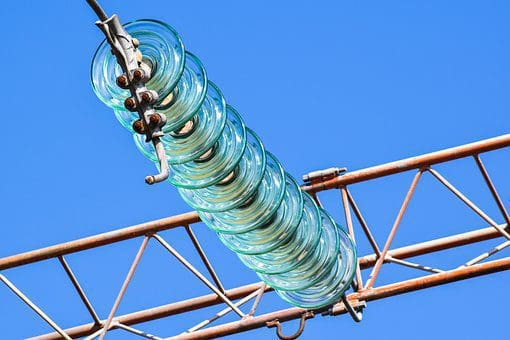
As their name suggests, they are bell-shaped and are used in low- or medium-voltage environments. They can be made from glass or porcelain. They are not usually found individually, but rather in groups linked together to form a chain. They are also called disc insulators.
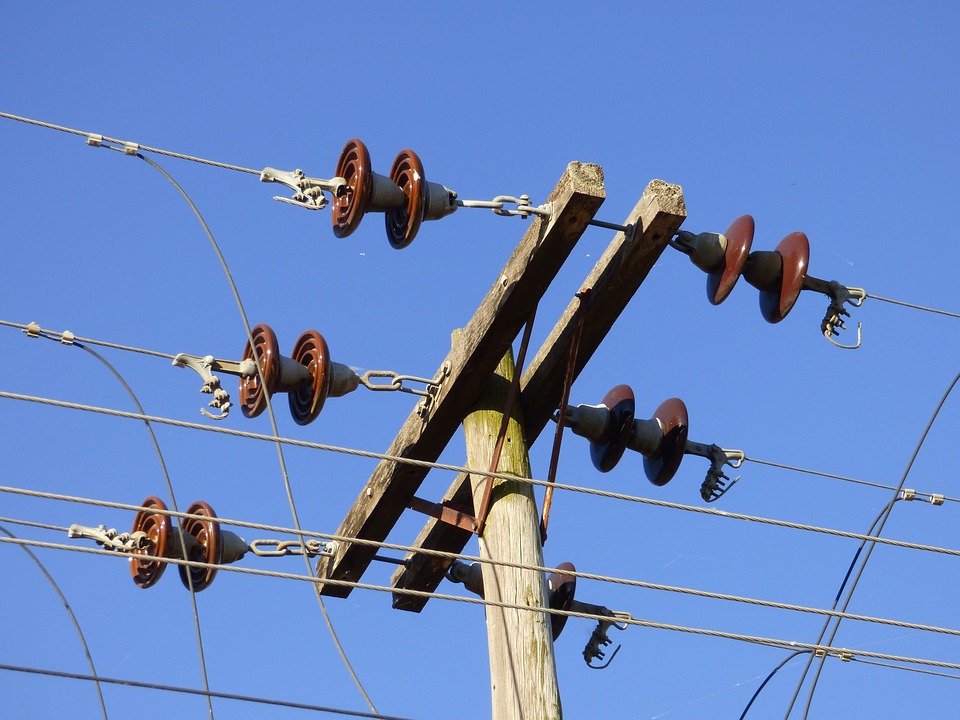
Photo: Barscar90 (Pixabay)
2. Busbar Insulators
They are used in environments subject to high voltages, since its Its elongated shape enables it to withstand high bending and compressive stresses, which are caused by high voltage demands. Busbar insulators can be manufactured from porcelain and composite.

Photo: genocre (Pixabay)
To learn more about construction and maintenance of electrical infrastructure, check out our Master's Degree in Operation and Maintenance of Power Plants