We explain Four Techniques for Situation Analysis widely used in projects. We detail the SWOT Analysis, 5C Method, PESTEL and the Porter's Five Forces.
4 Ways to Conduct a Proper Situation Analysis
Every project requires some preparation situation analysis. We must not skip this step before starting our projects, as the success of the subsequent phases will depend on it. How do we analyze the situation?
1. PESTEL
The PESTEL o PEST is a method of analysis used to investigate macroenvironmental factors which can have a profound impact on an organization's results. The factors analyzed in PESTEL (and which give the acronym its name) are as follows:
- Politicians
- Economic
- Social Studies
- Technology
- Environmental
- Legal.
As we can see, with the PESTEL An investigation is underway into the a company's external environment. PESTEL takes into account factors such as government instability, taxes, inflation, birth and death rates, and consumer spending habits. In recent years, many companies have also considered factors such as demographic, cultural, ethical, and environmentalin their PESTEL analyses.
2. Porter's Five Forces
It was the method developed by Michael E. Porter, from Harvard Business School. It’s another type of analysis that investigates external variables that can affect the outcome of a project.
According to Porter, there are Five forces that determine the intensity of competition and the attractiveness of a market. They are as follows:
- Supplier Strength: We assess how easily suppliers can drive up prices.
- Buyer power: We analyze how easily buyers can drive prices down.
- Competitive rivalry: We take into account the number and capacity of competitors in the market.
- Threat of substitution: We will analyze whether there are substitute products on the market, since customers might switch to these alternatives if we raise our prices.
- Incoming threat: Profitable markets attract new entrants, which undermines potential profits. We will examine the challenges and barriers to entering a market.
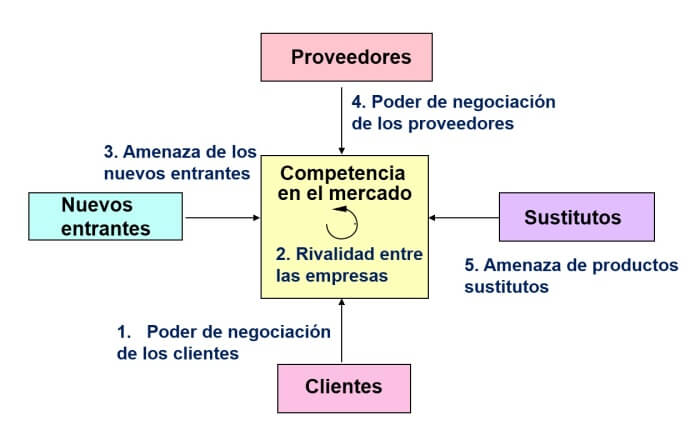
Source: Dircomfindencial
3. Model 5C
The the five C's method It is one of the most popular forms of situational analysis. This is because it is a simple and effective analysis. Combine the iInvestigation of internal and external factors. Each letter "C" represents an element related to our project or business model.
- Company: Our products, benefits, brand, and goals.
- Contributors: Partners, investors, distributors, and others.
- Customers: We analyze our target audience, their motivations, behaviors, and communication channels.
- Competitors: Research on established and new competitors, including their strengths, weaknesses, tactics, and strategies.
- Weather: We take into account laws, social and economic trends, and technology.
4. SWOT Analysis
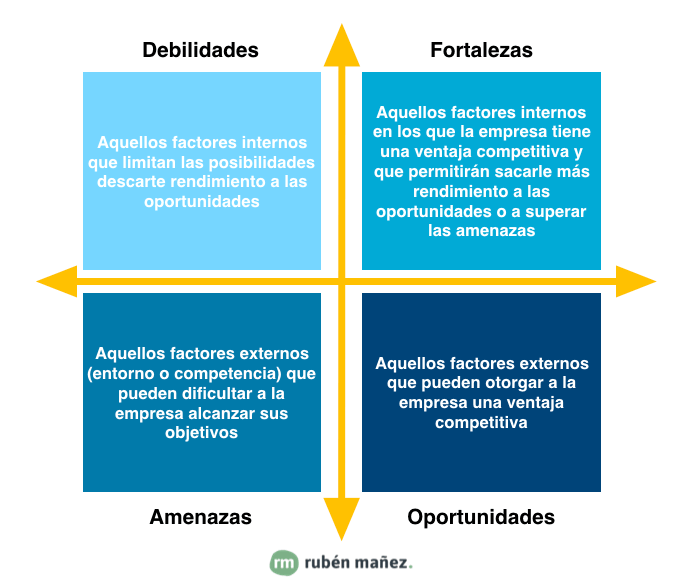
This is a internal analysis, that is, an investigation by our own organization; and external or the environmental factors that affect the company. The SWOT analysis takes the following into account.
Internal
- Weaknesses: We determine what we can improve, whether we have limited resources, or whether our competitors can see our weaknesses.
- Strengths: We analyze what we do well, what unique resources we have, and whether others are able to recognize our strengths.
External
- Opportunities: We are exploring what opportunities the market offers for our project, which trends we can capitalize on, and how to turn our strengths into opportunities.
- Threats: What external factors can harm us, what our competitors are doing, and what threats our weaknesses expose us to.
 Source: Rubenmanez.com – How to Conduct a SWOT Analysis for Your Company
We have looked at several types of analysis that companies have used over time. In Structuralia We'll show you these four ways to conduct a proper analysis before start a project in a company, taking into account internal and external factors. Sometimes, We will be able to combine several analyses. For example, we can use the PESTEL method in conjunction with SWOT analysis and Porter’s Five Forces. We conduct these analyses because it is very important to know where we stand before starting any project; for example, when we launch a new business or enter a foreign market.