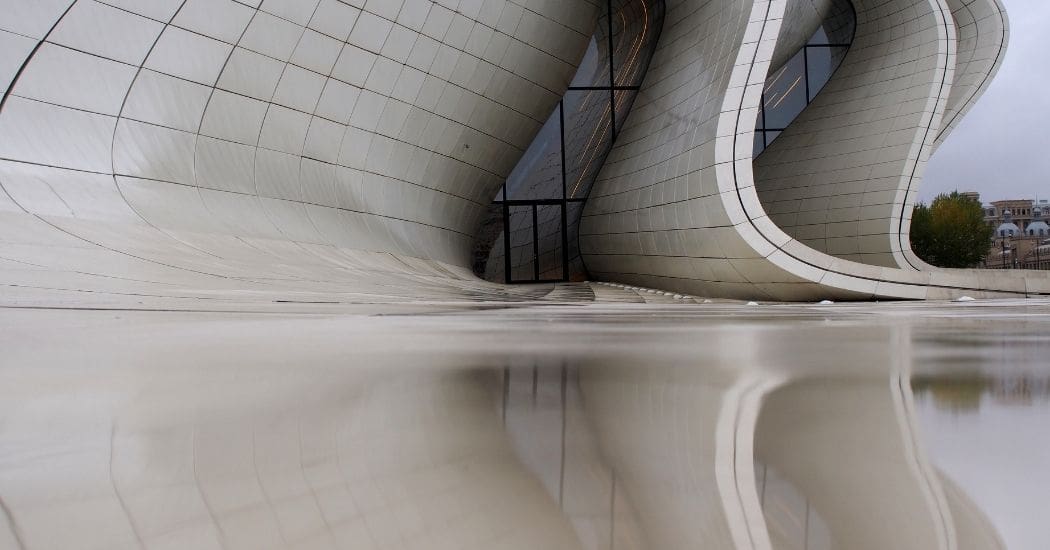
The term “parametric” is not a newly coined term; it originated in the field of mathematics, and although even ancient civilizations used principles that belonged to the parametric design, The concept has evolved over the course of history.
In the parametric design, Starting with a specific idea, we create an abstraction using geometric and mathematical processes, which allows us to arrive at a design with a more precise result—in other words, we optimize the result.
The parameters used in the design process These are variables that allow you to make changes that alter various characteristics of the design. Therefore, depending on the design type that we want to obtain, We will have to decide exactly which parameters will be involved and how they will interact with one another in order to achieve our desired outcome.
The possibilities of using the parametric design They are very broad and can be applied to fields ranging from architecture to music, including product design, engineering, and fashion.
Parametric Design and Architecture
As mentioned, the parametric design It can be applied to a wide range of fields. This article will explore how this type of design is changing the possibilities of architecture and how it has evolved.
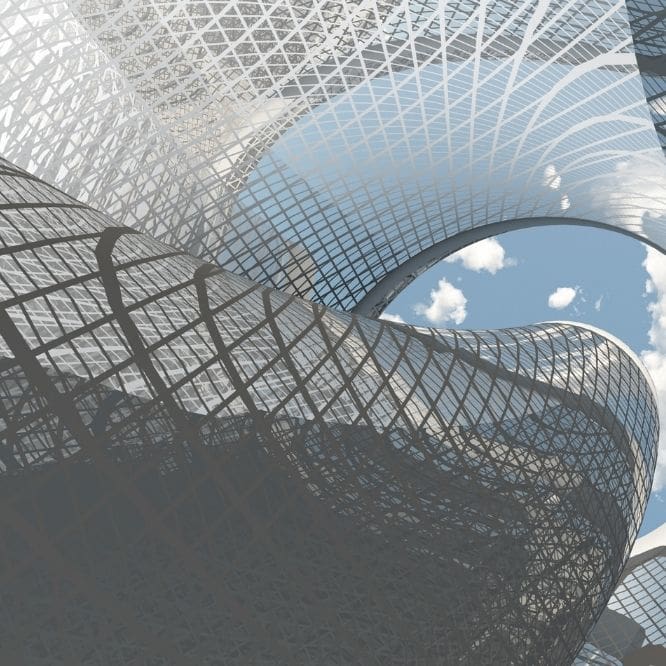
In the first half of the 20th century, before the digital age had begun and during a period characterized by empirical experimentation, architects Antoni Gaudí and Frei Otto used “analog” parametric designs.
Antoni Gaudí designed hanging models which consisted of a board on the ceiling from which chains with weighted pouches hung; the deformation of the chains under the weight formed the optimal geometric curve he needed to use in the domes and arches. He used an iterative process, changing the different variables and observing and analyzing the structure’s behavior to determine the most appropriate one. This model can be considered one of the first applications of parametric design in architecture.
The second half of the 20th century saw the dawn of the digital age and, with it, the first architectural design software. This made it possible to design buildings holistically, incorporating complex and unique architectural forms. An example of this type of architecture is the Guggenheim Museum in Bilbao, designed by architect Frank Gehry, which was created using CATIA parametric modeling software. Parametric design was used in both the design and construction phases, since each structural element was unique. As for the façade, as an interesting side note, its complexity required 60,000 hours of computer-aided design.
The third stage is defined by the introduction of Artificial Intelligence (AI). This is the stage we are currently in; it allows us to generate an infinite number of solutions to a single problem, because, during the design process, the algorithm is responsible for making some of the decisions that are carried out. This is how the generative design.
In any case, artificial intelligence is sparking controversy. Here's an interesting article on Innovation in Architecture and Industry 4.0 Technologies.
Generative Architecture
According to Autodesk, the generative design is the process of entering design objectives, materials, cost constraints, and other data into a computer program that evaluates all possible solutions. The generative design It allows architects and others involved in the construction process to identify the best design for a building based on real-world data.
In the generative architecture, the design is created collaboratively by the architect and the software that manages the algorithms. The architect must decide what objectives the architectural design must meet and must do so using the language of algorithms. It is not based on forms; the objectives chosen are parameters such as the value of the loads to be supported, height, width, etc. Next, the software carries out all the objectives the architect has specified, taking into account many parameters simultaneously—such as cost, performance, and material usage—and generating numerous solutions. Once again, the architect will be the one to evaluate the generated solutions and choose the one they believe best meets their objectives.
This procedure can be repeated; it is an iterative cycle, with the advantage that the system learns from its successive results. Therefore, with each iteration, a more optimized and efficient design can be achieved, saving a great deal of time. Creativity is enhanced, because the architect might never have arrived at the solutions generated in this way.
In addition, the generative design It helps architects discover new possibilities in architecture. It allows them to manage large amounts of information simultaneously while recording it with complete precision, leaving nothing to chance.
Conclusions
Since new design tools have emerged, architecture has known no limits, and projects that would have been impossible due to their complexity are now becoming a reality.
The parametric design It is constantly evolving because technology is advancing by leaps and bounds. With artificial intelligence, the possibilities for choosing entirely new forms are vast.
If you're interested in specializing in this area, we recommend that you visit our Master's Degree in Continuing Education in the Construction and Coordination of Parametric Virtual Building Models With it, you'll be able to lead the new construction market.