Originally published on December 21, 2015, Updated on October 15, 2024.
The Bahareque It is a forgotten construction technique that can be very valuable today and help reduce our environmental footprint.
Bahareque: An Environmentally Friendly Construction System
In a world that is increasingly aware of the urgency of protecting our planet, the sustainable construction has become an urgent necessity. For decades, we have seen how Conventional construction methods have had a significant environmental impact, contributing to the depletion of natural resources and an increase in carbon emissions. It is time to seriously rethink these approaches and seek alternatives that are not only efficient in terms of construction but also environmentally friendly, such as Bahareque.
The World Environment Day, which is celebrated every June 5, offers an opportunity to reflect on eThe crucial role that architecture plays in protecting our planet and to explore innovative solutions that can make a difference. It is in this context that the importance of the bahareque, an ancient building technique that offers a sustainable and environmentally friendly alternative. At a time when the construction industry is under scrutiny due to its significant environmental impact, it is essential to explore options that connect us to our roots and allow us to build more mindfully.
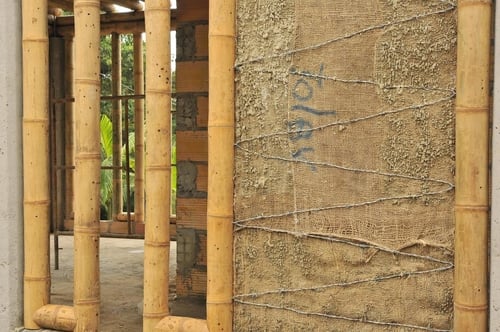
Detail of a house built using bahareque in Colombia. ArchDaily
What is bahareque?
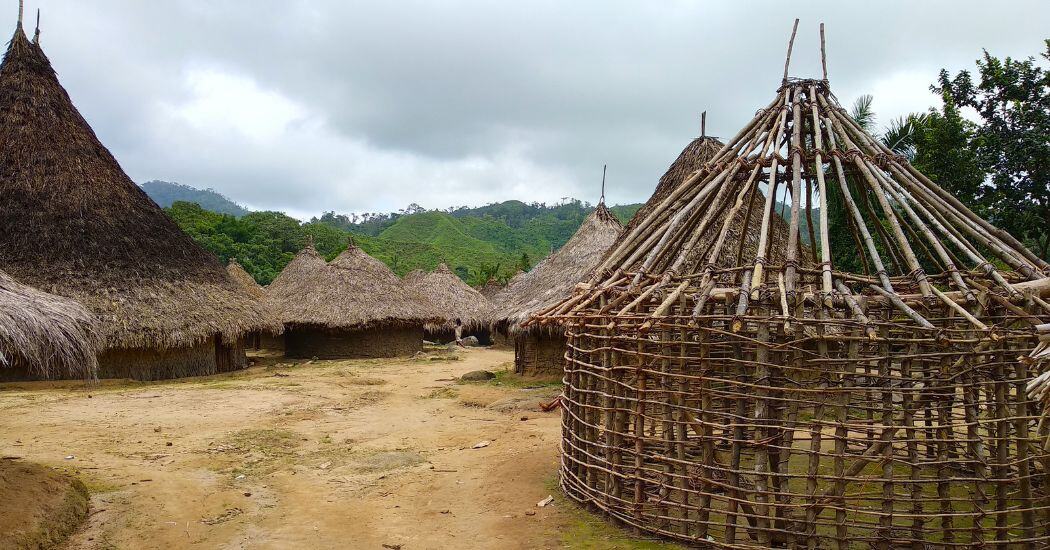
Bahareque is much more than an ancient building technique; it is a legacy of wisdom that has stood the test of time, originating in Latin America. This construction method dates back centuries, used by indigenous peoples to build sturdy homes adapted to their environment. The essence of bahareque lies in its simplicity: it consists of a combination of local materials, such as wood, cane, bamboo, or even clay, to create sturdy, durable walls.
An Approach in Harmony with Nature
Technically, adobe construction involves the orderly arrangement of available materials in layers, creating a structure that blends seamlessly into its surroundings. First, they erect vertical posts that serve as frameworks, upon which Reeds or bamboo are woven together to form a kind of lattice. This framework sIt is then filled with a mixture of clay and plant fibers, compacting it to form a solid, sturdy wall. The process is repeated layer by layer until the desired thickness is achieved, resulting in a final structure that is not only aesthetically appealing but also highly functional and environmentally friendly.
Advantages of Bahareque as a Construction Method
1. Environmental Sustainability:
Bahareque stands out for its minimal ecological footprint. By using local and renewable materials, such as wood and cane, it drastically reduces dependence on non-renewable resources and lowers the carbon emissions associated with the production and transportation of conventional building materials.
2. Energy Efficiency:
The thermal properties of bahareque make it an energy-efficient option. The thick, compact walls provide excellent insulation, keeping indoor temperatures stable and reducing the need for artificial heating or cooling.
3. Strength and Durability:
Despite their simplicity, bahareque structures are surprisingly strong and durable. The combination of natural materials and traditional construction techniques results in buildings capable of withstanding earthquakes and other natural disasters, offering greater safety and long-term stability.
4. Cultural and Aesthetic Adaptability:
Bahareque allows for great flexibility in architectural design, making it particularly well-suited to adapting to local needs and lifestyles. Furthermore, its natural, rustic appearance adds a unique charm to buildings, connecting them to the cultural identity and the surrounding environment.
5. Economy and Community Participation:
By using readily available materials and simple construction techniques, bahareque can be an economical and accessible option for local communities, encouraging residents to actively participate in the construction process and promoting sustainable economic development at the local level.
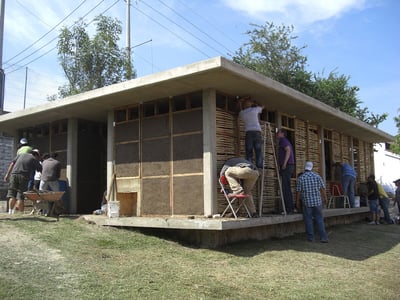
Community-led construction of a modern building in Bahareque. UCE Construction
In a world facing increasingly urgent environmental challenges, it is imperative that we rethink our construction methods and Let's embrace more sustainable alternatives. The Bahareque, with its nature-centered approach and its ability to blend tradition with innovation, represents just one of the many options available for transforming the construction industry toward sustainability.
For those interested in delving deeper into the field of sustainable architecture and energy conservation, I invite you to explore the extensive catalog of specialized online training courses available to architects and engineers. In particular, the Master's Degree in Energy Efficiency and Sustainability in Building Construction offers a unique opportunity to acquire key knowledge and skills in this constantly evolving field, preparing them to lead the shift toward a more sustainable and resilient built environment. Together, We can build a future where architecture is an integral part of the solution to preserve our precious planet for future generations.