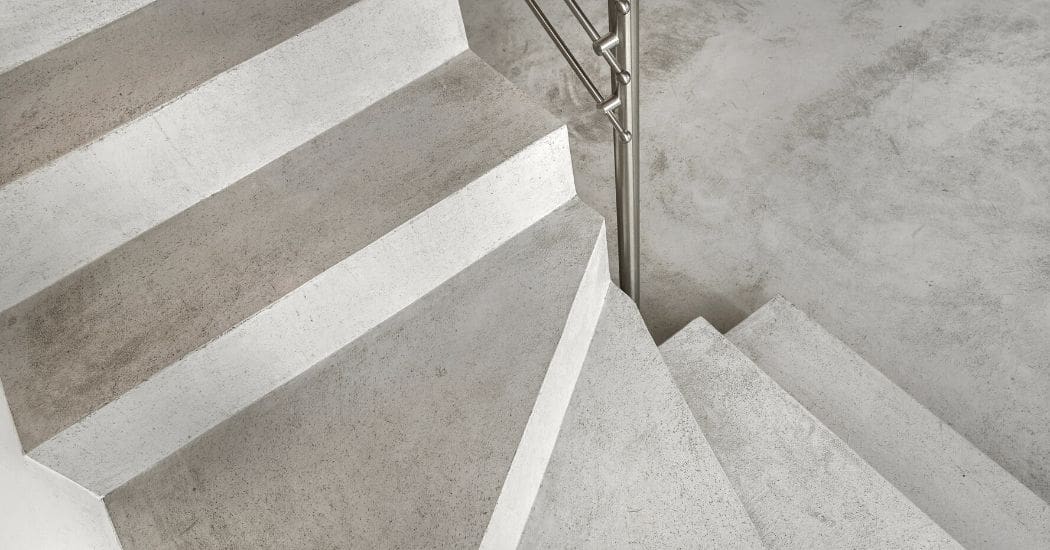
The Microcement is a very attractive material for interiors But we have to be very careful in how we carry it out to get the result we want.
Microcement can be considered one of the The Most Controversial Finishing Materials in Construction, since the aesthetic result it can bring to spaces is very difficult to achieve with other materials, but at the same time, it is a finish that is complicated to apply correctly. At the same time, if applied correctly, it can be a very strong and durable material over time, as well as aesthetically very appealing.
What Is Microcement?
It is a material with cementitious base high-performance material, mixed with polymers, fibers, air-entraining agents, ultra-fine aggregates, and accelerators; sometimes combined with pigments that add color to the final finish. It is applied continuously to flat surfaces in multiple layers ranging from 3 to 4 mm thick and is finally sealed once it has dried after 28 days, at which point it reaches its final strength.
One of its main features is the high level of adherence When covering different surfaces, it works very well when applied to concrete, tiles, plasterboard, metal, and almost any surface found in a building.
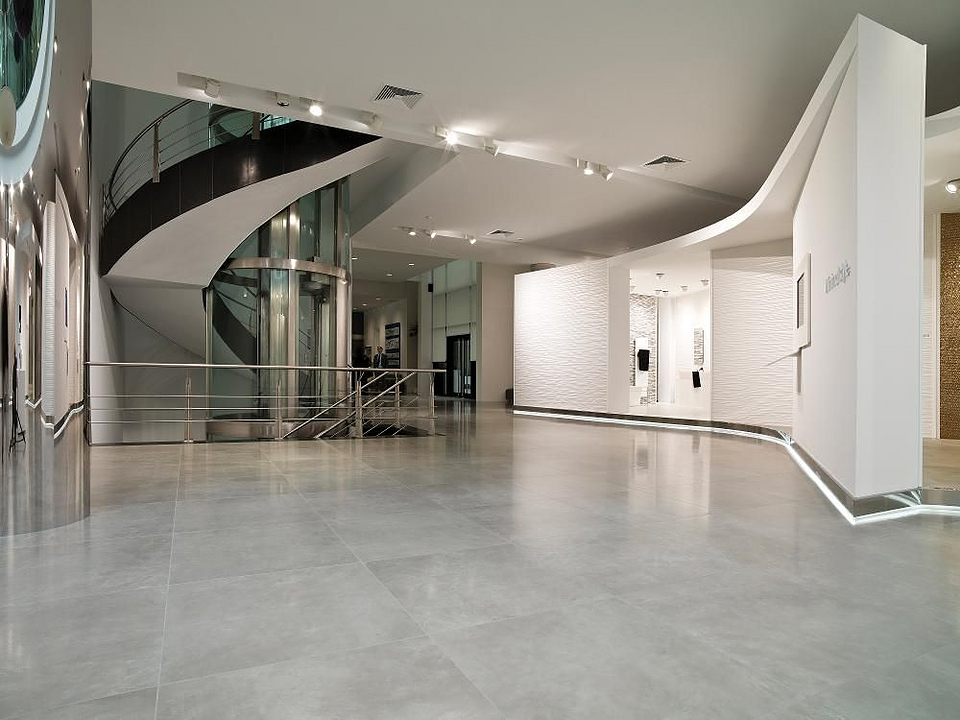
Ceramic Stone – Microcement: Source: Architecture Platform
Benefits of microcement:
- One of its main benefits is the versatility thanks to the material's high level of adhesion, which allows it to be used on floors, walls, and under almost any conditions. It works very well in bathrooms, kitchens, and even outdoors.
- Since it is a material that is poured in liquid form, It can adhere to almost any surface, so it does not require a prepared surface. It can be applied to porcelain, ceramic, marble, tiles, and concrete (except for wood and metal)
- Its chemical composition makes it perform very well in the event of a fire, it does not produce smoke or toxic gases. It has high fire resistance and prevents the spread of fire without increasing the fire load.
- Once it dries, you get a very durable and hard surface. Very difficult to scratch or break, and at the same time it is waterproof.
Problems with Microcement:
- One of the most significant problems with continuous coatings, such as microcement, is the cracks and fissures caused by thermal expansion of the material or the substrate beneath it. To achieve this, it is important to add additives that increase the material's flexibility and to install expansion joints at appropriate intervals.
- Although the microcement becomes waterproof when a sealing layer is applied, any type of defect in this layer—such as a failure of the sealer or insufficient coverage—can cause dark spots and cause the finish to be uneven.
- It is a material that It cannot be removed without being demolished., making it nearly impossible to reuse or make changes to it easily. In fact, if a specific area needs to be repaired, it is likely impossible to match the color to the existing installation.
- Like all on-site finishes, the The result depends largely on the quality of the product and the expertise of the workers..
Should I use microcement in my projects?
The answer is yes, is yet another finish in the wide range available to us in the world of construction and remodeling, Its material properties are almost unmatched aesthetically; it is very clean, durable, and versatile.. But it's essential to know that this is a material in which You can't skimp on the quality of the products used, and always have it done by specialized professionals.
To learn more about decorative solutions for interior spaces, and to discover the tools that technology provides architects and interior designers for creating designs using microcement and a wide variety of materials, we recommend our Master's Degree in BIM for Advanced Interior Architecture Design.
Share this with your contacts!