Do you know what textile architecture is? In this article, we'll walk you through all the features of this type of construction and its potential applications.
The textile architecture It is a textile solution based on lightweight structures that has become an excellent option for creating versatile structures.
Within textile architecture We include projects that use large tensioned surfaces for their enclosures, such as membranes, meshes, or thin sheets. Also known as tensile structure, can be defined as a system based on lightweight structures which are used primarily for develop coverage. Various materials are used in their manufacture rigid materials such as posts and arches which, in turn, provide stability when combined with flexible materials such as tarps and cables.
Thanks to the use of these components, the following are created: versatile structures with a great capacity for adaptability. Their use is becoming more widespread as new technologies make it possible to develop materials that are more flexible, durable, and with excellent lighting, thermal, and structural properties.
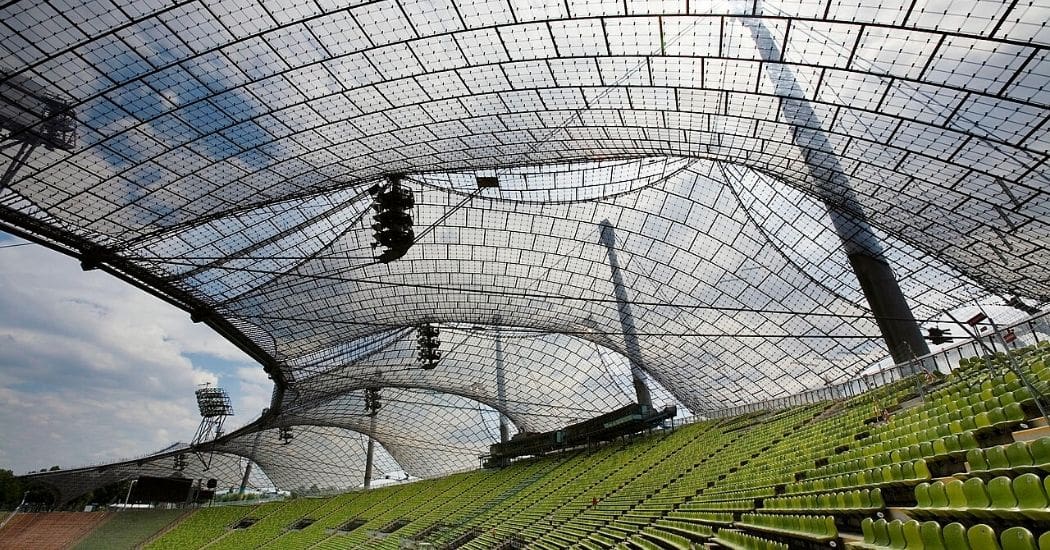
 Photo: Olympia Eissportzentrum, Munich, Germany
Textile Architecture: Uses and Benefits
Textile Architecture It is a construction technique that has been used since the dawn of civilization to prepare shelters or homes. Today, with advances in technology and improvements in materials, it has become a very popular construction method. It is mainly used for tensioned roofs over large areas since it allows a structural design with large spans between supports. Some of its most common uses are:
- Sports facilities
- Airports
- Event Venues
- Shopping centers
- Facade Enclosures
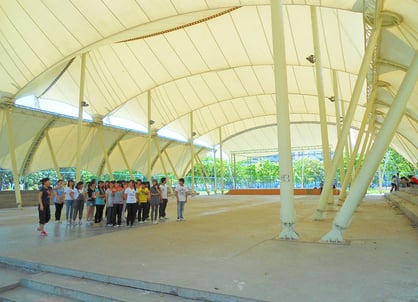 Photo: Wikipedia.org
These types of structures feature a number of advantages including:
- Lightness: Its materials are lightweight and flexible. This results in a lightweight structure that provides protection from rain and sun.
- Translucency and luminosity: Thanks to these structures, it is possible to take advantage of natural light without having to rely on artificial lighting.
- Durability: Its materials are very durable.
- Speed during assembly.
- Low production and maintenance costs.
- Geometric flexibility and formal beauty.
- Sustainability: Neither the materials nor the construction process cause harm to the environment.
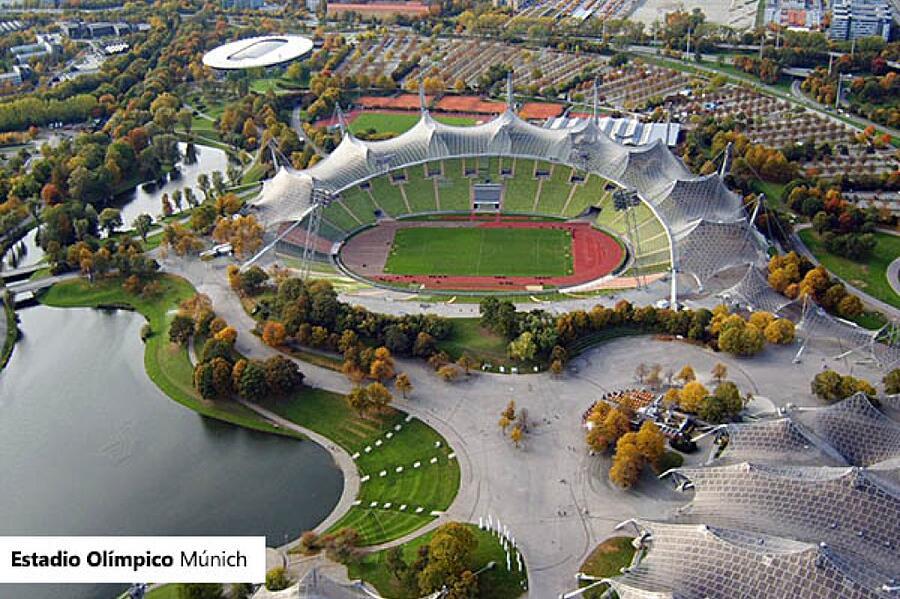 Munich Olympic Stadium
What types of textile architecture are there?
In textile architecture There are two types, based on their structural behavior, pneumatic and tension-controlled. The first is supported by air and refers to inflatable textile elements that can be used as bubbles of ephemeral spaces. Meanwhile, the latter are the most common, and they rely purely on attraction. In tensile architecture are used masts, cables, and tensioners to ensure they achieve the form and function for which they were designed.
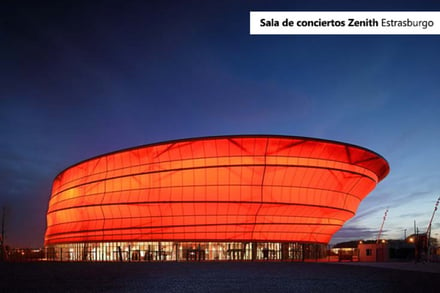 Zenith Concert Hall, Estamburgo
Materials Used in the Tensile Structure
The tensile structure uses a wide variety of materials used in these structures, such as the PES, PVC, PVDF, thermoplastic polymers, and silicone. The latest technologies have made it possible to develop materials with excellent properties: lighter, stronger, more durable, with better thermal and lighting performance. Some membranes are resistant to bending and allow folding structures. Surface treatments are also applied to make them more reflective, nonstick, and even dirt-repellent.
Some notable examples of this type of textile architecture where it has been demonstrated and expressed its excellent structural performance, great versatility, and unique beauty are the Munich Olympic Stadium, the concert hall Zenith in Strasbourg, the Millennium Dome in London, the Allianz Arena from Bavaria and the Khan Shatyr Entertainment Center in Kazakhstan.
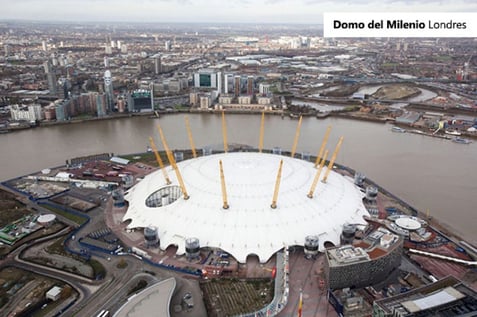 Millennium Dome, London.
Applications of Textile Architecture
Tensile Structures can be used to cover any outdoor space. Therefore, some of their applications are:
- Canopies for patios and balconies
- Enclosures for Carports
- Roofs
- Canvas roofs
- Industrial Roofing
- Awnings for Commercial Spaces
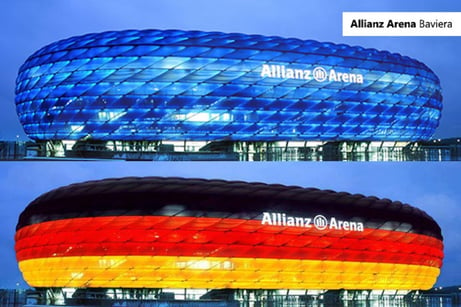 Allianz Arena, Bavaria.
What did you think of all this information about textile architecture? In Structuralia We want to help you with your training with a course on Expert in Textile Architecture which will be a great help to you. At our school, we offer you a a wide variety of specialized training programs y 20 years of experience in the sector.