Comply with the phases of a project's life cycle It helps set realistic goals and objectives.
How to Achieve Success by Following the Phases of a Project's Life Cycle
All human beings want to achieve that objective that we first dreamed of; however, many ideas end up being just ideas given the lack of specificity or errors in the planning.
Every project must necessarily meet a series of stages that cover everything from the moment the idea was first conceived in our minds to its implementation. That way, we ensure that the objectives are met, that the margins of errors are minimized, is avoid frustration of what remains unfinished, and errors are analyzed for future projects.
From a business perspective, understanding each stage of a project's life cycle, develops managerial skills to create a guide outlining what is expected at each phase and how those involved in each planning process should proceed.
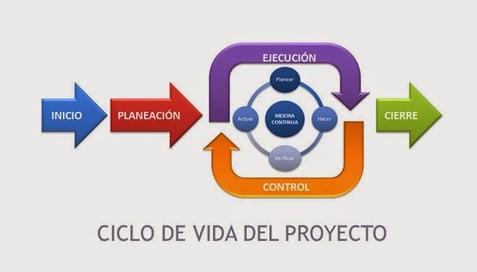 Project Life Cycle. Source: simplementevidic.blogspot.com
Learn about the phases of a project's life cycle
1. Define your project:
Conception It is the first step on this long journey. Being able to answer basic questions such as what, how much y when It provides insight into purely technical parameters, such as the quantity and availability of resources for the project. This process gives us the opportunity to identify potential risks, margins profit and also, identify potential errors In the next stage: planning.
2. Planning means preparing for the future
Turning everything we've imagined into a plan of action is the next step to consider in this process. Delegate specific responsibilities for all team members via workflow diagrams ...and ensuring that all members are able to fulfill their roles guarantees the project's success.
In this stage It is necessary to ensure that budgets include the tools needed to complete any task. Understanding limitations and innovating in problem-solving opens up the possibility of achieving better returns on investment.
3. Don't just stick to theory—take action!
Now is the time to put the team's synergy into practice—that is, the effectiveness with which the assigned tasks are carried out. It is necessary to stick to plan A, B, or C during implementation, this will reduce the need for improvisation. At this stage, it is necessary not only to monitor execution but also the quality of what is being delivered, while maintaining close communication with team members.
It is also common and necessary to document all the processes carried out during this stage so that, once the implementation stage is complete, they can be analyzed in a reflective manner: What can be improved and how.
4. Establish a follow-up review
After carrying out that planned event, it is It is necessary to assess whether the project has been successful or not. The number of hours spent on the project, adherence to or deviations from the budget, and an analysis of investment and return on capital are some of the questions that this phase of the work must address.
Comparing actual data with planned figures and informing team members of the achievements made is a mandatory part of this stage.
5. Rethink or replan
If necessary at this stage of a project's life cycle, the following are integrated: changes to the management system. Sometimes due to errors and other times due to the simplicity of certain processes, this stage allows us to improve future implementations until we achieve excellence.
6. The End
The final stage consists of the Data updates and integration of changes. Now is the time to provide guarantees or maintenance for the project and to verify all the documented information.
The completion of the various phases of a project's life cycle also involves changing its status in the asset system to "closed.".
So… What could possibly go wrong?
There are mistakes that can be avoided at every stage of a project's life cycle. In the initiation phase, it is common for the scope of a project to be incompletely defined.
People usually fall back on the in-depth exploration of opportunities. A brief assessment of the project's feasibility, risks, and limitations.
In fact, planners may not adequately identify the needs of clients interested in the project.
During the planning phase, the errors in budget estimates are usually the most common. Also, the underestimate the required documentation, complicates the project's implementation phase. Failures in the delegating tasks to the team, and the work overload The involvement of different members is identified as a risk of failure in the future.
The main setbacks in the project's implementation are the communication problems between the plaintiff and the bidder, whether due to failure to meet promised delivery deadlines or issues related to product quality.
When rethinking the project, it is important not to to underestimate its shortcomings, or to overestimate the shortcomings that prevent us from creating a sensible and measured plan.
During project closure, a incomplete progress estimate, and end up making mistakes regarding asset inventory.
No recognize the team's efforts and not to congratulate the project members It could mean that in the future we won't have key components needed for implementation. Paying close attention to details at this stage—when we think everything is ready—is crucial for the replication of successful models.