One of several sources of eOne form of renewable energy is geothermal energy, And here we'll explain how to make the most of the energy from the earth.
Every day we are getting closer to the final step toward renewable energy. Driven by the environmental crisis and the economic crisis which has driven up the price of hydrocarbons to unthinkable levels; it is becoming more and more common to carry out our daily activities, either entirely or in part, through renewable energy. And perhaps the most interesting thing is that with some of them, we can generate part of that energy at home—for example, by understanding such as How Geothermal Energy Works.
Geo means earth, and thermos comes from heat; so, based on the word itself, we can understand—at least on a superficial level—what this type of renewable energy is all about. Geothermal energy, as its name suggests, is generate energy using the Earth's heat. But how can we achieve that?
How Does Geothermal Energy Work?
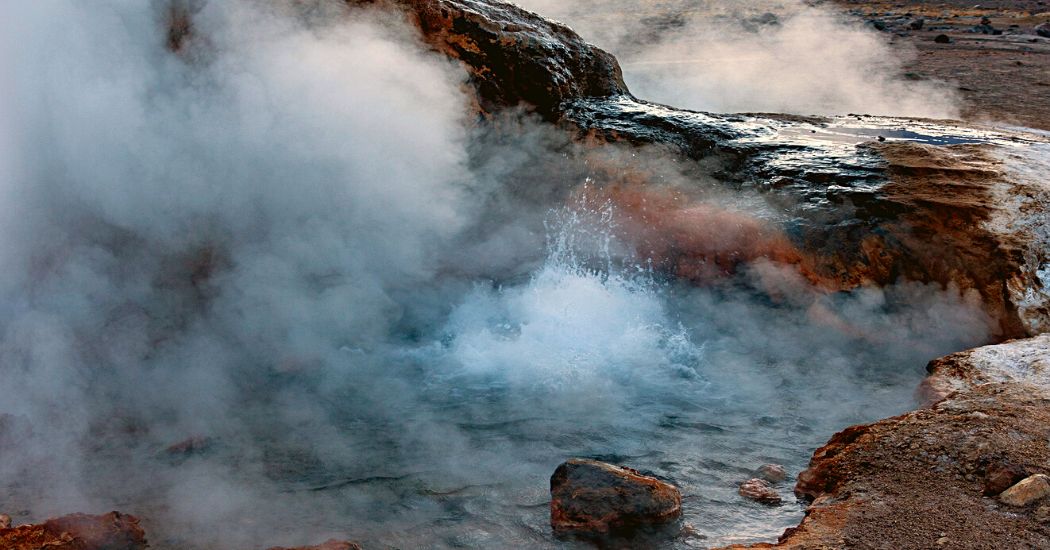
There has always been a very important source of energy right beneath our feet; the Earth itself contains within its core immense quantities of molten rock at very high temperatures (magma). Although only a small portion of that heat reaches the Earth's crust, it can still be harnessed. The secret to harnessing the Earth's thermal energy (geothermal energy) lies in the temperature variation between the surface and the one found underground, which increases with depth.
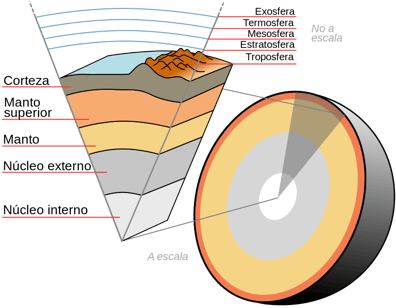
Geologically speaking, the planet is divided into three major layers: the core, the mantle, and the crust. It is estimated that in the core The Earth's core is at a temperature of about 4,000°C, a temperature that gradually decreases in the cloak, up to about 800°C. Meanwhile, in the bark, near the surface, the temperature remains almost constant throughout the year, regardless of the seasons and weather changes occurring outside, hovering at around 15–30°C underground.
Within the temperature ranges in the crust, there are variations caused by anomalous temperature flows, which result in two types of geothermal energy: geothermal energy from low temperature, and geothermal energy from high temperature.
1. High-temperature geothermal energy
It can be harnessed only in particularly active areas of the Earth's crust, where The temperature can reach 150°C, which is enough heat to generate electricity from steam. It is most commonly used in medium- and large-scale facilities, since these areas are located at much greater depths and require a higher initial investment.
2. Low-temperature geothermal energy
It is the most common type of geothermal energy, since it is highly efficient for residential installations, where, by taking advantage of a temperature that is usually below 30°C which can be reached just a couple of meters below the surface, serves as a heat exchanger for heat pumps, reducing energy consumption in residential HVAC systems.
Geothermal Energy Utilization
Based on the two main types of geothermal energy discussed above, there are several ways to harness the energy produced underground. These are the two main ones:
- Geothermal power plants: It is where high-temperature geothermal energy is harnessed on a large scale to produce steam and convert it into electricity.
- Thermal Energy for Industrial and Residential Use: Low-temperature geothermal energy is harnessed to help domestic hot water systems reach the temperatures required for heating, sterilization, drying, salt extraction, etc.
Geothermal power plant
They operate similarly to thermal power plants, since the goal is to generate heat in one way or another in order to heat a fluid sufficiently to produce steam, so that use that steam to generate electricity through a turbine. The difference, of course, lies in the source of that initial heat: in thermoelectric plants, the heat comes from fuels; in nuclear plants, from the fission of atoms; and in geothermal plants, as we explained earlier, They obtain heat from the temperature of the subsoil itself, the deeper you go, the more heat is generated, and therefore, the more electrical energy. There are several types of geothermal power plants:
- Dry steam plants: It is a high-temperature geothermal method that uses sites with small fractures through which pressurized steam escapes, driving a turbine to generate electricity.
- Flash Plants: It works on the same principle as dry-steam systems, but uses a separator that is capable of separating water from the steam.
- Binary-cycle power plants: It is also a high-temperature method that uses the high temperatures in the subsurface to heat a liquid with a low boiling point, producing high-pressure steam and thereby generating electricity.
Geothermal Energy for Residential Use
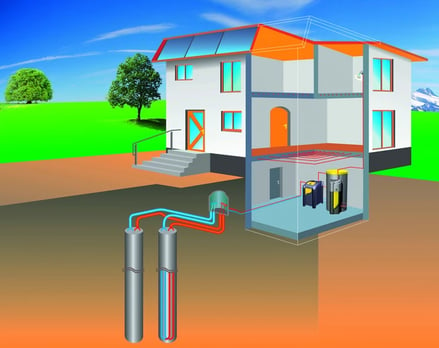
Ground-source energy collection systems used to help produce domestic hot water for residential and industrial use are divided into two main types:
- Horizontal geothermal energy: It involves burying polyethylene pipes at a depth of one or two meters, through which antifreeze circulates. At these depths, the ground temperature does not differ much from the outside temperature, but it is aided by the heat it receives from the sun.
- Vertical Geothermal Energy: The principles are the same as those of horizontal geothermal energy, but in this case, the pipes go much deeper into the ground, since they are installed perpendicular to the surface, reaching depths of between 20 and 150 meters, where temperature differentials are greater.
Pros and Cons of Geothermal Energy
1. Advantages of Geothermal Energy
Geothermal energy, in any of its forms, is a type of clean energy, which is generated in-house and, therefore, does not depend on the local power grid nor of their variations in price or quality, is safe and are constantly being used. On the other hand, they are standardized facilities that are very durable and allow for a return on investment over their long service life.
2. Disadvantages of geothermal energy
One of the main disadvantages of geothermal energy is that its feasibility depends largely on the type of soil and the geological conditions of the site. If the subsoil is unsuitable, certain systems may not function properly, which compromises efficiency and makes it difficult to recoup the initial investment.
In addition, payback periods are typically long, making it essential to conduct a detailed feasibility study before implementing the project. Added to this is the potential risk of aquifer contamination if rigorous technical controls are not applied during the drilling and design phases. Among the main disadvantages of geothermal energy is that the feasibility of the installation depends largely on the type of soil and the conditions
At this point, conducting a geotechnical study This mandatory step is essential for assessing the characteristics of the site and ensuring the technical and economic feasibility of the facility.
In conclusion, geothermal energy is no different from other forms of energy generation in that it has its own advantages and disadvantages, which are decisive in the use of renewable energy like this one. The return on this type of investment is still a very long-term prospect, but it depends on the ability of industry professionals to study and analyze each case It could turn out to be a very cost-effective solution. If you're a professional interested in specializing in this and many other renewable energy sources, we invite you to explore the catalog that Structuralia makes available to engineers and architects around the world.