Originally published on January 24, 2022; updated on May 31, 2023
The economy of movement reduces unnecessary movements and improves productivity, thereby lowering costs and improving the quality of products or services.
Efficiency of Movement: Its Importance in the Workplace
Workflow optimization is a technique used to optimize the efficiency of a process or activity by minimizing time, movements, and necessary resources to perform it. This technique is commonly used in manufacturing, assembly, and logistics, but it can also be applied to a wide range of everyday activities.
The main goal of motion economy is to minimize unnecessary movements and improve productivity, which results in lower costs and improved quality of the products or services offered. To achieve this goal, we analyzes each step of the process in detail, identifying processes that do not add value and eliminating or reducing them as much as possible.
Work study is based on the observation and detailed analysis of workers' movements and the use of tools and techniques to improve process efficiency. This technique is particularly useful in environments where high-speed, high-precision production, where even small improvements can have a major impact on productivity and quality.
What are the principles of economy of movement?
The principles These are fundamental truths that are part of the norms of job improvement, in this case, the aim is to reduce work-related fatigue. Divided into three sections, the guide highlights 17 basic or fundamental movements, many of which can be either effective or ineffective:
The Human Body
The way in which it let's use It will allow for a more comfortable workout with fewer movements, for example:
-
-
Both hands must be in line with at the beginning and end of an action.
- Hands no must be still at the same time, unless it's break time.
- The movements must be simultaneous and coordinated in opposite directions.
- Carrying out operations is something that is not driven by ambition, it is important to maintain a proper rhythm by making smooth, continuous, curved, and balanced movements, even when the task requires sudden changes in direction.
-
Arrange the tools in order so that they are within reach when you need to use them.
-
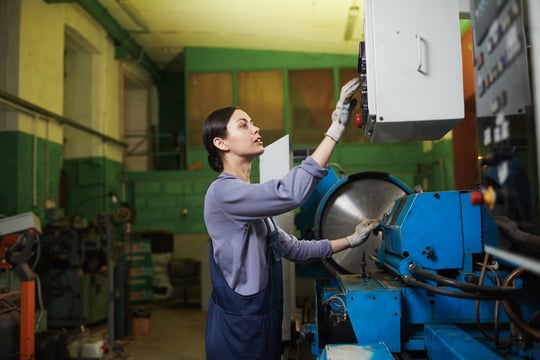
The Workspace
Perform well in the work environment It's a key factor—let's see what we can do:
-
-
Having a appropriate place Each tool must also be organized and kept clean at all times.
- Keep work materials close to where they will be used.
- Create well-lit spaces for optimal performance.
- Avoid staying in the same position for too long; in other words, the worker should perform their duties on an alternating basis, sometimes standing and sometimes sitting.
-
Maintaining good posture is essential, which is why using adjustable-height chairs is of vital importance.
-
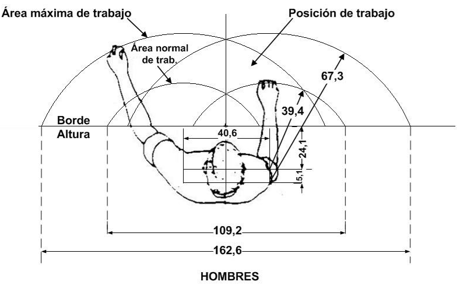
Work area. Source: ingenieriaindustrialonline.com
Machines and Tools
Proper use of each tool is a key factor in achieving good results; to that end, the following should be taken into account:
-
-
Whenever possible, use two or more elements to carry out an activity.
-
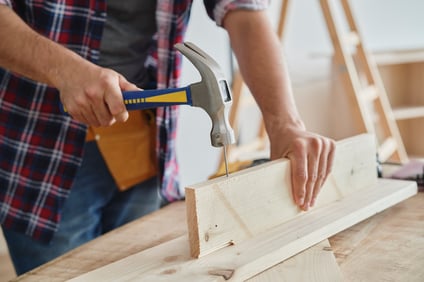
When using hammers, wrenches, or screwdrivers, make sure they have a long handle, as this reduces the force required for the task.
-
What criteria are used to classify the different types of motion economy?
The different types of motion economy can be classified according to different criteria, the choice of which will depend on the specific purpose of the classification to be performed.
Here are some of the most common ones:
-
By type of economic activity: These activities can be classified as agriculture, fishing, mining, manufacturing, transportation, services, and others.
- Based on the organizational structure: They are classified according to how the production and distribution of goods and services are organized. For example, market economy, planned economy, mixed economy, socialist economy, among others.
- Depending on the level of economic development of a country or region: These can be developed economies, developing economies, and underdeveloped economies.
- Depending on the level of specialization: Depending on the level of specialization required to carry out economic activities, they can be classified as highly specialized economies and economies with low levels of specialization.
-
Based on the level of industrialization: They can be classified according to their level of industrialization as industrial economies, agricultural economies, and service economies.
Where are these fundamental principles applied?
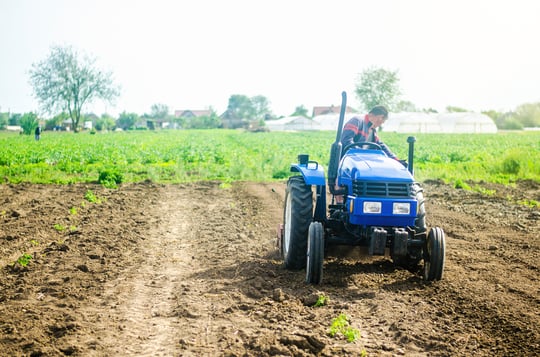
First, you should visualize your workspace, the space you have available, the tools you use, and the materials within your reach so that you can promote economy of movement and healthy work practices. Each of these principles applies equally to office workers, factory workers, and anyone who performs manual labor.
Use this set of rules in the workplace is of vital importance. As a result, engineers, architects, and other professionals will enjoy their work more and perform better in each of their duties.
In this regard, Structuralia is a school that allows students to professionals one more in-depth training on this topic, such as in master's programs related to Project Management We learn how to strengthen our functions.