It never hurts to expand our communication tools with examples of visual thinking to improve as professionals.
Examples of visual thinking to improve communication skills
In the competitive world of engineering, technical skills are essential, but we must not underestimate theThe Importance of Effective Communication Among Professionals, and the ability to convey ideas clearly and concisely can make all the difference in a project's success. It is in this context that the examples of Visual Thinking, a powerful tool that not only improves communication but also drives creativity and mutual understanding in professional teams. In this article, we will take an in-depth look at the importance of the Visual Thinking for engineers and professionals in the field, highlighting the tangible benefits this technique can bring to our professional skill set.
What do we mean by "Visual Thinking"?
The Visual Thinking, or visual thinking, is a technique that uses images, diagrams, and charts to represent ideas and concepts. Unlike purely verbal communication, examples of Visual Thinking Harness the power of visualization to simplify complex information, fostering faster and deeper understanding.
Let's imagine an engineering project that involves designing a new energy management system for an industrial plant, but instead of relying solely on verbal descriptions, the engineers use examples of Visual Thinking when creating diagrams depicting the power grid, energy flows, and key points in the system. This approach not only makes it easier for team members to understand, but also serves as a visual guide during the implementation phases. The ability to clearly see the system's structure through the Visual Thinking enables more efficient collaboration and minimizes misunderstandings, which ultimately contributes to the project's success.
 An example of visual thinking in an image that explores artificial intelligence. Apapel
Examples of How to Start Using Visual Thinking in the Workplace to Improve Communication
1. Start with the basics
Start by drawing simple concepts before tackling complex projects. Practicing with simple visual representations will help you develop your skills in the Visual Thinking.
2. Use digital tools
Explore platforms and apps that make it easy to create diagrams and charts. From online tools to software In the specialized field, there are various options that cater to different work styles.
3. Incorporate colors and shapes
Harness the power of visual coding. Assign specific colors and shapes to key concepts to make your representations more memorable and easier to understand.
4. Encourage team participation
Enter sessions of Visual Thinking during meetings. Encourage your colleagues to express their ideas visually. This will foster a collaborative atmosphere and improve mutual understanding.
5. Practice visual thinking on your own
Take some time to visually reflect on your own projects. This individual practice can help you clarify your ideas before sharing them with the team.
6. Be flexible and creative
There are no strict rules in the Visual Thinking. Experiment with different styles and approaches. Creativity is key to finding the best way to present the information.
7. Use existing visual examples
Draw inspiration from effective visualizations you find in books, blogs, or similar projects. Analyze how others apply the Visual Thinking and tailors his techniques to your needs.
8. Ask for feedback
Share your visual representations with colleagues and ask for their feedback. This will help you refine your skills and discover new ways to apply the Visual Thinking in your workplace.
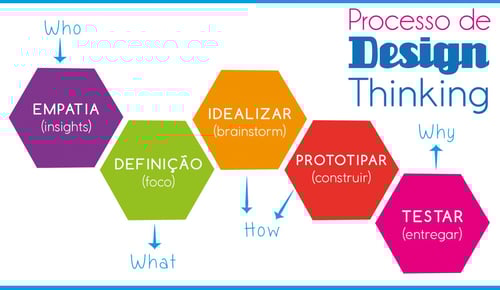 Outline of the phases of a process for creating a document based on Visual Thinking. Documotion
Benefits of Using Visual Thinking as a Professional
Integrating visual thinking as a communication tool in the professional engineering environment is not just an option, but a strategy that entails a series of tangible benefits. Here we'll explore some of the highlights that make the Visual Thinking a valuable addition to our skill set.
Clarity and Improved Understanding
By translating complex ideas into visual representations, Visual Thinking simplifies the information, making it easier to understand. This clear and straightforward approach eliminates linguistic and technical barriers, ensuring that all team members are on the same page.
Fosters Creativity and Innovation
Visual representation stimulates creativity by providing a space to explore ideas from different perspectives. This approach, free from verbal constraints, can spark innovative solutions to complex problems, fostering an environment conducive to innovation.
Increase Information Retention
Images are powerful mnemonic tools. By using visual thinking, information is presented in a more memorable way, which facilitates long-term retention. Teams can more easily remember and refer to visualized concepts, thereby avoiding misunderstandings and errors.
Facilitates Decision-Making
Visualizing Data and Concepts streamlines the decision-making process by providing a clear and comprehensive view of the situation. Teams can quickly evaluate options and make informed decisions based on a solid visual understanding.
Improve Collaboration in Multidisciplinary Teams
In engineering projects involving professionals from various disciplines, Visual Thinking serves as a common language. It facilitates communication among team members from different backgrounds, promoting more effective collaboration and the seamless integration of specialized skills.
Optimizing Time and Resources
Visual communication reduces the need for lengthy explanations, saving valuable time in meetings and presentations. Furthermore, by minimizing misunderstandings, errors and the need for manual work are reduced, optimizing the project's resources.
By embracing Visual Thinking as an essential tool in the modern engineer's skill set, we are taking an important step Toward More Effective and Collaborative Communication in the Workplace. If you'd like to deepen your knowledge even further and enhance your communication skills, we invite you to explore the training options offered by Structuralia, which offers a wide range of courses and master's programs designed specifically for engineers, Structuralia stands out for its focus on Soft Skills in the Field of Engineering. Broaden your professional horizons and hone your communication skills to stand out in today's engineering field.