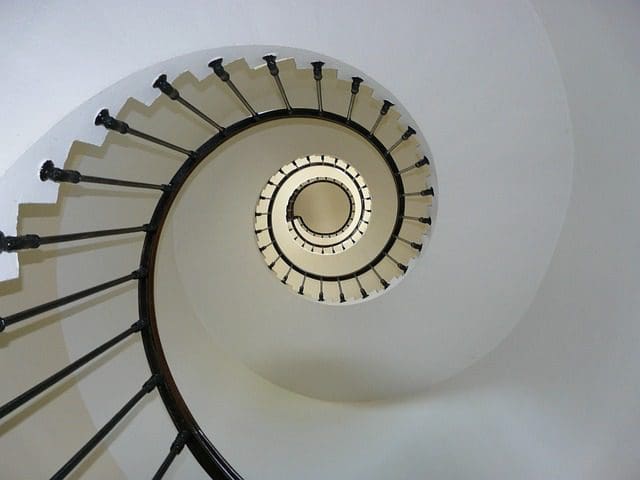
The Forth Bridge is located 14 kilometers from Edinburgh, Scotland, spanning the Firth of Forth and connecting the north and south of the country. It celebrated its 125th anniversary last week, and thanks to its construction, travelers were spared a 45-kilometer detour through rugged and dangerous terrain.
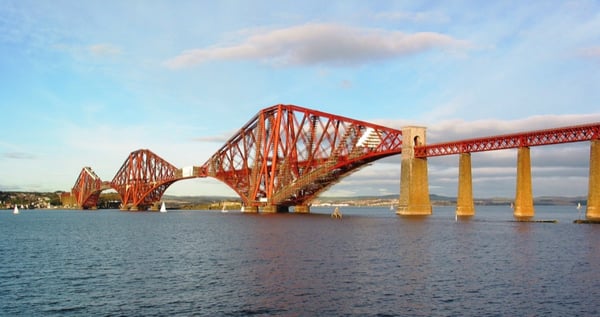
This is a cantilever railway bridge that took seven years to design and build, with the added challenge that the bridge had to be high enough for ships to pass underneath it. Two designs prior to the final one proved unfeasible: the first because of the depth of the mud layer at the bottom of the fjord—36 meters—which made construction very difficult; and the second, a suspension bridge that could have been built had it not been for certain concerns arising from the accident on the bridge over the River Tay.
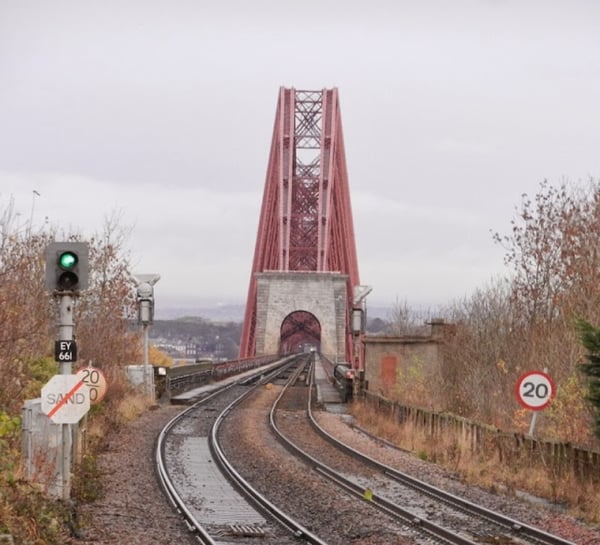
At the time, it was a major engineering challenge: it has a 2.5 kilometers long, supported by three pillars, with sections of masonry and iron, and rises 46 meters above the water level. The following materials were used in its construction: 4,600 workers, more than 55,000 metric tons of steel and nearly 19,000 cubic meters of granite. One drawback is that it is not made of stainless steel, so it currently needs to be painted approximately every 20 years.
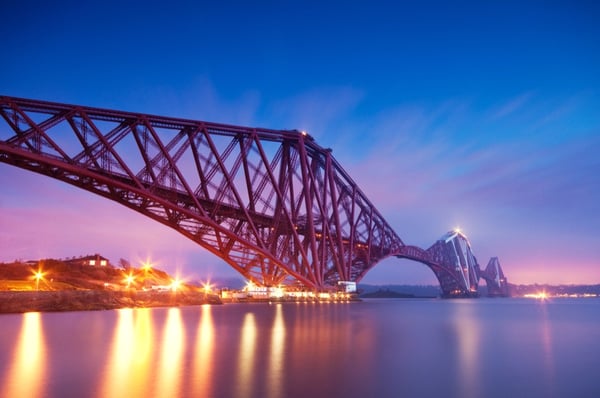
Trains cross the bridge at a maximum speed of 80 kilometers per hour, and no two trains are allowed to cross at the same time. Throughout the day, it handles traffic of 200 trains, despite being a bridge that is many years old.
Full Proposal Tour from Network Rail on Vimeo.
S. Queensferry Bridge Walk Proposal from Network Rail on Vimeo.